
 3 months ago
A24
This article contains spoilers for "The Death of Robin Hood."
Filmmaker Michael Sarnoski is only three movies into his career, yet those three happen to be some of the strongest and deeply felt films of the last five years. Each of them — "Pig," "A Quiet Place: Day One," and this week's "The Death of Robin Hood" — is written and directed by Sarnoski and bears the mark of a true auteur. They also share several themes in common, perhaps most notably the idea of legacy. In particular, Sarnoski's protagonists are concerned with how they have affected the world around them and what, if anything, they seek to leave behind.
This interest places Sarnoski next to another filmmaker whose body of work has largely concerned a similar theme: James Mangold. Indeed, the latter's movies typically feature characters struggling with their reputations, from real-life musicians like Bob Dylan all the way to mythic heroes like Indiana Jones. Most pointedly, Mangold has directed two films about Wolverine — 2013's "The Wolverine" and 2017's "Logan" — and both movies deal with the character's tortured past and uncertain future, with Hugh Jackman portraying their namesake. However, it's "Logan" that's more involved in summing up Wolverine and giving him a true ending ... something that not every popular hero gets to have these days.
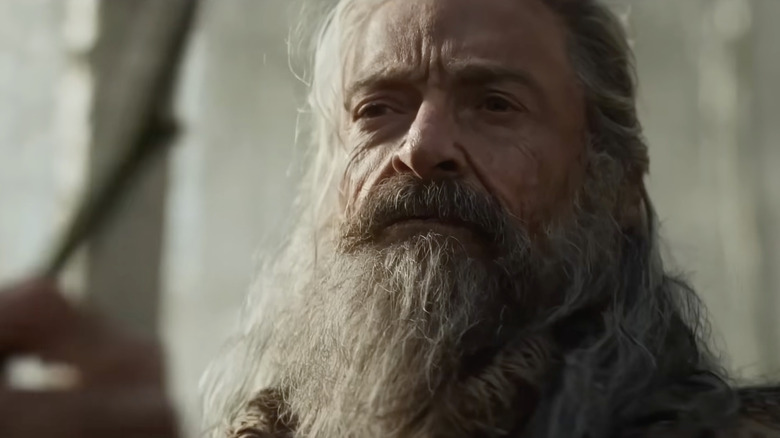
Jackman similarly plays the titular outlaw in Sarnoski's "The Death of Robin Hood." The film is based on the 17th-Century ballad "Robin Hood's Death," and Robin does, in fact, expire at the end of the movie. As a result, Sarnoski's movie and "Logan" share a remarkable number of similarities, something that is only made more pointed with Jackman being at their core. Yet, despite this, the films end up being distinctly different from each other thanks to the respective genres they partake in.
The Death of Robin Hood and Logan make excellent use of Hugh Jackman's paternal nature
20th Century Studios
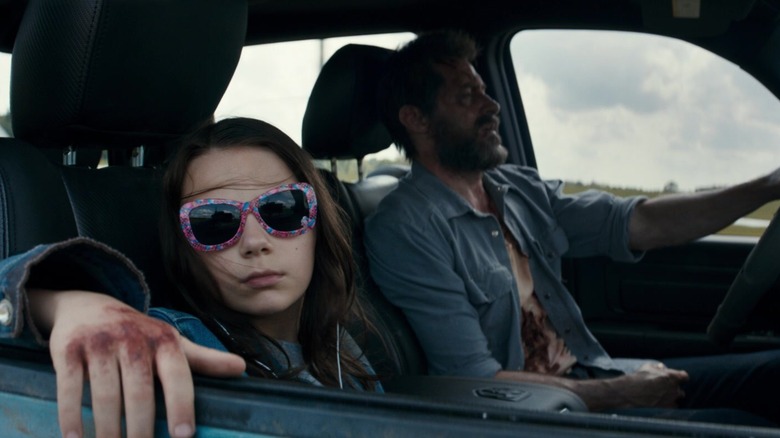
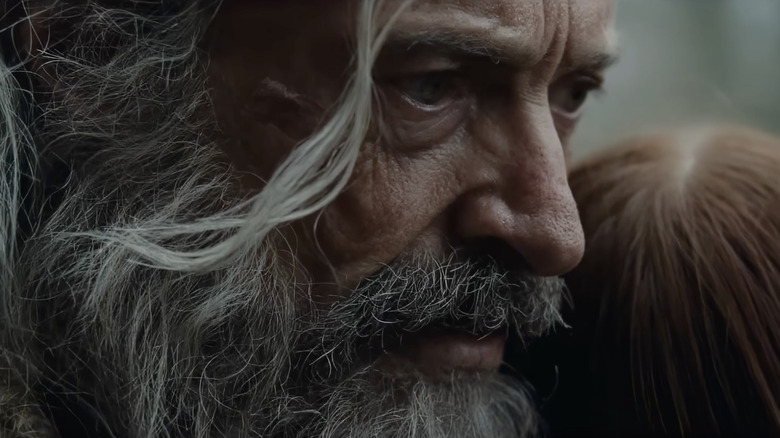
Both "Logan" and "The Death of Robin Hood" have a broadly identical structure. In "Logan," James "Logan" Howlett (Hugh Jackman) is slowly dying from the gradual failing of his mutant healing factor in the year 2029. Although he's taken it upon himself to look after his ailing friend and mentor, Charles Xavier (Patrick Stewart), Logan mostly works as a limo driver, getting into fights every now and again. In "The Death of Robin Hood," an aged Robin (Jackman) wanders the English countryside, halfway hiding from various revenge-seeking friends and relatives of people he's slaughtered over his lifetime. As circumstances have it, both characters unexpectedly find themselves having to take a young girl under their wing. For Logan, it's a daughter he didn't know he had, Laura/X-23 (Dafne Keen). For Robin, it's the orphaned daughter of his compatriot Little John (Bill Skarsgård), Little Margaret (Faith Delaney).
This angle allows James Mangold and Michael Sarnoski to capitalize on Jackman's inherently paternal nature. Given Logan and Robin's action hero pedigree, there's a bit of a "Lone Wolf and Cub" aspect to the respective characters' relationships with these girls, in that they bond by passing along their skills and wisdom, which generally involve violence. Yet, the girls' presence, along with their need for guidance and protection alike, help soften the iced-over hearts of these men, revealing a warmth under their gruff, brutal exteriors. Jackman excels at playing a complex father figure, standing in for anyone who has mixed feelings toward their relationship with their own children or, conversely, with their father. It's through doing right by these girls that Logan and Robin are able to find something close to grace: absolution, if not redemption.
The Death of Robin Hood and Logan serve different genres
A24
For those who haven't seen both movies and assume I'm dismissing "The Death of Robin Hood" as a carbon copy of "Logan," let me assure you, that's not the case. Both of these films serve different genres, resulting in largely different movies in tone and style.
Although it broadly fits the label of "superhero" or "comic book" movie, "Logan" is primarily a Western. Sure, there are tinges of film noir in the way Logan is portrayed as an antihero who mixes it up with colorful characters along his journey. Yet, James Mangold goes out of his way to align the film and its protagonist with the aging gunslinger archetype, as seen in Westerns like "Shane" (which "Logan" makes direct reference to) and "Pale Rider." "The Death of Robin Hood," meanwhile, is a tragedy in the Shakespearean tradition. Robin is a man whose past misdeeds not only haunt him but return to ensure his demise, whether or not Robin welcomes and helps facilitate that death. Michael Sarnoski's script does not attempt to revise Robin's sins, even while it asks us to consider the man's soul regardless of his actions.
The difference between the films is abundantly clear in their respective death scenes. Logan dies heroically, sacrificing himself in battle. Robin dies justly, allowing Sister Brigid (Jodie Comer), whose husband and children he murdered long ago, to bleed him to death. Both men willfully give up their lives in favor of a girl carrying their legends forward in a more progressive manner. Considering how great these movies are, one hopes that Hugh Jackman might complete the thematic trilogy someday ... assuming Jackman's turn as Jean Valjean in "Les Misérables" doesn't count.
"The Death of Robin Hood" is currently playing in theaters.

 English (US) ·
  Indonesian (ID) ·