
 3 months ago
Static Media
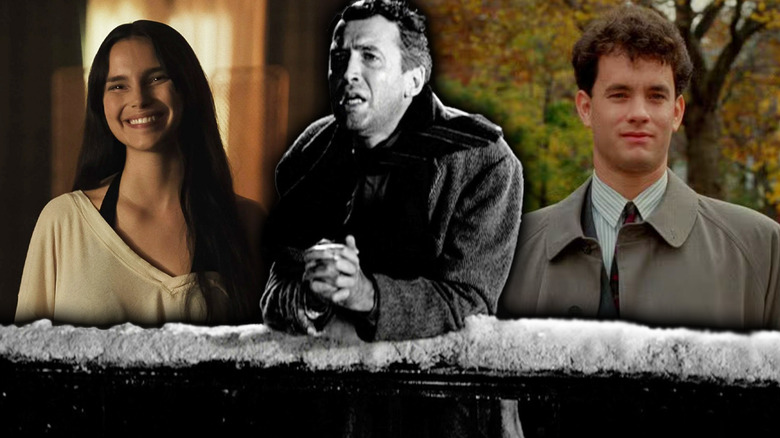
For centuries upon centuries, wishing stories have been a reliable subgenre within every form of storytelling. From "One Thousand and One Nights" and "The Monkey's Paw" to Curry Barker's 2026 breakout hit "Obsession," cultures across time have been entranced by the idea of making their wildest dreams come true with a single spoken desire — and, occasionally, tantalized by the horror that would inevitably come from such a short cut.
Whether taking the form of broad, slapstick physical comedies, black-and-white dramas, horror-thrillers, or animated adventures, the pieces of a wishing film remain the same: an average person, extraordinary desires, selfish wishes, selfless resolution. A basic use of this trope won't deviate from this path, and the films below stand out for how they pushed the boundaries of this timeless kind of story, even in subtle ways.
These are the 10 best movies about wishes, ranked.
10. Bruce Almighty (2003)
Universal Pictures
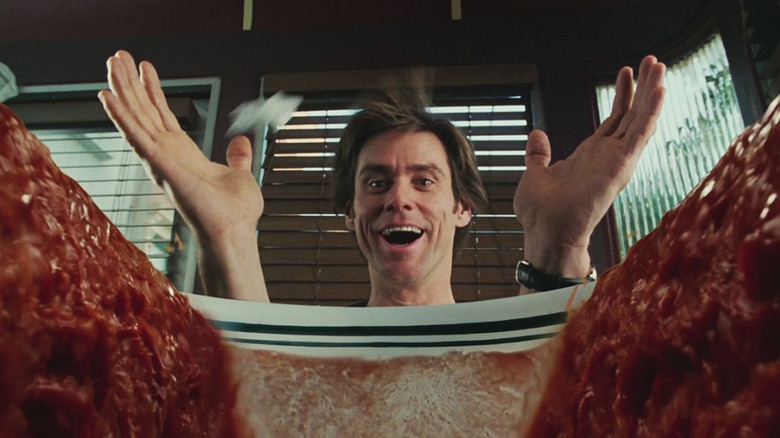
No film has taken the trope of wish-fulfillment to its logical — or, rather, theological – extreme like "Bruce Almighty." The 2003 film from frequent Jim Carrey collaborator Tom Shadyac stars the legendary comedy actor as Bruce Nolan, an egotistical TV reporter who can't help but feel like God has it out for him. So, naturally, God (played by a mythically well-cast Morgan Freeman) decides to test Bruce by giving him his nigh-omnipotent power and limitless responsibility for a single week. After all, if God made the world in the seven days, Bruce probably won't be able to destroy it in the same amount of time... right?
"Bruce Almighty" has never been a critical darling (though audiences certainly enjoyed it, as it remains the second-highest grossing film of Carrey's career behind "Sonic the Hedgehog 3"). Its biggest cultural impact is probably its casting of Steve Carell, and the "Daily Show" correspondent used his supporting role as the launch pad for his own prolific career, and later led a standalone sequel titled "Evan Almighty."
But if one cares to look beyond the laughs and dig into what the film actually says about ultimate wish-fulfillment, it has something surprisingly truthful to offer. The God-like power Bruce is granted comes with two key limitations, the most explicit of them being his inability to subvert the free will of another human being. At the same time, Bruce is also constrained by his own selfishness, pettiness, and ingratitude. He can change the minor inconveniences that caused him to initially lash out, force miracles that change what his life looks like, but he can only genuinely change for the better by taking advantage of the quieter, humbler power he always possessed. "Bruce Almighty" makes the simplest (though at times stupidest) argument that our biggest wishes are usually granted by the smallest choices.
9. Bedazzled (2000)
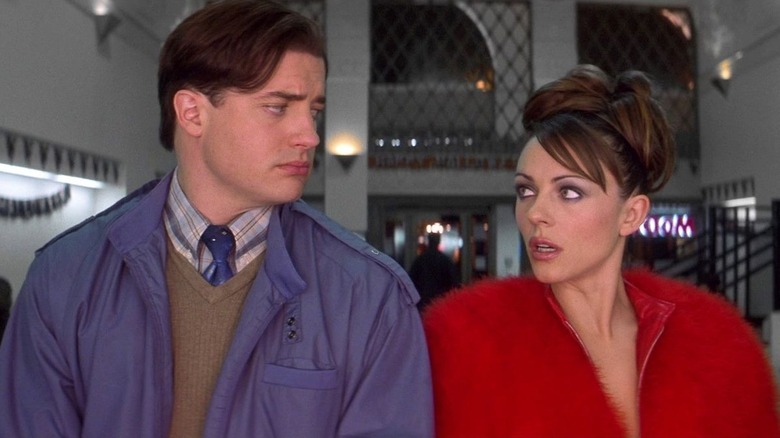
Though it came out nearly three years before "Bruce Almighty," Harold Ramis' 2000 remake of "Bedazzled" feels like a spiritual sequel in some ways. It's a direct inversion of the dynamic that serves as the premise of Jim Carrey's feature. A rising Brendan Fraser plays a quiet, mild-mannered IT worker named Elliot, who isn't so much ungrateful for his own life as he is afraid to live it (a recurring theme in the wish-fulfillment subgenre). This is most acutely manifested in his inability to ask out Alison (Frances O'Connor). When The Devil herself (Elizabeth Hurley) offers him the opportunity to live the life he dreams of, Elliot sells his soul for seven deadly wishes.
"Bedazzled" is worth a stream for Fraser's charismatic comedic turn alone, but it also lands with more nuance than "Bruce Almighty." The bones of the two films are identical, as Elliot initially wishes for money and power, only to find they come with unexpected consequences (Hurley's Devil grants her wishes with an ironic twist). But where Bruce eventually realizes that his selfishness won't bring him closer to the woman he loves (and is thus rewarded with her affection by making one selfless choice), Elliot ultimately gives up all his power just to make sure Alison lives the life she deserves. When he realizes that (even with his newfound confidence and self-awareness) he isn't going to be a part of that life, he's able to accept reality and move on.
Despite both films depressingly treating women as trophies in the lives of dismal men, "Bedazzled" gets closer to the truth by rendering Elliot's final wish as truly selfless. It has a stronger statement about accepting who you are, even if it means letting go of the life you think you need.
8. 13 Going on 30 (2004)

Sony Pictures Releasing
As one of the best romantic comedies of the 2000s, "13 Going on 30" is the film most adult zillennials should revisit today. After suffering a humiliating 13th birthday party, Jenna Rink (future "Revenge" actor Christa B. Allen) closes her eyes and wishes she was "30 and flirty and thriving." When she wakes up, she finds herself 17 years older (looking a lot like Jennifer Garner) with a lavish New York apartment, a professional athlete for a boyfriend, her former bully as her new best friend (Judy Greer), and a job at a powerful editor as a premier metropolitan fashion magazine. The experience is, of course, jarring and a bit terrifying for the middle-schooler, who seeks out her now-estranged childhood best friend Matt (an all-time great role for Mark Ruffalo) — he can't understand or empathize with her plight but challenges her to enjoy her dream life now that she has it.
That's the simple central idea of "13 Going on 30," which puts a new twist on a Tom Hanks movie we'll discuss shortly. Matt's words carry a touch of irony as he says them (having been scorned by Jenna's destructive behavior on her path to popularity and professional success), which is compounded in every scene Jenna realizes her dream feels hollow. The film realizes the idea of being able to show one's younger self the life they're currently living, to show them that everything turns out okay after you make it out of the uncomfortable phases of life. It then subtly challenges that premise, however, by asking the audience to cherish our awkward, innocent youth and to hold on to or reconnect with the parts of that youth that made us unique. We spend so much time wishing for a future self we can actually love, but "13 Going on 30" shows how much there is to lose if you don't start loving yourself in the present.
7. Three Thousand Years of Longing (2022)
MGM
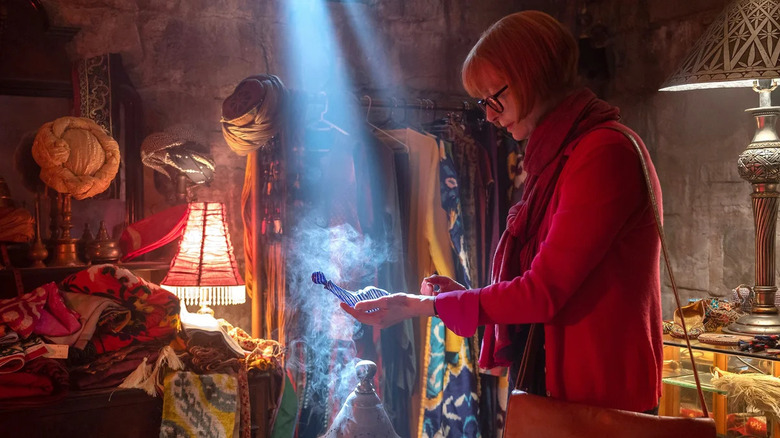
We'd forgive you for not having heard of "Three Thousand Years of Longing." George Miller's wild, underseen romantic fantasy epic was a sharp pivot in the director's filmmaking career, made and released between his most recent and acclaimed entries in the "Mad Max" series. He left behind the loud, stylish violence of those post-apocalyptic stories to try his hand at telling a story that was far more intimate and understated — one which interrogates the wish-fulfillment subgenre on an existential level.
In "Three Thousand Years of Longing," Tilda Swinton plays a storytelling expert with a deep and encyclopedic understanding of wishing stories, a fact which comes in handy when she suddenly finds herself at the center of one. Idris Elba stars opposite Swinton as a mythological Djinn (a genie in a bottle, for all intents and purposes) whom her character frees and falls in love with after hearing his extraordinary life story. It explores with far more texture and emotional weight the simple truth communicated by "Bedazzled" and "Bruce Almighty" — that the human experience is the struggle between selfishly wanting the beautiful things life has to offer and learning to let them go.
"Three Thousand Years" focuses exclusively on real adult relationships rather than the superficial desires of the other two films. Though Swinton's academic and Elba's Djinn couldn't have lived more different lives at different times, they are united as one through loneliness and a spiritual kind of yearning. And in that isolating feeling, one comforts themselves through such delicate, elaborate wishes as stories often are — in Miller's world, the story or the wish unfulfilled is its own treasure.
6. Freaky Friday (2003)
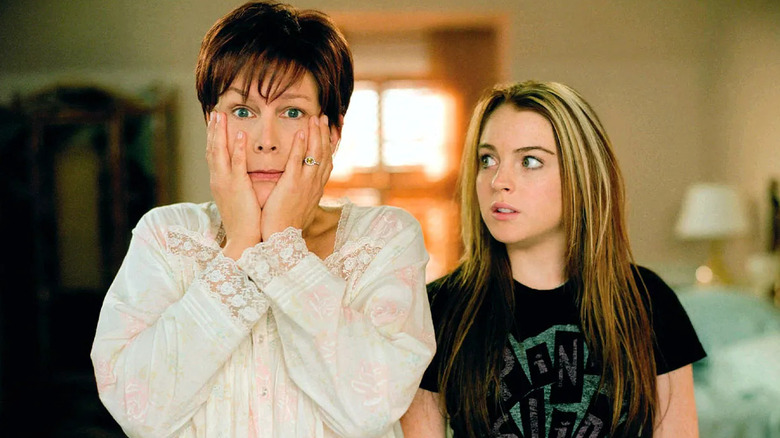
Walt Disney Pictures
Ironically, while the original "Freaky Friday" film from 1976 features one of the more explicit and incredible on-screen wishes, we have to admit we're partial to the less literal take on the subgenre offered by Mark Waters' remake. The 2003 film is peak early-2000s joy. Jamie Lee Curtis and Lindsay Lohan star as Tess and Anna Coleman, the mother-daughter duo who unwittingly swap bodies after eating magical fortune cookies (there are, admittedly, elements that haven't aged well culturally).
Where the movie unequivocally succeeds is how clear its focus is on turning a "wish" into empathy. Curtis and Lohan may not want to literally swap bodies in the same way Barbara Harris and Jodie Foster's characters did, but they need to be understood by each other. Anna is hurt that her mother doesn't believe in her passion for music, and feels judged for prioritizing her work with her band over other aspects of her life; Tess, meanwhile, has decided to remarry just three years after the death of Anna's father, and is struggling to move forward with the wedding without her daughter's support.
The sequel, "Freakier Friday," is fun, but not nearly as touching (though it isn't afraid to weaponize nostalgia in an unexpected way). The first one just had a better understanding of why anyone would want to wish to swap places with someone, even if it alters the formula. The 1976 film was largely about showing kids and adults the pluses and minuses of their respective experiences, but Waters' "Freaky Friday" is about two people in complicated phases of their life re-learning to see and love one another as people, instead of simply as family.
5. Liar Liar (1997)
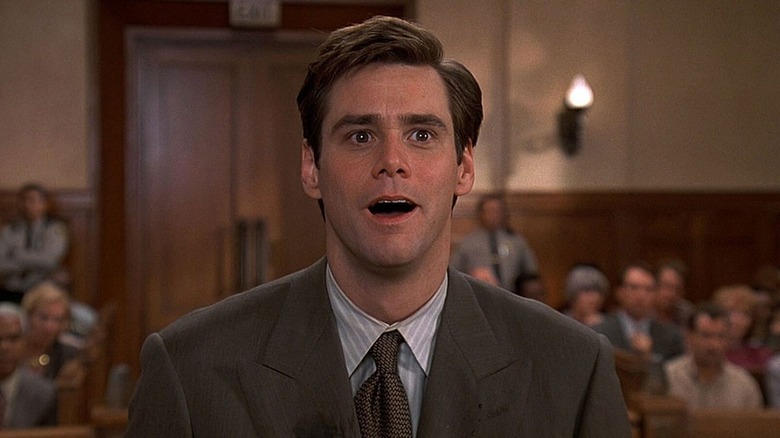
Universal Pictures
Before Tom Shadyac and Jim Carrey partnered up for "Bruce Almighty," the duo created one of the best films of 1997 with "Liar Liar." However, unlike the 2003 film, this one finds Carrey as the victim of the well-intentioned wish of another person: his own child.
After missing his son's (Justin Cooper) birthday party, Carrey's Fletcher Reede has his ability to lie completely revoked for a 24-hour period. Fletcher, who makes a killing as a silver-tongued defense attorney, now can't help but vomit up the truth whenever it crosses his mind, whether in passing to a stranger or in an active court of law. The film is first and foremost a showcase of Carrey's talent in a more adult, refined register. His physicality lends itself well to both sides of Fletcher, as the charming, seductive litigator and the helpless man who strains visibly and in vain to keep his thoughts inside of his head. It's one of the actor's best performances of his career.
Though Carrey's character is powerless and manipulated throughout, "Liar Liar" presents Fletcher's experience as an ultimately liberating one. When the film begins, he's on a dangerous track toward lying his way into a life he doesn't actually seem to want. After all, there would be no conflict in this story if Fletcher were comfortable seeing his family drift further and further away as he maintained exclusively manipulative, transactional professional relationships. That's exactly what would have happened had his son not intervened with the kind of wish only a five-year-old at the end of his rope would come up with. In the end, it shows the person Fletcher was lying to most of all was himself.
4. Big (1988)

20th Century Studios
"Big" is easily one of the most famous wishing movies ever made, if only for Tom Hanks' star-making performance as a 12-year-old who wishes himself into the body of an adult. His character, Josh Baskin, makes this wish to a magical Zoltar carnival machine (perhaps the most iconic wishing device in the entire subgenre), and is subsequently able to live the life every kid in the '80s would have dreamed of.
It's a common trope in wishing movies that the wisher themselves will eventually be dissatisfied by or become disillusioned with their own wish. "Bruce Almighty" realizes there are some things he can't force; Jenna in "13 Going on 30" realizes the life dreamed of isn't the life she really wants. But "Big" finds its own unique spin by taking a simpler route: It's the wish itself that troubles Josh, rather than the consequences. He has the autonomy he wanted, a dream job where his child-like personality is an actual asset, and a "healthy" (ignoring the fact that he's a 12-year-old boy) relationship with someone who cares about him.
In other words, "Big" doesn't punish Josh for making a wish by revealing some dark irony in his desires. Instead, it allows Josh to realize that being young is a natural part of life, one he'll miss if he tries to skip over it entirely. The near perfectness of Josh's "big" life makes it all the more powerful when he chooses to go back to being a kid, as he chooses a normal childhood over a certain and successful adulthood.
3. Obsession (2026)
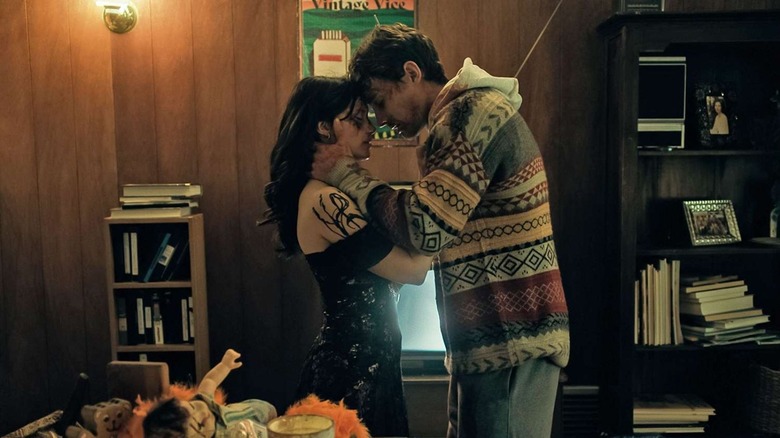
Focus Features
At first glance, "Obsession" is anything but a trail-blazing movie, even within the wishing subgenre. Plenty of movies before it have explored a man wishing his way into the heart of a woman he has a crush on (see: "Bedazzled"), and there are even several horror films where wishing is the central conceit ("Wish Upon," the entire "Wishmaster" franchise). Where Curry Barker's take on these tropes becomes immediately distinct is his refreshing — and often disturbing — focus on character.
Though she spends much of the film horrifically imprisoned in her own body, Inde Navarrette's Nikki is given a level of agency that characters in her position never receive. Barker's script treats her predicament seriously. She isn't just the object of Bear's (Michael Johnston) affection and the target of his wish but a victim of both of those things at once. The film imagines what it would be like to have your feelings for another person change instantaneously, and Nikki fights for control in eerie ways throughout, as the wish compels her to perform single-minded romantic devotion. She often appears to be possessed. But while many viewers have interpreted the nature of her possession to be at least vaguely spiritual (the "Other Nikki" is often regarded as an "entity"), it's scarier, and closer to the ideas explicitly presented in the text and on-screen, to imagine that she is purely controlled by Bear's desires — even more so that those desires are so far from her own that it essentially splits her identity in two.
Countless horror movies come and go every year, many of them receiving rave contemporaneous reviews only to more or less disappear from the discourse by the following Halloween. If "Obsession" proves to be an exception, it will largely be because of how it uses wishes to dive into the quiet, vile depths of human selfishness.
2. It's a Wonderful Life (1946)
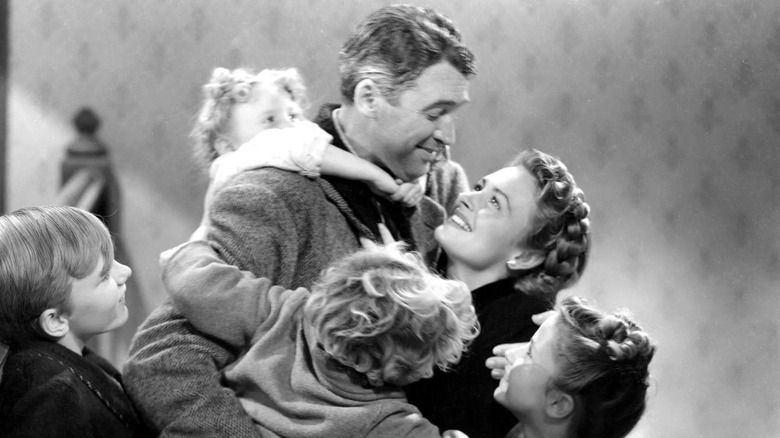
RKO Radio Pictures
There's a reason "It's a Wonderful Life" is one of the most culturally enduring films ever made. Frank Capra's 1946 film is foundational to the way wishes are portrayed in movies, establishing the central themes and ideas of the subgenre as it takes them to their emotional limit. This is, in large part, because its protagonist makes a wish no other character on this list would ever make. Jimmy Stewart's George Bailey is neither Bruce nor Bear. He doesn't wish for money, love, or power, or even a better future for himself — and yet, it's his belief that he lacks these things that causes him to wish he'd never existed at all.
It's a bleak desire that Capra manages to grant in the most life-affirming way possible. In what has been described as the first alternate reality movie, Bailey gets to haunt a world where he was never born, and the lives he unknowingly touched are robbed of his subtle yet meaningful impact. His wish doesn't backfire because he gets too much of something he wants, like Elliot in "Bedazzled" or Jenna in "13 Going on 30," but because Bailey finally realizes how much he matters to the world he was ready to abandon.
The biggest criticism someone could have of the wishing subgenre as a whole is that it relies too heavily on safe, predictable revelations. "It's a Wonderful Life" is riskier and even darker than many of the films it inspired. The pain of desire is captured here as deeply as it ever could be.
1. Aladdin (1992)
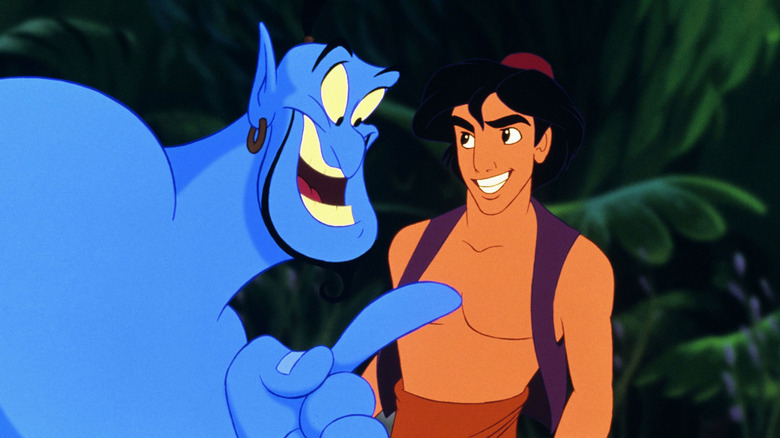
Walt Disney Feature Animation
Though our top two choices are in a league of their own, it was difficult for us not to select "Aladdin" as the best wishing movie ever made. When movie-lovers think of this subgenre, many of them instantly hear the brassy opening of "Friend Like Me," the showstopping march of "Prince Ali," or the romantic chorus of "A Whole New World." Alan Menken and Howard Ashman's score is core to the cultural staying power of "Aladdin," having brought the fantasy of a centuries-old folktale to life with vibrant, catchy tunes. Then, of course, there's Robin Williams' seminal voice role as the Genie, a magical entity that turns a diamond-in-the-rough street rat (Scott Weinger) into a prince worthy of a princess (Linda Larkin's Jasmine).
But when it comes to its impact on the tradition of the wishing trope, the impact "Aladdin" had is overshadowed by its sheer entertainment value. "Bruce Almighty" shows the limits and headache of total control; "Three Thousand Years of Longing" asks how we sit with desire we can't wish away; "It's a Wonderful Life" teaches us to value the lives we already have. "Aladdin" finds the usual beats of selflessness and satisfaction, then goes a step further by having its protagonist use his final wish to free the being who could secure his ideal life. He chooses a hundred lifetimes of freedom for the genie over a lifetime of dreams for himself, because no amount of exploitation can give someone what they seek from love. That's the lesson wishing movies exist to teach.






 English (US) ·
  Indonesian (ID) ·