
 5 months ago
CBS Studios
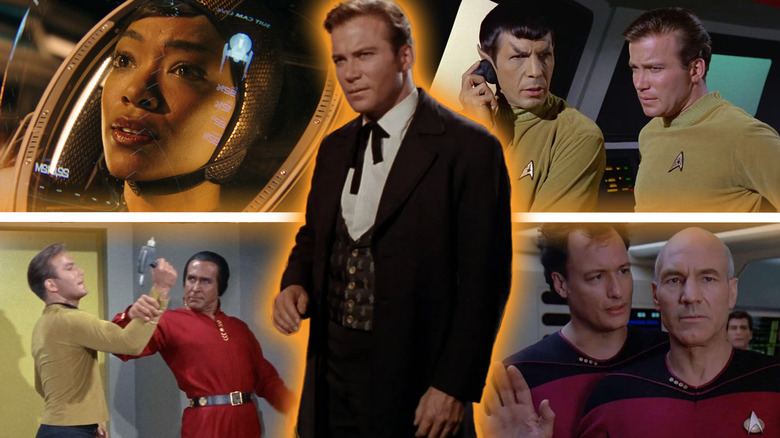
Ever since first making a splash in 1966, "Star Trek" has become the greatest sci-fi franchise of all time, with iconic characters and a growing number of multimedia projects. While the "Star Trek" movies hold their own special legacy, the franchise has really defined itself with its numerous television shows. For a sci-fi property that's produced over a dozen series, there are pivotal stories that have come to define the overarching narrative as fans know it. Whether it's in-universe factions and elements that have since become narrative constants or landmark moments in its production, several episodes carry noteworthy importance.
For sure, many of these defining episodes are from the earliest shows in the franchise, particularly "The Original Series." But beyond the property's inaugural show, subsequent television continuations have added to their own lasting contributions to "Star Trek."
These are the 15 "Star Trek" episodes that changed the franchise forever, each leaving their own important marks on the long-running sci-fi saga.
The Man Trap (The Original Series)
CBS Studios
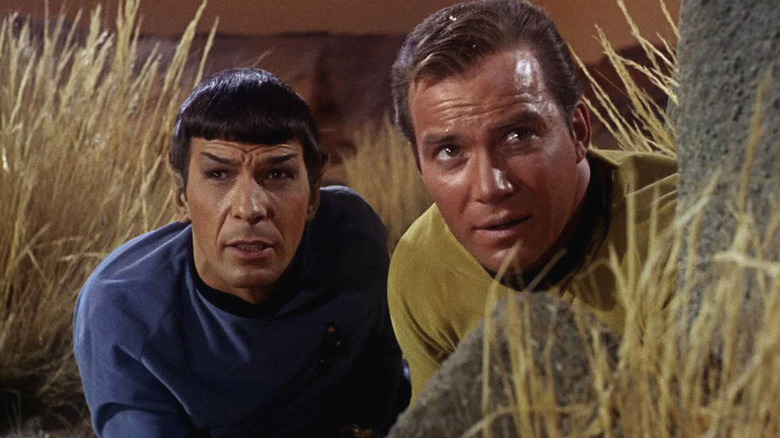
Though it wasn't the first episode produced, the very first "Star Trek" episode to air was "The Man Trap," which was broadcast on September 8, 1966. The episode has the Enterprise visit a research station on a remote planet, only for a shape-shifting creature to sneak aboard the ship hiding among the landing party. The creature drains its victims entirely of the salt in their blood, killing them and leaving telltale marks of its suction-cupped fingers on their faces. Captain James T. Kirk (William Shatner) and his crew search for the hidden salt vampire in their midst before it can claim any additional victims.
Admittedly, nobody but the network wanted "The Man Trap" as the "TOS" premiere, but it received that distinction and earned its place here. The episode was actually the sixth one produced for the series, for its more action-oriented plot and memorably vampiric monster. This episode was the first "Star Trek" story audiences saw on their television screens, even if it wasn't the best initial representation of the show overall. Making this list, mostly for that distinction alone, "The Man Trap" is how the public was introduced to the long-running franchise.
Where No Man Has Gone Before (The Original Series)
CBS Studios
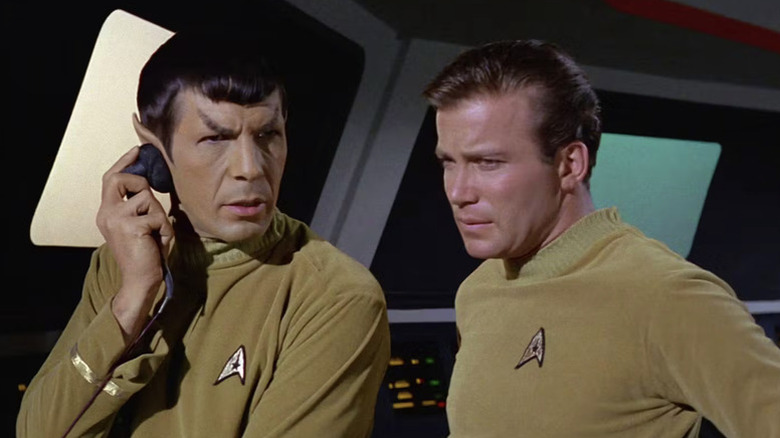
"The Cage," the first "Star Trek" pilot, deviated from the norm, though the network saw enough potential to order a second pilot. This second attempt, "Where No Man Has Gone Before,"not only resulted in the show being ordered to series but was the third episode to air. After the Enterprise is struck by a cosmic anomaly, resulting in crew members Gary Mitchell (Gary Lockwood) and Elizabeth Dehner (Sally Kellerman) gaining godlike powers. As Mitchell grows murderously unstable, Kirk realizes he will have to kill his friend before he grows dangerously out of control.
If "The Man Trap" makes this list for debuting "Star Trek," "Where No Man Has Gone Before" makes it for getting the show made in the first place. Revisiting the episode, it's clear that the series is still finding its tone and design, with the uniforms and personnel not quite matching the rest of "TOS." The episode even has a notorious continuity error over Kirk's middle name, as it still developed its own mythos and cast. But "Where No Man Has Gone Before" signals a more palpable balance between action and sci-fi concepts that the show built off of moving forward.
The Corbomite Maneuver (The Original Series)
CBS Studios
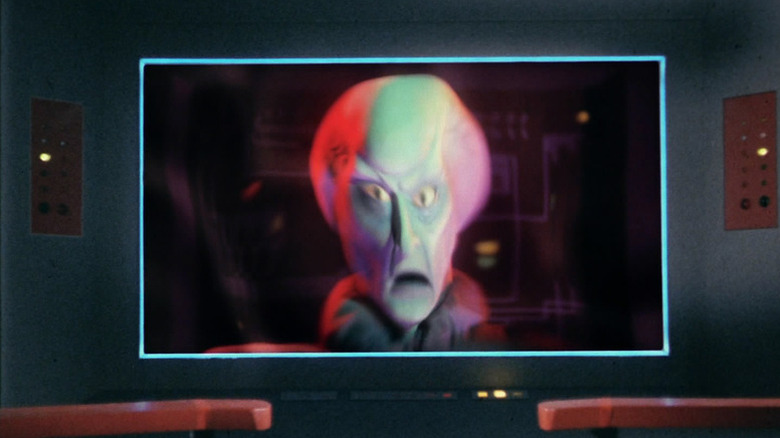
The very first episode of "Star Trek" produced after the show had been ordered to series was "The Corbomite Maneuver," though it aired 10th. The episode starts with the Enterprise forced to destroy an unmanned probe pursuing them, emitting dangerous levels of radiation. In response, a much larger ship arrives and threatens to destroy the Enterprise in retaliation for destroying its probe. Seemingly outmatched by the intimidating vessel, Kirk bluffs his way with the hostile force to convince them to spare his starship.
Beyond the behind-the-scenes significance of "The Corbomite Maneuver," the show does illustrate key themes in "Star Trek" as a whole. Kirk doesn't resolve the issue of facing an overwhelming enemy through force but by his wits and delicate negotiations. The episode is a better representation of what "Star Trek" could be than "The Man Trap" and one of the best James T. Kirk episodes ever. "The Corbomite Maneuver" was a lock on this list for being the first regular episode of the franchise ever filmed, but it also sets the "TOS" template.
Balance of Terror (The Original Series)
CBS Studios
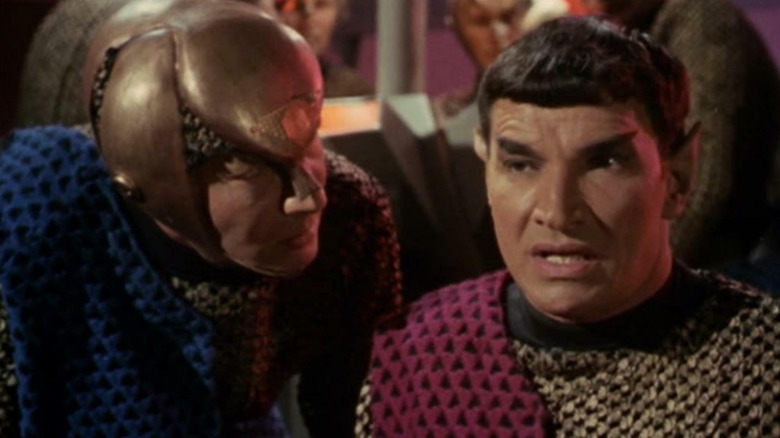
The first recurring antagonist in "Star Trek" wasn't the Klingons but the Romulans, who were introduced in the episode "Balance of Terror." While investigating attacks on outposts along the Federation-Romulan border, the Enterprise discovers the culprit is a lone Romulan Bird of Prey. The Enterprise moves to intercept the Romulans before it can escape back to the safety of its territory, which is complicated by the enemy's cloaking device. Tensions rise when the Romulans are revealed to be ancestrally linked to Vulcans, fueling bigoted suspicions about Spock (Leonard Nimoy).
More than just the obvious debut of the Romulans, "Balance of Terror" features several cornerstone concepts in the wider "Star Trek" franchise. The episode includes the first major instance of ship-to-ship battles in the series and the idea of cloaking devices. Beyond just being a staple antagonistic presence in television and film, the connection between Romulans and Vulcans is established right from their introduction. A major influence on the franchise 60 years later, "Balance of Terror" was referenced directly in "Strange New Worlds," solidifying its pervasive legacy.
The Return of the Archons (The Original Series)
CBS Studios
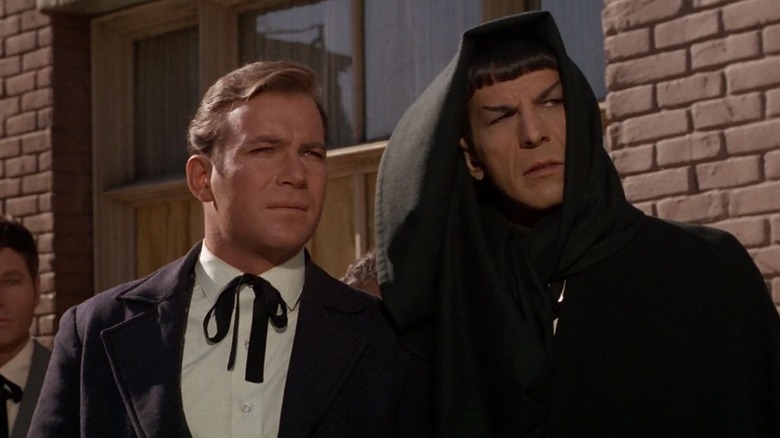
One of the guiding principles for Starfleet throughout the franchise is General Order One, or the Prime Directive, which is introduced in "The Return of the Archons." The Prime Directive is a Starfleet edict commanding its personnel not to interfere with the development of civilizations that have yet to develop warp speed space travel. This vitally important policy has Starfleet personnel disguise themselves as locals whenever they visit pre-warp societies, trying not to reveal the extent of their technological advancements. Ironically, "The Return of the Archons" has Kirk violate the Prime Directive to save the Enterprise, which becomes a recurring staple for him.
Whether or not Kirk adheres to the Prime Directive, Starfleet's policy of non-interference is a prominent one. Not only does this edict stand in shows after "TOS," but its creation is seen in the series premiere of "Strange New Worlds." This policy carried over into the movies and serves as a major plot point in 2013's "Star Trek Into Darkness." "The Return of the Archons" may seem like a solid, if unassuming, early episode of the series, but it does introduce the franchise's in-universe golden rule.
Space Seed (The Original Series)
CBS Studios
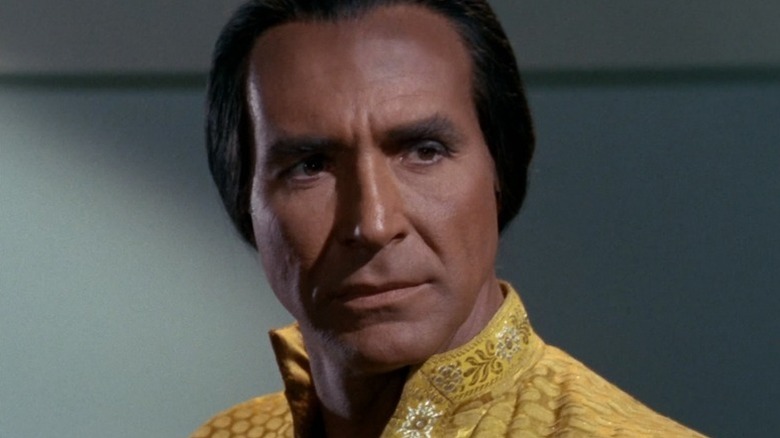
Of all the individual antagonists that "Star Trek" has seen over the years, the one that casts a particularly large shadow is Khan Noonien Singh. The villain made his debut in the "TOS" first season episode "Space Seed," masterfully played by Ricardo Montalbán. The episode has the Enterprise encounter an old space freighter filled with cryogenically preserved genetic superhumans, led by Khan. As Kirk and the crew learn the dark truth about Khan's past, he stages a takeover of the Enterprise.
Khan is easily one of the best "Star Trek" villains of all time, and "Space Seed" provides him with an introduction worthy of his reputation. Seeing Montalbán's swaggering superman square off with Kirk and the other senior officers gives them the rare articulate opponent challenging them on multiple fronts. The episode also ends with a dangling loose end that would be paid off in a big way in "Star Trek II: The Wrath of Khan." With the 1982 movie positively reversing the franchise's cinematic fortunes, "Space Seed" retroactively became an important story in its history.
Errand of Mercy (The Original Series)
CBS Studios
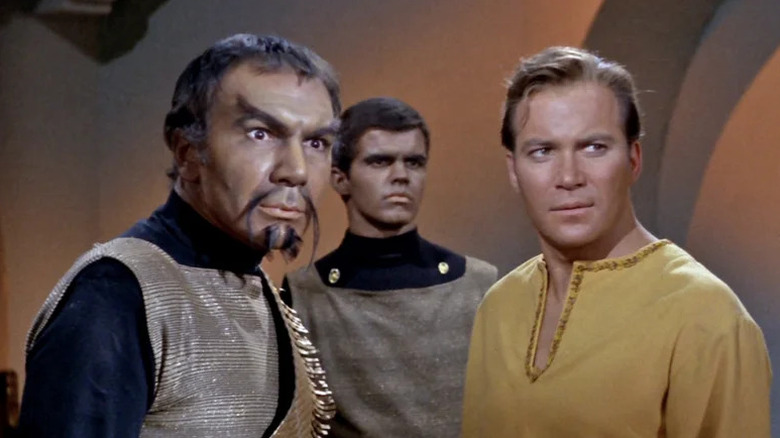
For as much as the Klingons loom over the entire "Star Trek" mythos, they weren't introduced until late into the first season. The episode "Errand of Mercy" opens with war breaking out between the Federation and the Klingon Empire once again. As the two armadas amass near the planet Organia, Kirk and Spock infiltrate the local population to subvert the Klingons' brutal occupation. However, as the duo's resistance efforts escalate, they discover that the Organians are much more than they appear.
The Klingons were the most prolific antagonists from the "TOS" era, including "The Animated Series" and several of the movies. This hostile relationship can all be traced back to their introduction in "Errand of Mercy" and John Colicos' masterful performance as Commander Kor. The episode also ends with the creation of the Organian Peace Treaty, the only thing preventing an all-out war between the Federation and Klingon Empire until "Deep Space Nine." "Errand of Mercy" brings in the last crucial adversarial pieces to the mythos from the "TOS" era, setting the stage for Klingons to play a bigger role moving forward.
The City on the Edge of Forever (The Original Series)
CBS Studios
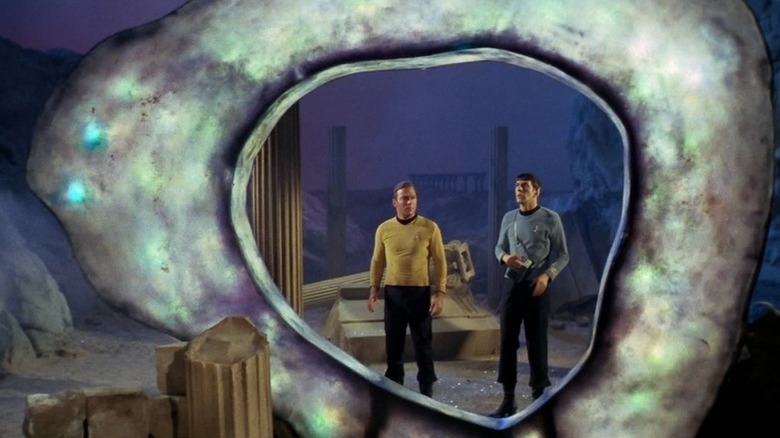
While "Star Trek" experimented with time travel since "The Naked Time" and "Tomorrow Is Yesterday," its most ambitious exploration of it is in "The City on the Edge of Forever." In an accidentally induced state of temporary delirium, Leonard McCoy (DeForest Kelley) travels back to the early 20th century and alters history. Kirk and Spock pursue him, discovering that the alteration centers around social activist Edith Keeler (Joan Collins) during the Great Depression. After learning that Keeler's grim fate must be preserved, Kirk finds himself falling in love with her, complicating the mission.
"The City on the Edge of Forever" is one of the best "Star Trek" time travel episodes, opening the franchise for even more stories featuring these sci-fi tropes. But beyond the series embracing time travel more readily, the episode also signals a growing maturity in dramatic storytelling rather than strictly campy fare. The cast, particularly Shatner, shines with the material and the story hints at the greater potential "Star Trek" is capable of. An enduring high point in the franchise's creative achievement, "The City on the Edge of Forever" remains the guiding star for "Star Trek" and its knack for humanist stories.
Journey to Babel (The Original Series)
CBS Studios
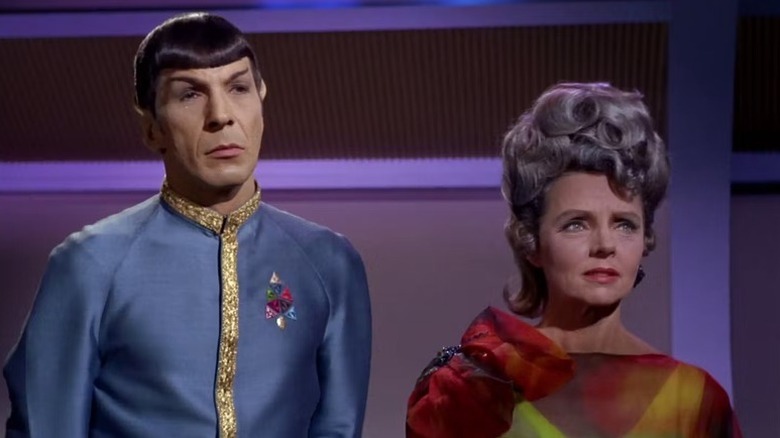
"Star Trek" had touched on the backstories of its various main characters in passing before but none to the same level as Spock. The second season of "The Original Series" went even deeper into the culture and personal life of the show's breakout character, especially in the episode "Journey to Babel." The Enterprise hosts a diplomatic delegation which includes Spock's father Sarek (Mark Lenard) and mother Amanda Grayson (Jane Wyatt). As the delegation endures a harrowing attack, Spock and Sarek must overcome their troubled relationship in the face of Sarek's failing health.
Spock's personal history and complicated domestic life became a major touchstone for the franchise, both in television and film. More than just exploring Spock's history, the episode opened the door for more character-driven, nuanced storytelling. "Journey to Babel" did this in a more substantial way that the previous episode "Amok Time" only touched on. It wouldn't be until subsequent series that characters' individual backgrounds were explored at the same level, but "Journey to Babel" helped pave the way.
Beyond the Farthest Star (The Animated Series)
CBS Studios
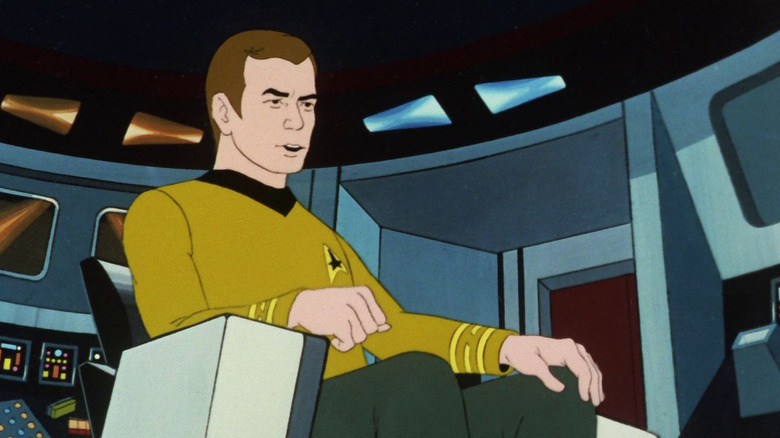
Years before the franchise was reinvigorated on the silver screen with 1979's "Star Trek: The Motion Picture," its first revival was with an animated television series. Retroactively titled "Star Trek: The Animated Series," the show ran for two seasons from 1973 to 1974, with most of the main cast reprising their roles. The series premiere, broadcast in September 1973, almost seven years to the day when the franchise launched, is the episode "Beyond the Farthest Star." The animated story has the Enterprise hijacked by a hostile alien entity trying to use the starship to escape from the gravity well of a dormant star.
Many of the stories in "Star Trek: The Animated Series," stood on par with its live-action predecessor, featuring high-concept sci-fi. "Beyond the Farthest Star" isn't the best story from "TAS," but it does exemplify that the show wasn't playing down to audiences. Animation became a huge part of the franchise in the streaming era, and shows like "Lower Decks" and "Prodigy" can trace their roots back to "Star Trek: The Animated Series." It's a spin-off still worth revisiting five decades later, and "Beyond the Farthest Star" demonstrates that enduring quality.
Encounter at Farpoint (The Next Generation)
CBS Studios
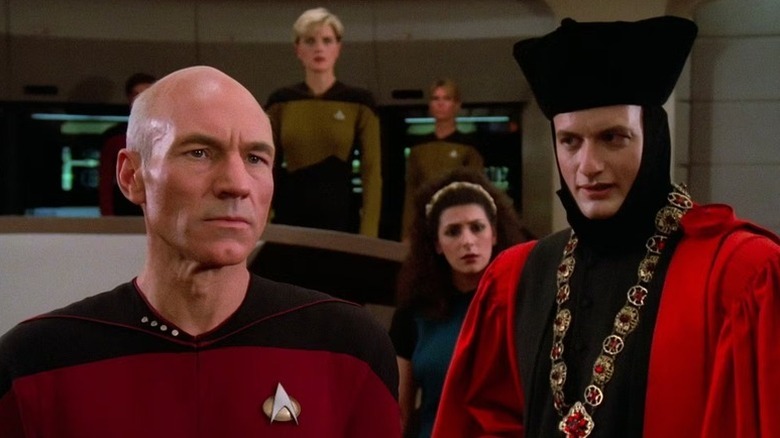
After years of failed attempted revivals, Gene Roddenberry agreed to create "Star Trek: The Next Generation" in a fit of rage, rather than letting someone else decide its television legacy. Launching in 1987, the "TNG" debut episode is "Encounter at Farpoint," a double-sized story introducing the crew of the Enterprise-D. Set approximately a century after the events of "TOS," this 24th century ensemble is led by Captain Jean-Luc Picard (Patrick Stewart). The new Enterprise's first mission has them contend with the omnipotent Q (John de Lancie) who decides the crew will represent humanity's fate as it judges its worthiness to exist.
"Encounter at Farpoint" premiered when the "TOS" era was still riding high off the box office success of "Star Trek IV: The Voyage Home" the preceding year. Though "TNG" was still visibly trying to distinguish itself from the Shatner and Nimoy-led era, it found enough of an audience to continue. The episode also introduces de Lancie's Q, who appeared at least once every season in "TNG" and remained a presence in subsequent "Star Trek" series. "TNG" eventually more than doubled "TOS" with a seven-season run and spawned its own movies and revival series, resurrecting the franchise's television viability.
Q Who (The Next Generation)
CBS Studios
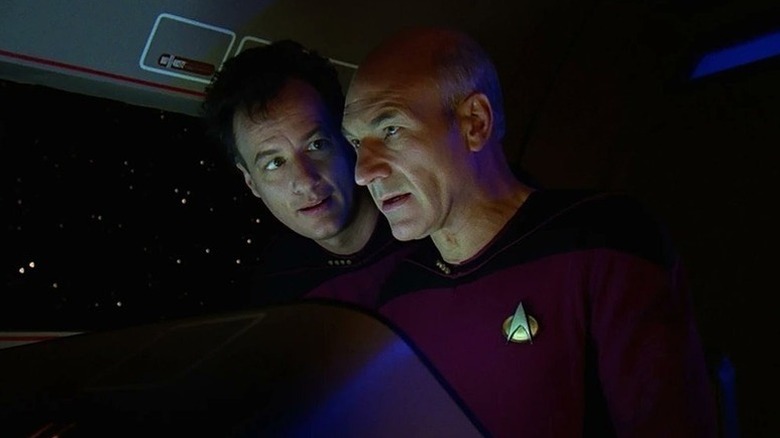
Q quickly became a mercurial presence in "The Next Generation," evolving from a sneering antagonist to a trickster and frenemy of sorts. The second season episode "Q Who" repositions Q as an ally, albeit under his own mysterious terms, as he preemptively introduces the Enterprise to a grave threat. This new enemy is the Borg Collective, a techno-organic force assimilating all life into its hive mind that it encounters. Overwhelmed by the Borg's advanced technology, Picard persuades Q to bring the Enterprise back to safety and help Starfleet prepare for the Borg's inevitable incursion.
After a failed attempt to create a new menacing presence with the Ferengi, "Q Who" brought in the definitive "Star Trek" enemy with the Borg. Mercilessly cold and clinical and utterly relentless, this was a foe that Picard and his crew couldn't overpower, outmaneuver, or outsmart on their own. For years, the Borg were the best "Star Trek" villains, not just in "TNG" but subsequent movies and shows. "Q Who" is an early standout from "TNG" and perfectly captures just how frightening the Borg Collective should be.
The Best of Both Worlds (The Next Generation)
CBS Studios
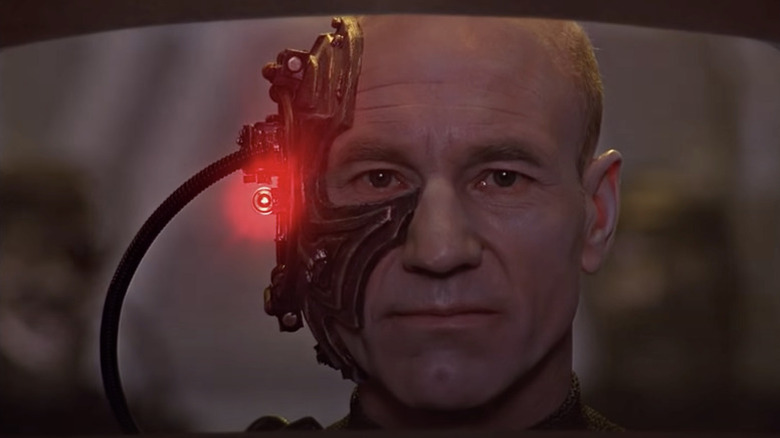
With the exception of Denise Crosby's Tasha Yar, "Star Trek" main characters generally felt safe for much of the franchise's television history. The "Next Generation" episode "The Best of Both Worlds" marked a turning point in that regard with the shocking lengths it inflicted on Picard. As an unstoppable Borg vessel makes headway into Federation space, the Enterprise moves to intercept it as the Starfleet armada assembles. However, the Borg capture and assimilate Picard into their hive-mind before setting a course straight for Earth.
"The Best of Both Worlds" is the level-up moment for "TNG" just as "The City on the Edge of Forever" had been for "TOS." The story marks more consequential episodes with visible lasting impact on the franchise moving forward, particularly on the development of Picard. The episode itself not only affected Picard for the remainder of "TNG" but also the movie "First Contact" and continuation series "Picard." An essential "Next Generation" everyone should watch at least once, "The Best of Both Worlds" signals a major shift for the franchise.
Call to Arms (Deep Space Nine)
CBS Studios
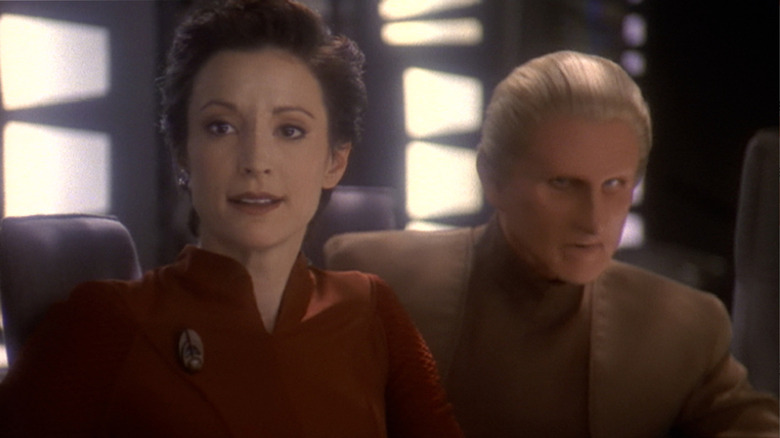
The 1993 series "Star Trek: Deep Space Nine" was primarily focused on tense interstellar politics rather than cosmic exploration. The crew of the Federation space station was at the center of the Cardassian Union joining the antagonistic Dominion for control of the galaxy. This culminates in an all-out war breaking out between the Dominion and the Federation and its allies in the fifth season finale "Call to Arms." With reinforcements unable to stop the Dominion from claiming DS9, Captain Benjamin Sisko (Avery Brooks) performs a rearguard action before evacuating.
"DS9" employed serialized storytelling before, in contrast to the franchise's usual episodic television, but it became more pronounced with "Call to Arms." The overarching Dominion War storyline caused tension behind-the-scenes, but ultimately came to define the series. Moreover, when "Star Trek" was revived for the streaming era, it doubled down on the serialized storytelling style. "Call of Arms" saw "DS9" shift to longer-form narratives and a growing darkness in tone that informed its Paramount+ revival.
The Vulcan Hello (Discovery)
Jan Thijs/Paramount+
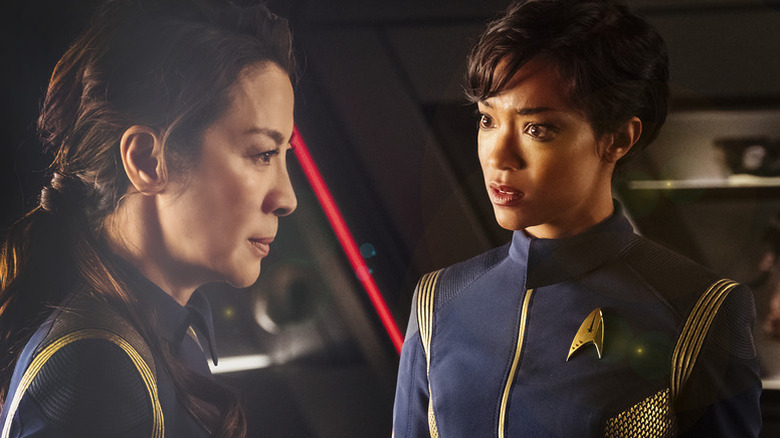
As the soft reboot in the "Star Trek" Kelvin timeline failed, the franchise turned its prospects back to television, more specifically for streaming platforms. The inaugural series for the streaming era was "Star Trek: Discovery," which helped launch CBS All Access before the platform was relaunched as Paramount+. The show kicked off with "The Vulcan Hello," centered on Michael Burnham (Sonequa Martin-Green), Spock's secret adopted sister. After making contact with the Klingon Empire, Burnham tries to seize control of her starship to make an aggressive first impression with them.
Though "The Vulcan Hello" certainly doesn't rank highly among "Star Trek" series premieres, it does herald a new era for the franchise. The episode embodies the cinematic-level presentation that many of the Paramount+ shows quickly embraced, along with more noticeably serialized storytelling. The series also signaled that there was plenty of life in the untold secrets in the franchise's history, something that "Strange New Worlds" has capitalized on. Officially bringing the franchise into the streaming era, "The Vulcan Hello" let audiences know this would be unlike any "Star Trek" story before it.
![This Resident Evil Scene Was 'the Most Complicated' Of The Vfx Supervisor's Career [exclusive]](https://www.slashfilm.com/img/gallery/this-resident-evil-scene-was-the-most-complicated-of-the-vfx-supervisors-career-exclusive/l-intro-1791476965.jpg "This Resident Evil Scene Was 'the Most Complicated' Of The Vfx Supervisor's Career [exclusive]")


 English (US) ·
  Indonesian (ID) ·