
 5 months ago
NBC
We may receive a commission on purchases made from links.
All the way up to the 1990s, many TV networks were averse to making long-form, serialized stories. Soap operas were, of course, the grand exception — some American soaps ran daily for decades – but most primetime shows were presented episodically, with each 30-minute or one-hour TV episode concluding its drama by the end of its time slot. It was a banner event if there was a two-part episode, or better yet, a season-ending cliffhanger to your favorite primetime shows. The episodic model was more syndication-friendly, ensuring that casual TV viewers could randomly catch reruns of certain shows without needing any broader context for the story. This was long before the days of TiVo and streaming and binge-watching, so the decision did make sense.
Of course, networks were able to work around the episodic model and tell longer, more in-depth stories in the form of the miniseries. A miniseries was perfect for epic TV events, as they were longer than one-evening TV movies, but didn't necessarily require whole seasons to play out. One could adapt a piece of classic literature into a four-hour event (with commercials), and leave it there, not having to worry about being renewed for a second season, but also drawing in crowds for, essentially, multiple nighttime events.
The 1990s saw a few miniseries trends continuing, notably with the influx of classic lit. Stephen King books slotted well into the miniseries format (the notoriously long 1994 miniseries of "The Stand" was very popular), and his works graced the small screen many times throughout the decade (albeit in network-safe form). Some filmmakers even got a little experimental with the medium. Below are five 1990s miniseries that you might have missed, serving as reminders of what 1990s TV really looked like.
Intruders (1992)

CBS
The 1992 miniseries "Intruders" was one of the many pieces of "true story" alien lore that came into the pop consciousness following the publication of Whitley Streiber's "Communion" in 1987. At the time, many people believed that alien spacecraft were coming to Earth and abducting humans for use in ineffable medical experiments. People believed the aliens had small grey bodies, large grey heads, and scary, giant black eyes. These alien "greys" became a larger part of the American pop zeitgeist after the release of "The X-Files" in 1993, but "Intruders" beat it to the airwaves by 16 months.
There are two protagonists of "Intruders." One is a Nebraska mom named Mary (Mare Winningham) who begins having random nosebleeds and eerie visions of large-eyed creatures that she cannot explain. The other is an L.A. woman named Lesley (Daphne Ashbrook) who has nightmares of faceless repairmen passing through the walls of her house like ghosts and carrying her out. There are several creepy details in both women's cases, including a small metal chip that seems to have been deliberately implanted in someone's nose.
Richard Crenna plays the psychiatrist who links the two cases. Naturally, he will find that they have both been abducted by alien spacecraft, and there's a government conspiracy to cover up the aliens.
"Intruders" felt important in 1992, like the lid was being blown off the real truth about the nature of the galaxy. It was also legitimately scary, with alien and abduction imagery peppered throughout. What are the aliens doing with human DNA, anyway? The miniseries was outstripped in popularity by "The X-Files," but it still possesses the power to scare. It's also a good peek into the mind of the American consciousness in 1992.
Queen (1993)
CBS
Alex Haley's 1976 book "Roots: The Saga of an American Family" was once required reading in schools across the country. Haley was born in New York in 1921, and "Roots" detailed his attempt to trace his family roots back to Africa. He found his roots, and wrote, in novel form, how Kunta Kinte, a teenager from the Gambia, was kidnapped by human traffickers in 1767 and brought to America. The book was adapted into a widely celebrated 1977 miniseries that starred a young LeVar Burton as Kunta Kinte. We called it one of the best miniseries of all time. The second half of Haley's book became the 1979 miniseries "Roots: The Next Generations," bringing Haley's family right up to 1967.
Fewer people might know about Haley's own sequel novel "Queen," which was published in 1993, a year after his death. "Roots" traced Haley's mother's family, while "Queen" was about the lineage of his paternal grandmother. Although rather long, "Queen" covered a shorter timeline than "Roots," getting to the title character's life much more quickly. Queen was the daughter of James Jackson III and one of his own enslaved people, a woman named Easter. "Queen" is very much about the sexual ownership of women, and how often enslavers assaulted their captors.
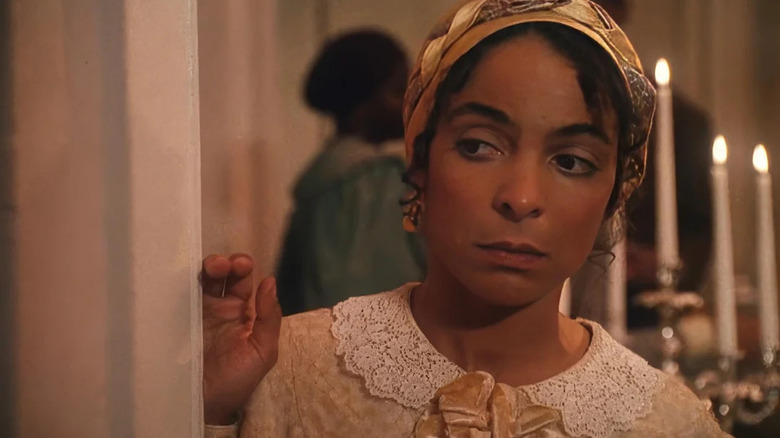
In 1993, CBS produced a three-episode, 282-minute miniseries of "Queen" starring Halle Berry as the title character and Jasmine Guy as Easter. Raven-Symoné played the young Queen, and the series also featured Ann-Margaret, Patricia Clarkson, Dennis Haysbert, Martin Sheen, Paul Winfield, and many other notable performers. Danny Glover played Haley, who had only recently passed.
"Roots" was a phenomenon and won nine Emmys. "Queen" was largely ignored, winning only one, for its hairstyling. While it may not be as "epic" as "Roots," "Queen" is still a vital part of an enormous story: the story of Black families in America.
Gulliver's Travels (1996)
NBC
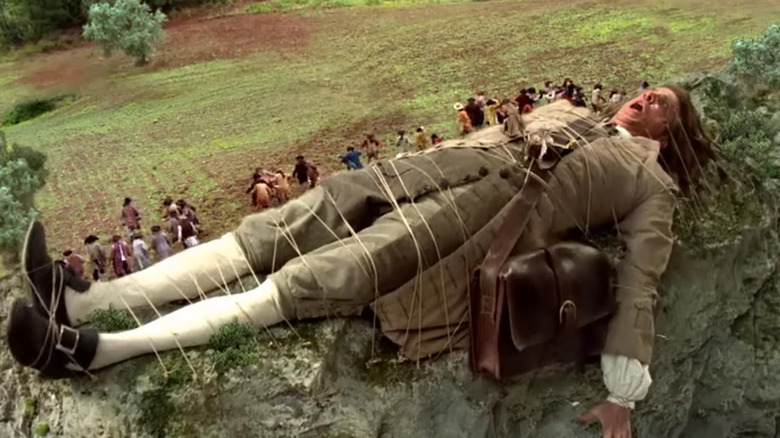
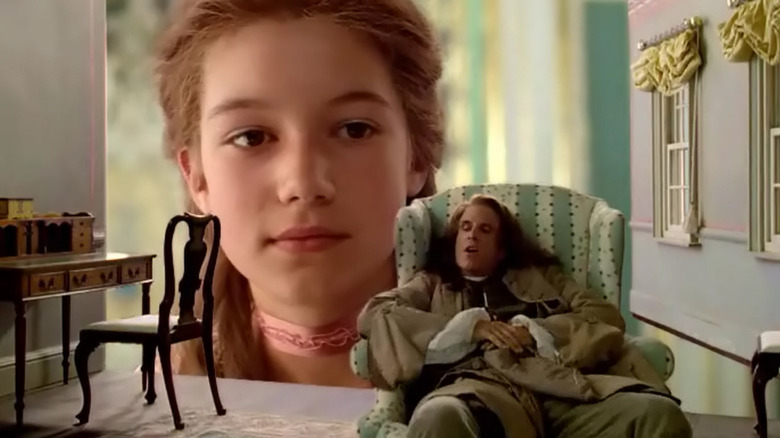
As mentioned, the miniseries was a great way for networks and the runners of TV shows to adapt classic literature or historical epics. The multi-episode format allowed for more time than a feature film, and the televised medium commanded much lower budgets. There is a clunky, whimsical charm to the very particular optical VFX that went into a lot of these historical epics of the 1990s, belying both their era and their earnestness. This was the decade that saw "Cleopatra," "20,000 Leagues Under the Sea," "Noah's Ark," "Moby-Dick," "Merlin," and even a pre-James Cameron "Titanic."
One of the best of the decade was "Gulliver's Travels," based on the notable 1726 satire by Jonathan Swift. Ted Danson played Lemuel Gulliver, and it bothered to adapt more of the adventures of the novel, not just the opening portion in Lilliput, on which other adaptations typically focus. This "Gulliver" bookends the action with Lemuel telling his story in flashback from the cells of an insane asylum. He recalls Lilliput, Brobdingnag, Laputa, Glubbdubdrib, the Struldbrugs, and, most impressively, the Houyhnhnm, a species of sentient horses.
"Gulliver's Travels" is, like the book, presented as a large fantasy adventure, but it retains some of the arch political satire of Swift's original work, especially in the portion with the peaceful Houyhnhnm. It also boasts a huge celebrity cast, including Danson's wife Mary Steenburgen, as well as John Gielgud, Alfre Woodard, Kristen Scott Thomas, Omar Sharif, and Peter O'Toole. The cast and the careful adaptation make "Gulliver's Travels" feel significant, like the filmmakers wanted to make sure they adapted the source material correctly. But it still had all that charming '90s VFX compositing that kids of a certain generation love.
Whatever you do, don't confuse it with the mediocre Jack Black movie that made Emily Blunt miss out on the Marvel Cinematic Universe.
The Odyssey (1997)
NBC
More raucous than "Gulliver's Travels" was Andrei Konchalovsky's two-part adaptation of Homer's "The Odyssey," which aired in 1997. "The Odyssey" played with the original a bit, reordering the story to be told chronologically. Homer's original epic caught up with Odysseus after he had been stranded on an island with the nymph Calypso for eight years, but the miniseries doesn't even get to Calypso until the second half.
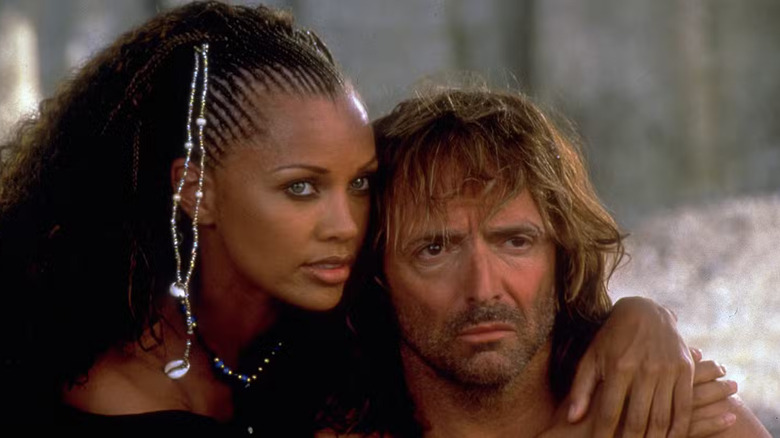
The cast is large and impressive. Armand Assante played a muscular, tough-guy version of Odysseus, while Vanessa Williams played Calypso. Penelope, Odysseus' wife, was played by Greta Scacchi. The blind prophet Tiresias was played by Christopher Lee, Athena by Isabella Rossellini, Circe by Bernadette Peters, and Eurymachus by Eric Roberts. The creatures in "The Odyssey," including the cyclops Polyphemus, were constructed by Jim Henson's Creature Shop. The Shop also designed the CGI version of the sea monster Scylla.
"The Odyssey" exists on a matrix in between an earnest, big-budget Hollywood epic and a playful, fun, 1960s Italian peplum film. It's not afraid to be fun and spectacular, but is also careful to get all the details of Homer's epic at least somewhat correctly. It's not the most intelligent version of "The Odyssey," as it is more concerned with action and spectacle than anything adult or mature. Odysseus' return to Penelope is, like in many adaptations of "The Odyssey," greatly shortened. If one wants a fun, kinda cheesy, Saturday matinee-style, utterly distracting primer for Homer's epic before the release of Christopher Nolan's more earnest feature film of "The Odyssey," due out this summer, one could do worse than Konchalovsky's version.
The Shining (1997)
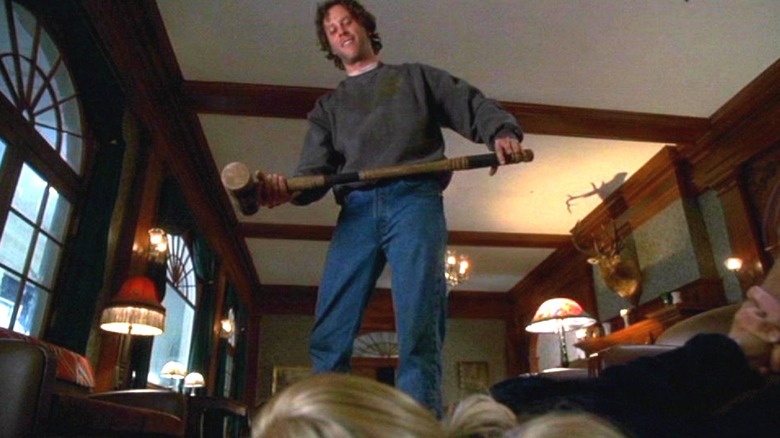
ABC
It's no secret that Stephen King dislikes Stanley Kubrick's 1980 film adaptation of his novel "The Shining." He has gone on record several times to say how he liked the movie, but felt it was a bad adaptation of his work. A lot of changes from the book to the film were practical; it would have been hard, in 1980, to visualize the living topiary animals from King's novel, so Kubrick transformed it into an outsize hedge maze instead. Some other changes seemed more arbitrary. Why was the central room in King's book changed from 217 to 237 for the movie? (There's an answer, but it may not have been to King's satisfaction.)
In 1997, he had a chance to repair the situation by writing his very own TV adaptation of "The Shining," directed by Mick Garris. The miniseries ran for three episodes on ABC, and starred Steven Weber as Jack Torrance. In King's vision of things, Jack Torrance was a sympathetic character, an alcoholic trying to make good, but who falls into madness. King felt that Jack Nicholson's performance in Kubrick's made Jack into an angry maniac from the start. In the miniseries, Jack's wife Wendy was played by Rebecca De Mornay, and their young son Danny was played by Courtland Mead from "Hellraiser: Bloodline." The psychic caretaker, Dick Halloran, was played by Melvin Van Peebles. Pat Hingle, Miguel Ferrer, and Elliott Gould also have small roles. King himself makes a cameo as a ghostly orchestra conductor.
Watching the TV version of "The Shining" back-to-back with Kubrick's version of "The Shining" makes for a fascinating experiment in writing philosophies. The former is clearly inferior, but it's closer to what Stephen King wanted. It's also a good portrait of fealty vs. creative license. All Stephen King fans should watch his 1997 version of "The Shining" to get a better look into the author's head.
![This Resident Evil Scene Was 'the Most Complicated' Of The Vfx Supervisor's Career [exclusive]](https://www.slashfilm.com/img/gallery/this-resident-evil-scene-was-the-most-complicated-of-the-vfx-supervisors-career-exclusive/l-intro-1791476965.jpg "This Resident Evil Scene Was 'the Most Complicated' Of The Vfx Supervisor's Career [exclusive]")




 English (US) ·
  Indonesian (ID) ·