
 7 hours ago
The Busan Film Commission has canceled a public screening of The Assassin(s) as a historical-distortion firestorm engulfs the film igniting a familiar clash between creative freedom and the memory of a real national tragedy.
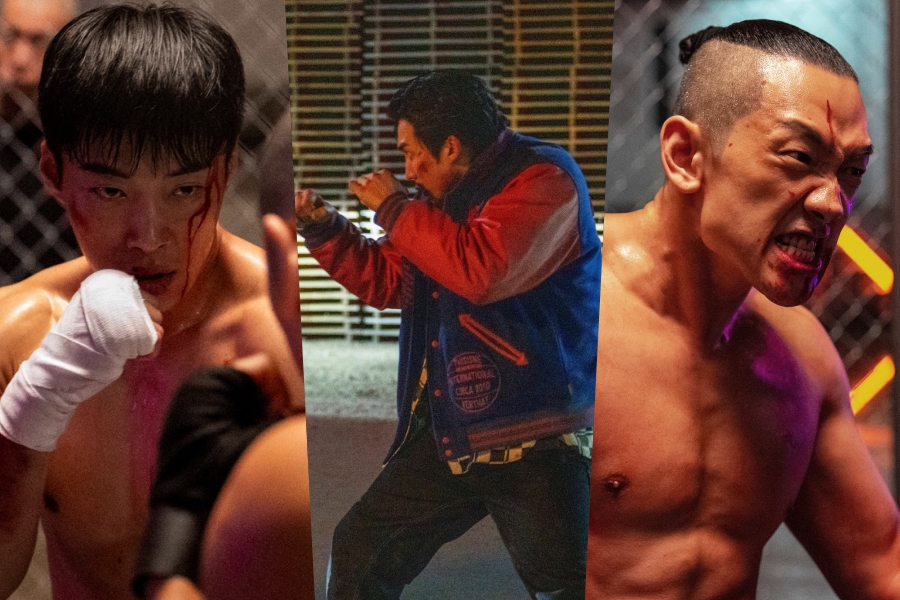
A free screening for 80 citizens doesn’t usually make national news. But almost nothing about The Assassin(s) (암살자(들)) has gone the way anyone planned. On October 1, the Busan Film Commission abruptly canceled a public preview of the film a screening it had organized itself, with 160 invitations ready to go out as the controversy around the movie reached a boiling point that a local arts body was no longer willing to stand in the middle of.
The decision is a striking one: a public institution withdrawing support not from a film it commissioned creatively, but from one it had merely helped bring to its own city. And it says a great deal about how combustible this particular story has become.
 The Assassin poster / Hive Media Instagram
What the Commission Actually Said
The Busan Film Commission was careful to frame its reversal as a response to circumstance, not a verdict on the film. “After comprehensively reviewing the recent situation surrounding the work and the diverse opinions of citizens, we decided to cancel the screening,” the commission said, apologizing “for any confusion caused to citizens.”
Crucially, it insisted the move carried no editorial judgment. The cancellation, it stressed, “does not signify any judgment on or support for a particular position.” In other words: this is us stepping back from a crossfire, not us picking a side.
The screening existed because of a pre-existing relationship. The Assassin(s) was produced with location support from the commission, with Busan standing in throughout the Busan Tourist Hotel, Hotel Nongshim, and the streets of Jungang-dong 4-ga all served as filming sites. Hosting a citizens’ preview of a locally supported release is routine. This time, routine collided with a national firestorm.
The Flashpoint: A Real Tragedy, Reimagined
To understand the backlash, you have to understand the history the film touches. The Assassin(s) draws on one of the most traumatic episodes in modern Korean memory: the shooting of First Lady Yuk Young-soo (육영수) on August 15, 1974. During a Liberation Day ceremony that was broadcast nationally, a gunman opened fire in an attempt on President Park Chung-hee; the president survived, but his wife was fatally wounded, and a high-school student, Jang Bong-hwa, was also killed. The assailant, Mun Se-gwang (문세광), was executed later that year.
That is the recorded history. The film, according to critics, ventures into speculation around it reportedly floating hypotheses such as the possibility of an accomplice or a “real” culprit beyond Mun, and the suggestion that intelligence authorities may have been involved for political ends. For a wound this raw in the national psyche, that kind of what-if storytelling was always going to be contentious.
 The Assassin poster / Hive Media Instagram
The Backlash — and the Studio’s Defense
The reaction has been fierce and multi-front. The Park Chung-hee memorial foundation and conservative political figures have accused the film of distorting history and demanded screenings be halted; some critics have gone as far as labeling it a “remake of a North Korean film” for allegedly implying the president himself staged the incident. The divide is visible even in the numbers moviegoer and online user ratings for the film have split dramatically, reportedly landing around 8.4 versus 2.4, a chasm that reflects less a disagreement about craft than a proxy war over politics and memory.
The production company, Hive Media Corp, has firmly rejected the distortion allegations. The film, it said, “was not made to confirm a particular conclusion or to deny established facts,” characterizing the work as a fictional reinterpretation grounded in the historical record rather than an attempt to present hypotheticals as truth.
That defense has not cooled the dispute. A former Seoul city council member, Lee Jong-bae, has filed a criminal complaint against four members of the production company and crew, alleging defamation through the dissemination of false information escalating a cultural argument into a legal one.
A Chilling Effect, in Real Time
Perhaps the most telling development is happening on YouTube. Content creators who posted reviews or explainers of The Assassin(s) have begun quietly pulling them down. The popular film reviewer Jimovie uploaded an introduction to the film, then removed it without explanation. Another creator, Kim Dangun, deleted his review and issued an apology: “I should have clearly distinguished between actual history and the dramatized portions, and I’m sorry for causing misunderstanding.”
This is the part of the story that should give pause regardless of where one lands on the film itself. When independent reviewers start self-deleting commentary about a movie amid legal threats and political pressure, the controversy stops being only about one film and starts touching the broader climate for discussing contested history at all.
The Bigger Picture
The Assassin(s) has become the latest flashpoint in a debate Korea has had many times before the tension between artistic freedom and the responsibility that comes with dramatizing real, painful events. It’s a debate with no tidy resolution, and the Busan cancellation won’t provide one. If anything, pulling the screening has only amplified the film’s visibility, a familiar irony in which attempts to contain a controversy tend to feed it.
What happens next will likely play out in two arenas at once: the box office, where the stark ratings split suggests audiences are watching as much to take a side as to be entertained, and the courts, where the defamation complaint could set the terms for how far Korean filmmakers can go in reimagining the nation’s history. For now, one thing is clear The Assassin(s) has already become a story much bigger than the film itself.




 English (US) ·
  Indonesian (ID) ·