
 3 months ago
Marvel Studios Animation
This article contains spoilers for "X-Men '97" Season 2, Episode 2, "A Force to Be Reckoned With."
At the end of "X-Men '97" Season 1, the X-Men were divided; five of them shot to the far future, five of them thrown to the distant past. But as far as those left in 1997 were concerned, the heroes died when Magneto's Asteroid M imploded. Each part of the three-episode Season 2 premiere is set in a different time period; Episode 2 returns to 1997, where things still aren't going great for mutants.
Valerie Cooper (Catherine Disher), the government agent who last season decided "Magneto was right," is now locking up mutant kids to supposedly keep them safe from bigots. In this task, she's recruited her own team of mutants, X-Factor. (The story of how is told in the "X-Men '97: Season Two" comic prequel.)
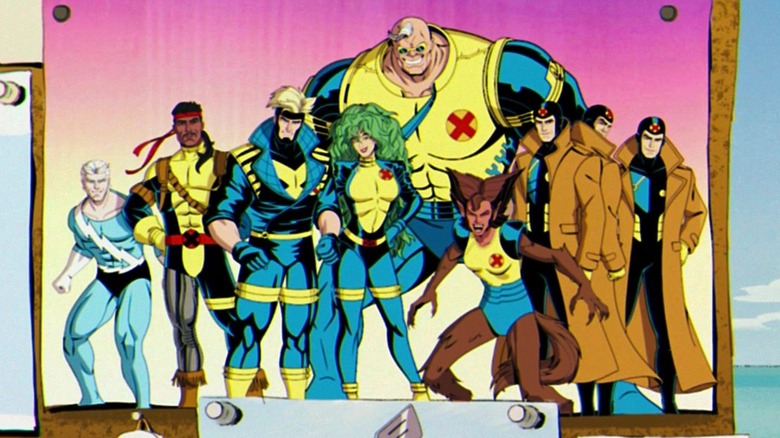
The X-Factor lineup, introduced this episode, is:
-
Havok/Alex Summers, the field leader who can project energy blasts and the long-lost brother of the X-Men's field leader, Cyclops/Scott Summers.
-
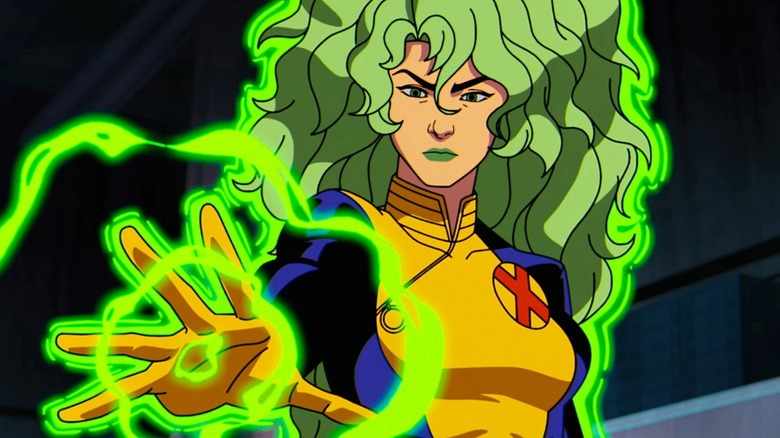
Polaris/Lorna Dane, a former X-Man, Havok's girlfriend, and the daughter of Magneto who shares his metalbending powers.
-
Strong Guy/Guido Carosella, who channels energy into muscle mass. (He's also the comic relief on the team, including his laconic and uncreative code name.)
-
Wolfsbane/Rahne Sinclair, a Scottish mutant who can shapeshift like a werewolf.
-
Jamie Madrox/Multiple Man, who can duplicate endless clones of himself.
In "A Force to Be Reckoned With," X-Factor butts heads with Cable's (Chris Potter) and Jubilee's (Holly Chou) new underground team X-Force. X-Factor has the law on their side, and Havok proudly boasts they are the good guys in their first scene. That said scene involves them chasing down some scared mutant kids to lock them up gives that claim a heavy flavor of self-delusion.
X-Factor appeared in the original X-Men: The Animated Series
Marvel Comics
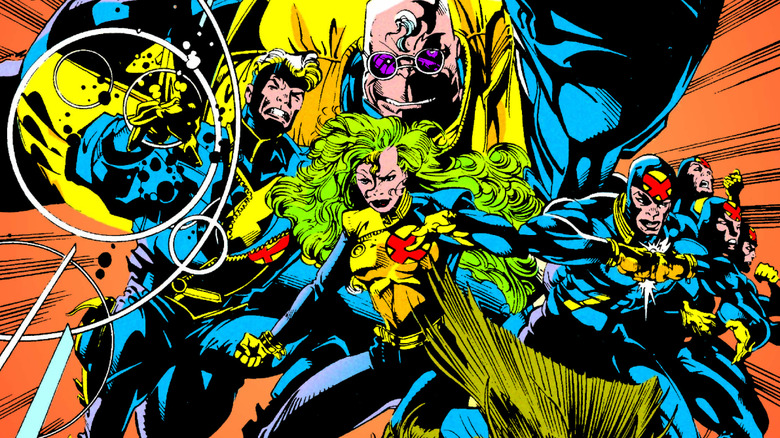
The "X-Factor" comic launched in 1986 to reunite the original five X-Men (Cyclops, Jean Grey, Iceman, Beast, and Angel). Since the X-Men were being led by Magneto, the team distanced themselves by posing as non-mutant superhumans who captured other mutants.
It's a weird premise, but the comic also provided important source material for the 1990s "X-Men" cartoon. Writer Louise Simonson took over "X-Factor" a few issues and introduced mutantkind's next big villain, i.e. Apocalypse, leading to a memorable arc where he brainwashes a clipped-wing Angel into being his Horseman Death. "X-Men: The Animated Series" adapted this in its first season, and Apocalypse — who's back worse than ever in "X-Men '97" Season 2 — became the series' preeminent villain.
After 1991's "Muir Island Saga" became the final arc of Chris Claremont's 16-year "X-Men" comic run, the X-Men were reorganized into new teams across different books. Writer Peter David took over "X-Factor," which now starred Havok, Polaris, etc. The second X-Factor line-up is the one that "X-Men: The Animated Series," and now "X-Men '97," uses.
The animated X-Factor debuted back in the episode "Cold Comfort," led by the mutant inventor Forge. "X-Men '97" gives Forge (Gil Birmingham) a bigger role and a romance with Storm (Alison Sealy-Smith). Season 1 referenced his time with X-Factor, but he's evidently left the team since. (So has Quicksilver, who was part of X-Factor in "X-Men: The Animated Series" but isn't in "X-Men '97." After he learned Magneto was his father, perhaps he found serving on a team with his half-sister too loaded.)
In "X-Men '97" Season 2, X-Factor largely takes after the Peter David iteration, including Valerie Cooper's role overseeing the team. X-Factor's purpose, though, is the one of the original '80s line-up: costumed mutants hunting other mutants.
X-Factor's (and Polaris') role going forward on X-Men '97
Marvel Studios Animation
"A Force to Be Reckoned With" uses X-Factor and its alliance with the government to explore what helping marginalized people actually means. The X-Men have often saved the world only for said world to go right back to hating and fearing mutants. This time, things have gotten worse because the X-Men have been gone for months, leaving mutants without a public advocate.
X-Factor has stepped in to fill that void; note they use the same X-branding and blue-and-yellow color schemes as the X-Men. But their idea of mutant advocacy is proving themselves heroes by locking up other mutants for their supposed own good. Keeping the peace, for X-Factor, has to be on humanity's terms at the cost of mutants' liberties. This goes further than even the most compromised version of Professor X's integrationist dream.
After X-Factor captures Jubilee, we get a peek at what they've built; rows of young mutants in cells, their spirits broken by collars cutting them off from their powers. An essential ingredient of "X-Men" stories is political commentary; looking to the real world, the imprisonment of mutants declares uncomfortable similarities to real immigrant detention centers and the inhumane conditions therein. It's also an image that Jubilee uses to remind Polaris (Carolina Ravassa) that being an X-Man doesn't mean unquestioned obedience to authority. Lorna sabotages Jubilee's cell, giving her just enough time to escape and free X-Factor's other prisoners.
Promotional footage shows Polaris, out of her X-Factor uniform, returning to the X-Mansion and safeguarding some of the mutant kids X-Factor had locked up. The groundwork for her leaving X-Factor has been laid, and she might go rogue in a way that would make her militant father proud.
"X-Men '97" is streaming on Disney+, with new episodes premiering Wednesdays.





 English (US) ·
  Indonesian (ID) ·