
 3 months ago
Universal
Ray Bradbury was turning into a literary force of nature in the early 1950s. Like many novelists, he then saw an opportunity to take his talents to Hollywood, where he could make good money writing screenplays. Though he'd written works like "The Martian Chronicles" and "Fahrenheit 451," the latter of which seemed a natural for a big screen adaptation, John Huston hired him to wrestle with Herman Melville's whaling epic "Moby-Dick." It went horribly.
Luckily, Bradbury struck up a much friendlier creative relationship with actor/director Charles Laughton and his wife Elsa Lanchester ("The Bride of Frankenstein"). Laughton persuaded the young writer to turn "Fahrenheit 451" into a stage play. This went horribly, too. In a 1996 interview with Playboy, Bradbury recalled, "In 1955, Charles Laughton got me thoroughly drunk before he told me how bad the stage play I'd adapted for him was and convinced me I should give it up." Bradbury remained friends with Laughton (whose one directorial effort is the masterpiece "The Night of the Hunter"), probably because he was being blunt instead of abusive, as was Huston's wont. But when Universal sought to make a film adaptation in 1966 with François Truffaut, the author said, "I'd had it" and asked the director to write it.
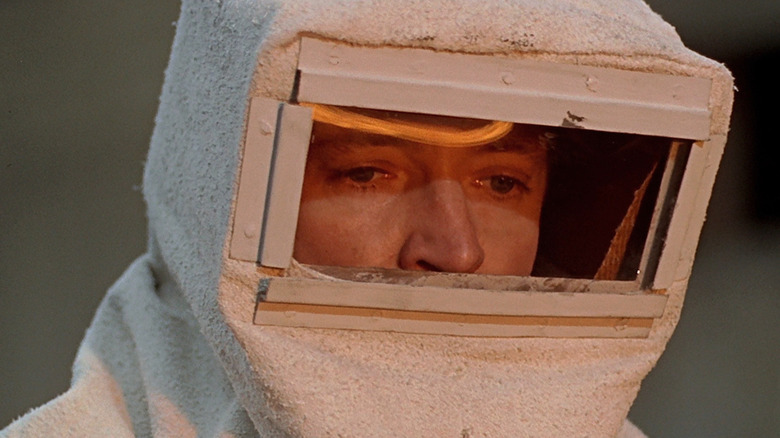
Truffaut made many changes to Bradbury's novel and left out one of the book's most fascinating and/or horrific elements. Some of this irked Bradbury, but, overall, he liked the film. Many critics of the era disagreed, but, over time, the movie has become recognized as underrated, if not a sci-fi classic. (It's certainly more celebrated than the 2018 "Fahrenheit 451" film adaptation starring Michael B. Jordan.)
Bradbury liked Truffaut's film, but he wasn't wild about Julie Christie's casting
Universal
In the Playboy interview, Ray Bradbury said François Truffaut's "Fahrenheit 451" was "very good" before launching into a list of grievances:
"[Truffaut] was a coward about doing certain things. He didn't put in the Mechanical Hound, which should be included, because it's a metaphoric adventure thing. The tactical stuff is really miserable. The flying men should be cut out. They're not flying anywhere except down. And the casting was a mistake. Not all of it. Oskar Werner [as protagonist Guy Montag] I like very much."
I don't know how the film could've convincingly pulled off the "Mechanical Hound" in 1966. It's a robotic, eight-legged dog outfitted with a steel needle loaded with morphine and procaine that protrudes from its snout. It stalks people who harbor books, which are illegal and burned by firemen in Bradbury's novel. My guess is that Truffaut couldn't create a moveable hound that would've looked realistic, so he cut it.
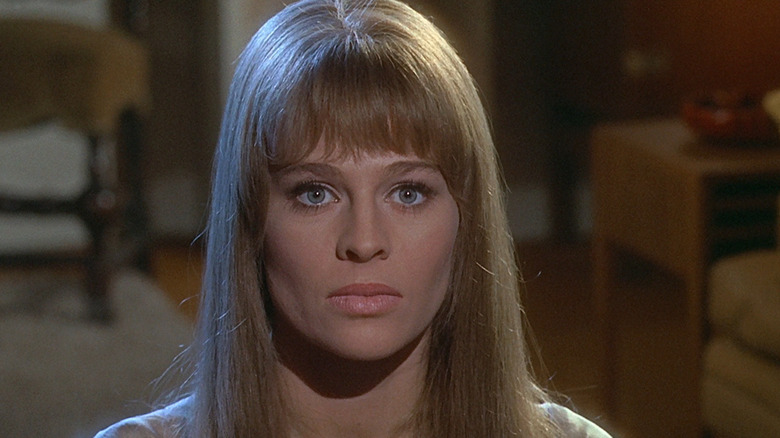
The major casting mistake, in Bradbury's view, was Julie Christie playing both Montag's wife and the book-loving Clarisse. "[Clarisse] was supposed to be 16. So, Truffaut did the trick. He had Julie Christie play the wife and the girl next door, which was confusing. Sometimes you weren't quite sure who was talking." A Time critic concurred at the time of the film's release, writing that it "strongly supports the widely held suspicion that Julie Christie cannot actually act" — an absurd statement given that she'd just won a Best Actress Oscar for "Darling."
I think Truffaut's film is masterful, particularly for a brilliant element that the filmmaker added to the original story's conclusion (which I won't divulge here). He did justice to Bradbury's esteemed novel.


 English (US) ·
  Indonesian (ID) ·