
 4 months ago
CBS
We may receive a commission on purchases made from links.
"The Twilight Zone" is known for establishing tropes that became well-worn in the decades after, in part due to the sheer amount of shows just like "The Twilight Zone" that proliferated in its wake. But as with any media of the era, Rod Serling's sci-fi anthology wasn't immune to using established tropes and clichés, as evidenced by the 1961 episode "The Jungle." Based on that name alone, you can probably see where this is going. With its bolstering of negative stereotypes about Africa, "The Jungle" was an unfortunate moment in what was otherwise arguably the best anthology TV series of all time. But it also happened to feature a plot twist that undermined the episode's impact; a rare thing for a show that mostly displayed an absolute mastery of the art of the twist.
"The Jungle" was written by Charles Beaumont, the influential author who's otherwise known for penning some of the series' most celebrated episodes as well as several short stories, novels, films, and comics. But even Beaumont made some missteps, like when he used the already tired "it was all a dream" twist in another of his episodes, "Perchance to Dream." Even that installment, however, wasn't quite as groan-worthy as "The Jungle" and its African curse trope.
This particular twist involves revealing that the episode's main character was actually dealing with a real curse the entire time, and not just spiraling due to superstition-induced mania. While it could be seen as a subtle inversion of the "it was all a dream" mechanism by revealing that the curse was, in fact, the complete opposite of a dream, the whole thing just sort of falls flat.
The Jungle is about a literal African curse
CBS
"The Twilight Zone" was generally known for its great twists. With "Time Enough at Last," the show even gave us one of the most shocking twists in sci-fi history when Burgess Meredith's Henry was denied the ability to read in a post-apocalyptic version of Earth where the only preserved items were books. But with "The Jungle," the series fell far short of that mark.
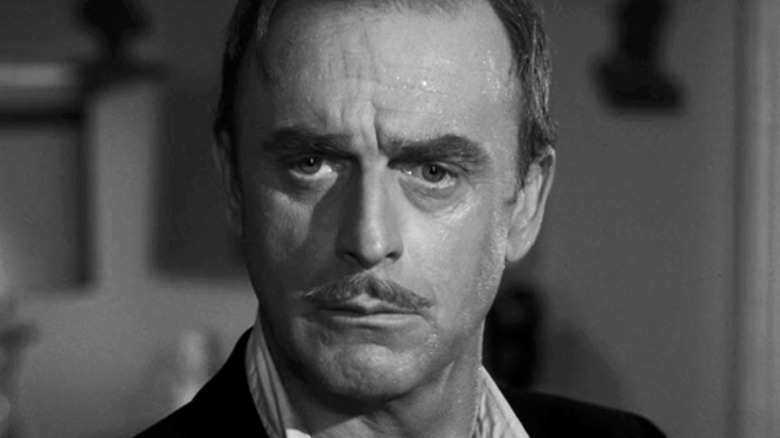
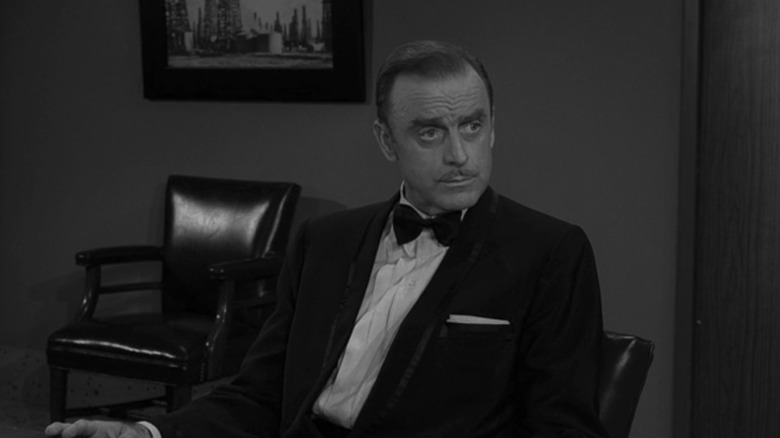
The episode follows John Dehner's Alan Richards, a businessman and land developer who returns from a trip to Africa with his wife, Doris (Emily McLaughlin). While abroad, Richards was building a dam, which prompted a backlash among local tribes. In an effort to protect herself and her husband from African witch doctors and their curses, Doris brings home several charms from a local shaman. After Richards scoffs at the idea and burns one of the charms, he encounters the body of a dead goat outside his apartment.
Already, then, the episode indulges in some dodgy stereotypes, which were unfortunately quite widespread at the time "The Jungle" was made. Sadly, Charles Beaumont wasn't able to overcome those stereotypes through his narrative, as "The Jungle" ultimately delivers an underwhelming twist.
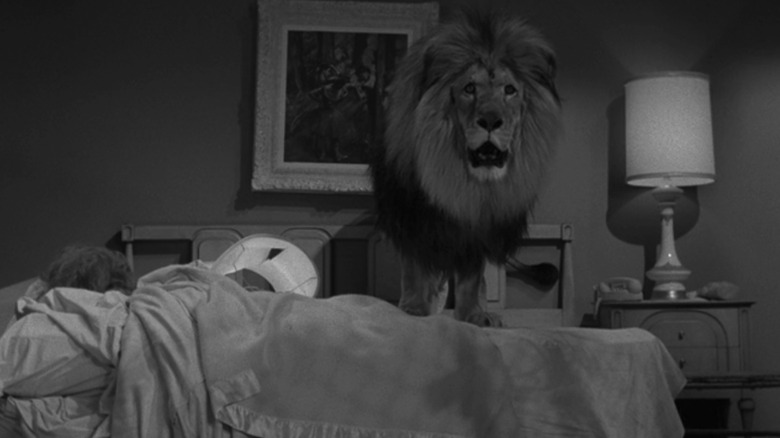
As Richards continues to dismiss the idea of being cursed, he is increasingly menaced by elements of the African jungle, hearing jungle sounds as he walks through his city, before witnessing the death of his cab driver from a heart attack while riding in his taxi. When he finally returns home, he discovers his wife has been killed by a lion, before the beast leaps at Richards and presumably kills him off-screen. Rather than being an exploration of the psychological workings of superstition, then, "The Jungle" is literally about an African curse.
The Jungle had some redeeming qualities but was a low point for The Twilight Zone
CBS
"The Jungle" was based on a short story of the same name that Charles Beaumont wrote in 1954 for "If" magazine. That tale was collected along with several other stories in the 1958 book "Yonder" before Beaumont adapted it for "The Twilight Zone." The third season of the show comprised a dizzying 37 episodes, so it makes sense that Beaumont went back to a previous story to help flesh out his contribution to the season. Of course, this also means the story of "The Jungle" emerged from an earlier point in cultural history, when the stereotypes and clichés were arguably even more pernicious than they were in the early 60s. In that sense, the episode didn't really get off to the best start.
Still, even the worst episodes of "The Twilight Zone" have plenty of redeeming qualities, and that's no different with "The Jungle." There's some intriguing imagery, especially in how the episode brings elements of the jungle to the big city, but it's all somewhat undermined by the revelation that the curse is real rather than the result of Alan Richards' own delusions. Even leaving things ambiguous would have been a lot better.
What's more, there's absolutely no attempt to differentiate between different areas of Africa — it was just enough to name the continent and assume that this provided enough basis for witch doctors and curses. Not to get all Disney-cultural-sensitivity-disclaimer on ya, but it's not exactly the most heartening thing to watch in retrospect. You're better off giving one of the more underrated "Twilight Zone" episodes a go.




 English (US) ·
  Indonesian (ID) ·