
 4 months ago
Paramount
We may receive a commission on purchases made from links.
When you think of classic Westerns, you might think of John Ford's "Stagecoach" or even Raoul Walsh's cutting-edge John Wayne-led "The Big Trail." But the genre had a long history even prior to those 1930s triumphs. During the silent era, one film was particularly influential, yet it doesn't always get the recognition it deserves. Indeed, James Cruze 1923 silent epic "The Covered Wagon" was a truly important entry in the Western oeuvre, but it's rarely acknowledged in popular discourse despite the fact it has a strong claim to being one of the greatest Westerns of all time.
Not only is "The Covered Wagon" frequently cited as the very first Western epic, it was also a bonafide hit in its day. Paramount made the film for almost $800,000, which, as "The Hollywood Story" author Joel W. Finler has noted, made it "the most lavish Western epic ever filmed up to that date." It paid off: "The Covered Wagon" made $3.5 million at the box office and became the second-highest grossing film of the year, just behind Cecil B. DeMille's "The Ten Commandments," which had cost Paramount $1.5 million to bring to fruition.
The film's success and epic scale spawned a slew of similarly epic Westerns, including 1924's "North of '36" and 1925's "The Pony Express." But it influenced the evolution of the Western more generally, and it remains one of the great films of the 1920s.
The Covered Wagon was an innovative epic and a boon to the flailing Western
Paramount
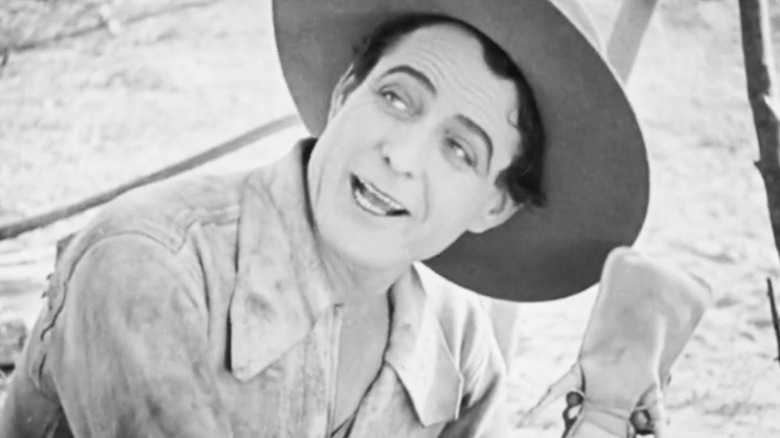
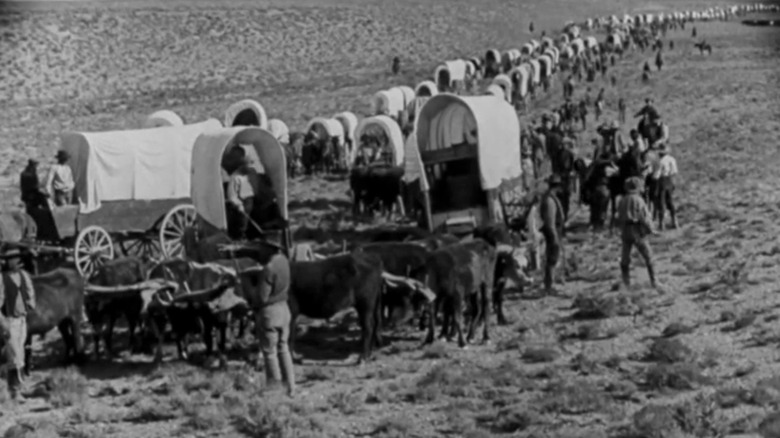
Directed by James Cruze and based on Emerson Hough's 1922 novel of the same name, "The Covered Wagon" follows a group of pioneers who set off from Kansas on an epic voyage to Oregon. Along the way, they encounter all manner of setbacks, from overwhelming heat to bitter cold, as well as an attack by Indigenous Americans and a prairie fire. The crew, led by Charles Ogle's Jesse Wingate and aided by his scouts Will Banion (J. Warren Kerrigan) and Sam Woodhull (Alan Hale), also engage in buffalo hunts and the ford of a flooded river — all of which is depicted at a then-unprecedented scale.
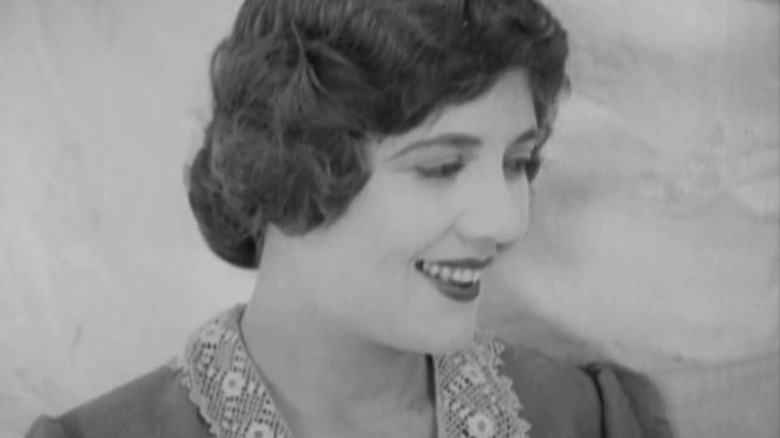
At the center of the story is a triangle between Banlon, Lois Wilson's heroine Molly Wingate, and Woodhull, who actually turns out to be the villain. Interestingly enough, Woodhull actor Alan Hale was the father of The Skipper himself, "Gilligan's Island" actor Alan Hale Jr., who starred in his fair share of significant Westerns, including one of Clint Eastwood's most important films. Alongside the main cast were character actors Ernest Torrence and Tully Marshall, who arguably steal the show as boozy frontier scouts.
In "Classics of The Silent Screen; A Pictorial Treasury" author Joe Franklin described the film as "one of the major milestones in the history of the 'Western' movie." He went on to dub "The Covered Wagon" "the first real epic Western" and "the first American epic not directed by [D. W.] Griffith," noting how it fortified the popularity of the genre at a time when it was struggling to maintain its dominance. Quite so, only 50 Westerns were produced in 1923, compared to 125 a year later — a jump Franklin attributed to the success of "The Covered Wagon."
The Covered Wagon's influence can't be understated
Paramount
Though the historical accuracy of "The Covered Wagon" is absolutely questionable, the film was shot in a quasi-documentary style. Combine that with the fact many of the Conestoga wagons used in the film were real relics of the Old West, this made the movie feel like a truly immersive and believable trek across the frontier.
Karl Brown, who had previously worked with D. W. Griffith, lensed the stunning vistas on display in the movie, as well as the (admittedly tame by later standards) action scenes and important sequences. It was these scenes in particular that demonstrated what a Western could be moving forward, as well as how the genre's evolution might look.
That evolution would be overseen by the likes of John Ford, who pushed the action sequences hinted at in "The Covered Wagon" even further with films like 1924's "The Iron Horse" and, ultimately, 1939's "Stagecoach," which featured a much more intense and drawn-out attack on the heroes' titular wagon (so much so that the stunts sparked a battle with the studios backing the John Wayne vehicle). Still, without "The Covered Wagon," much of that might not have happened.
Those interested in seeing this oft-forgotten yet important Western can find it streaming for free on Tubi. It was also released on Blu-ray in 2018 by Kino Classics.


 English (US) ·
  Indonesian (ID) ·