
 1 month ago
CTV
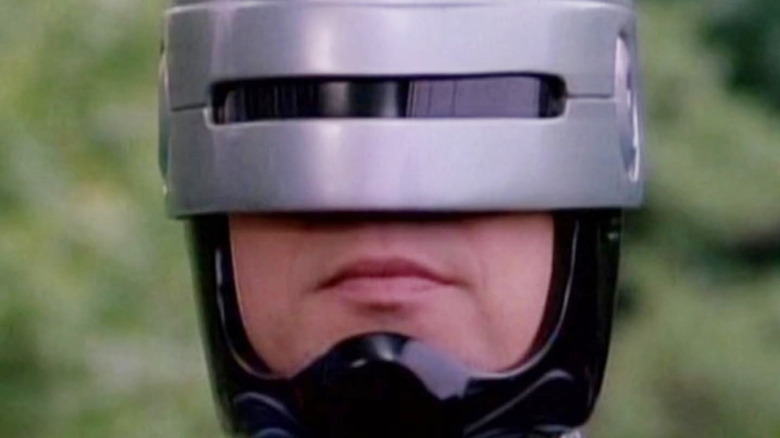
Prime Video is currently in the process of adapting Paul Verhoeven's classic 1987 sci-fi film "RoboCop" to the small screen, with Dan Stevens starring as Alex Murphy (aka. RoboCop). The irony of Amazon, itself the real-world equivalent of the soulless Omni Consumer Products mega-corporation featured in Verhoeven's movie, being involved in such a project isn't lost on anyone. That said, Stevens is one of the more fascinating, and weirder, actors working today, so there may be hope for the show yet.
However, this new "RoboCop" series will only be the latest in a long string of "RoboCop" films and TV shows. To date, there have been four "RoboCop" movies (including the 2014 remake), two animated "RoboCop" shows (titled "RoboCop" and "RoboCop: Alpha Commando"), and a pair of live-action series (titled "RoboCop: The Series" and "RoboCop: Prime Directives"). That's a whole lot of coppage.
1994's "RoboCop: The Series" is probably the highest-profile "RoboCop" show produced up to this point. For the '90s, it had fairly impressive production design, and it definitely had better writing than other "RoboCop" series before and after it. It may have only aired for a single 20-plus episode season, but it was a slick and clever continuation of Verhoeven's movie only. (Yes, it ignored the events of "RoboCop 2" and "RoboCop 3.")
The series explores the Alex Murphy/RoboCop character (as portrayed here by Richard Eden) a little more deeply, allowing him to interact with his human side's family and giving him a new holographic sidekick in the form of Diana Powers (Andrea Roth), a scientist whose consciousness is shunted into a computer system early in the series. Yvette Nipar also co-stars as RoboCop's human partner Detective Lisa Madigan, an extrapolation of the Nancy Allen character from Verhoeven's movie.
RoboCop: The Series explores RoboCop's dwindling humanity
CTV
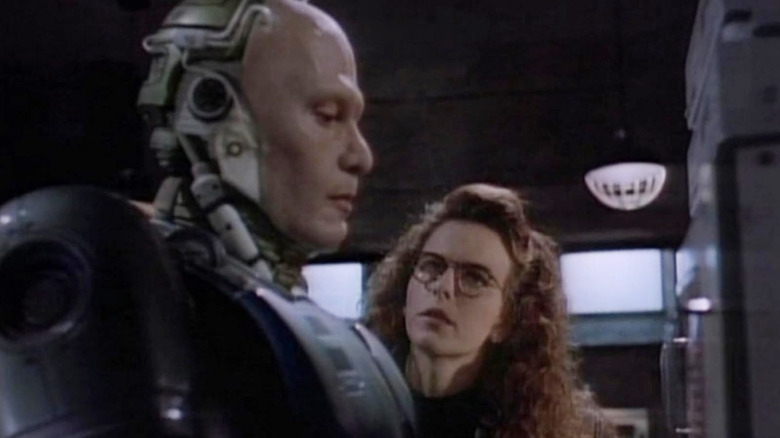
To get everyone on the same page: RoboCop started out as Alex Murphy, a beat-walking Detroit cop operating during a dystopian period when the police had been privatized. The cops are now owned by the amoral OCP and are more interested in image, profit, and weaponry than law enforcement. When Murphy is brutally, brutally murdered by criminals, OCP takes possession of his corpse, shoves it into a mechanical robot body, and uses his last remaining brain functions to create RoboCop, an OCP mascot and super-deadly police force.
In Paul Verhoeven's "RoboCop" movie, RoboCop comes to realize that he was once a human and has vague memories culled from Murphy's brain. (Murphy is simultaneously dead and not-dead.) "RoboCop: The Series," on the other hand, pulls more humanity out of RoboCop's human brain by pairing him with Murphy's old family members. Murphy's father, Russell Murphy (Martin Milner), appears on the show, as does Murphy's widow, Nancy (Jennifer Griffin). They only learn that RoboCop contains Murphy's corpse later in the show.
RoboCop himself comes to realize that he was, in another life, married to Nancy, but he chooses to not reveal his identity to her. In a rare flush of human conscience, RoboCop acknowledges that Nancy needs a husband, just like her and Murphy's son Jimmy (Peter Costigan) needs a father, but that he's just a robot with a gun. The series leans into the more emotional side of Murphy's tragedy in that way, making the character a touch more melancholic. Hence, over the course of the show, more and more of Murphy's humanity begins to reassert itself. RoboCop is not Murphy, exactly, but he's more than the robot killer he was built to be.
RoboCop's holographic counterpart Diana underlines RoboCop: The Series
CTV
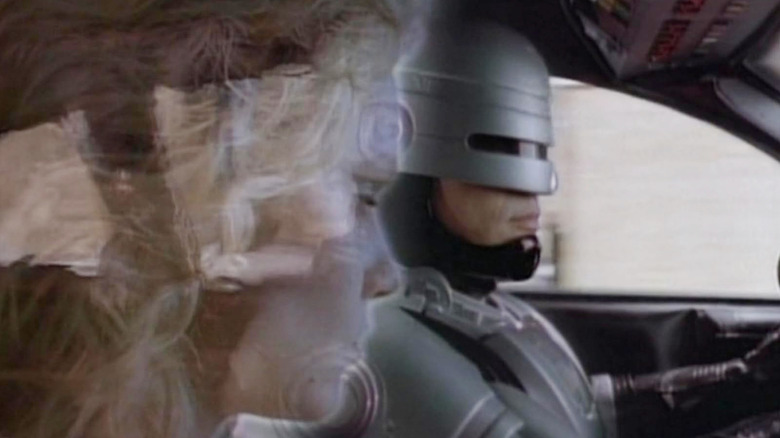
Diana Powers is the most interesting twist to the story in "RoboCop: The Series." In the pilot episode, Diana's boss, the wicked Chip Chaykin (John Rubinstein), along with the twisted scientist Cray Z. Mallardo (Cliff De Young), removes Diana's brain and inserts it into NeuroBrain, a network that keeps all of Detroit's infrastructure humming along. Chaykin and Mallardo's original intent was to erase Diana's consciousness, but RoboCop stops them before they can, allowing Diana to live on, essentially, in the cloud. Diana thereafter appears as a hologram, often only seen by RoboCop.
Diana and RoboCop are great counterpoints, with both having had their bodies co-opted by corporate malfeasance and been forced into privatized public works. RoboCop, however, is all brawn and might, an indestructible metal man with a giant gun. Diana, by comparison, is all disembodied consciousness and has no body. She, in turn, serves as RoboCop's conscience, confidant, and perhaps the only person who can really understand him.
The "RoboCop" movies have never delved so deeply into RoboCop emotionally, as they've mostly been ultra-violent satires. In that respect, "RoboCop: The Series" unfolds more like a conventional sci-fi TV drama, and it, surprisingly, pulls off the tonal shift with aplomb. The show can still be silly, sure, but it's also thoughtful in unexpected ways.
Obviously, the strictures of 1990s television dictated that "RoboCop: The Series" had to be less violent than Paul Verhoeven's borderline X-rated "RoboCop" film, so RoboCop doesn't always murder suspects. Moreover, this allowed for a recurring rogues gallery of fun villains. For instance, I was fond of James Kidnie as William Ray "Pudface" Morgan, a criminal who blamed RoboCop for the physical damage that he'd unwittingly caused himself.
You can watch "RoboCop: The Series" on Prime Video.




 English (US) ·
  Indonesian (ID) ·