
 2 months ago
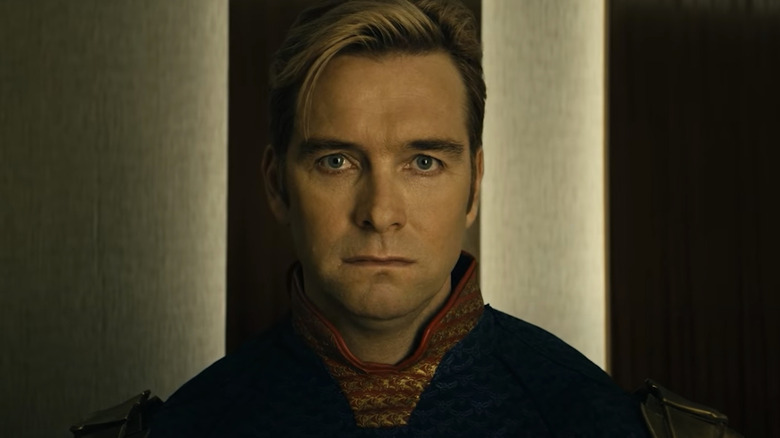
Prime Video
After "Avengers: Endgame," it felt like the superhero genre had reached its peak and was on its way out. Then along came "The Boys," which helped reinvigorate the genre, picking up the mantle of the Marvel Cinematic Universe during the COVID-19 pandemic and becoming the most refreshing and important superhero story as DC and Marvel slowly collapsed around it.
Based on Garth Ennis' comic book series of the same name, Eric Kripke's "The Boys" took a vastly different approach to the genre than we'd seen at the time. Gnarly, gory, and gross, the Prime Video show dared to use the superhero genre as a mirror to satirize our own society with a great balance of humor, commentary, and over-the-top action. The show mocked Marvel and online fans as often as it would mock Amazon itself. For a time, it felt like the show was unstoppable ... then it wasn't.
Earlier this year, "The Boys" ended on a whimper, with mixed reviews and a public opinion that plummeted with every episode. By the time the finale aired, it felt like a flashback to the last episode of "Game of Thrones." Creator Eric Kripke even had to come out and defend the finale after the backlash got too big.
So, what went wrong, exactly? How did such a promising show that was starting a franchise, with animated spin-offs and prequels, go so far off course so quickly? The downfall of "The Boys" as we knew it can be traced to a singular moment — the Season 3 finale. Specifically, it was the fight against Homelander, which really does feel like the perfect ending for the show. When it didn't end there, "The Boys" had nothing left to do except disappoint everyone.
The Boys should have ended with Season 3
Prime Video
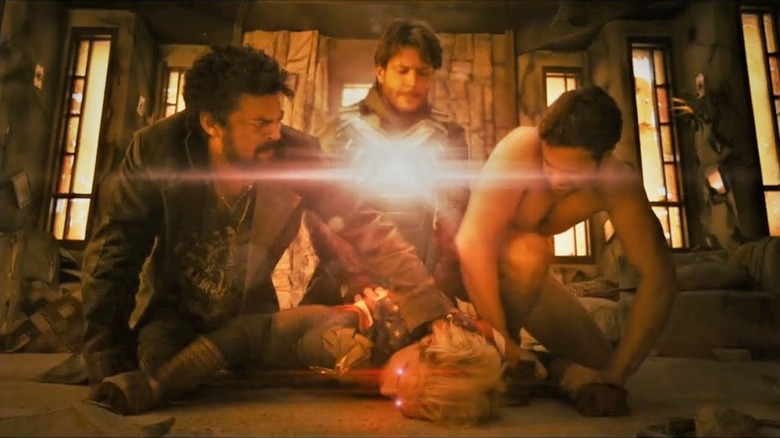
There was a big change in "The Boys" starting with Season 3. This was the season where Homelander (Antony Starr) went from a Darth Vader-esque superpowered enforcer to a bigger villain to becoming the one and only big bad of the entire show. It worked for this season, as it served to focus the storylines and give the season a singular goal to reach: The Boys finding a weapon strong enough to kill Homelander. They find it in the form of Soldier Boy (Jensen Ackles), who teams up with Butcher (Karl Urban) and Maeve (Dominique McElligott) to kill Homelander, resulting in a massive battle involving all the main characters.
In retrospect, this was the biggest the show could go, with the fight serving as the best possible place to kill Homelander once and for all. It could have concluded that story, with the characters having already reached a climax for their individual arcs. Even if "The Boys" had continued, it would have been free to explore a world beyond Homelander, a world that could go back to Vought being the ultimate evil, rather than a singular man being the one and only threat.
When the show didn't just end there, it started quickly going downhill. Rather than heading toward a conclusion after this, "The Boys" kind of hit the reset button in a bleak, miserable Season 4 that felt like the show was just stalling for time. It felt unable to kill off anyone important or to move the plot forward in significant ways. Season 5 made things worse by spending most of its episodes on a silly goose chase that went nowhere, culminating in a fight that simply mirrored what Season 3 had already done.
Making Homelander the main villain was a mistake
Prime Video
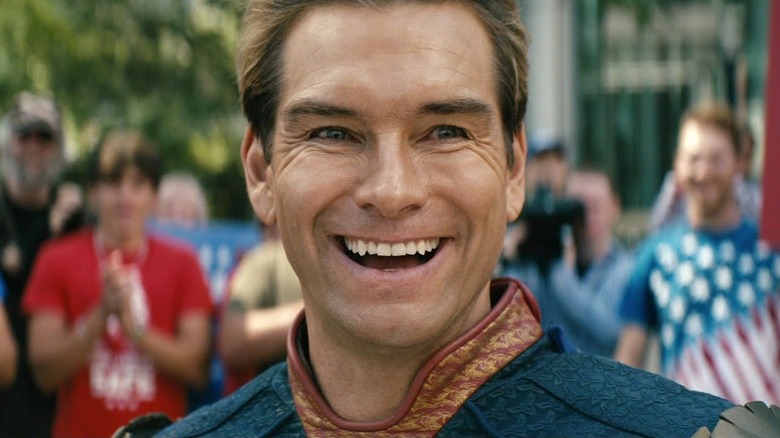
Season 3 made it clear that "The Boys" was moving away from being a relatively broad satire of American pop culture and capitalism and toward making Homelander its singular focus. After the Season 3 finale, it became clear the show was all about Homelander as Donald Trump, and this was a massive mistake. In the first couple of seasons, Homelander wasn't necessarily terrifying. He was a big, powerful minion for the real villains — Vought. He was a lot like Darth Vader, scary if he was sent after you, but chances are you'd never encounter him.
But Season 3 and beyond turned Homelander from Butcher's personal antagonist to being the main antagonist of the show at large. This resulted in lowered stakes, and the story getting caught in an endless loop of trying and failing to hurt Homelander. Sure, this coincided with the rather depressing rise ofthe twice-impeached felon living in the White House. But the longer "The Boys" went, the parody went from funny to depressing to kind of prophetic to plain boring. It's the same problem that plagued "South Park" when they turned Mr. Garrison into Trump: the satire couldn't compete with reality, and they ran out of things to do with him. When Homelander is finally defeated in Season 5, it was less a triumphant victory and more of a sad note that had lost its momentum and impact, a tired joke everyone wants to just move on from.
The fight that ends Season 3 is so clearly the highlight of "The Boys," the real climax of the story, that Season 5 replicates it but with half of its impact. The show's downhill started when Butcher teamed up with Soldier Boy, and Homelander was not defeated right then and there.

![Why Project Hail Mary Used An Animatronic Rocky Instead Of A Puppet In One Scene [exclusive]](https://www.slashfilm.com/img/gallery/why-project-hail-mary-used-an-animatronic-rocky-instead-of-a-puppet-in-one-scene-exclusive/l-intro-1791817996.jpg "Why Project Hail Mary Used An Animatronic Rocky Instead Of A Puppet In One Scene [exclusive]")


 English (US) ·
  Indonesian (ID) ·