
 3 months ago
DC Studios
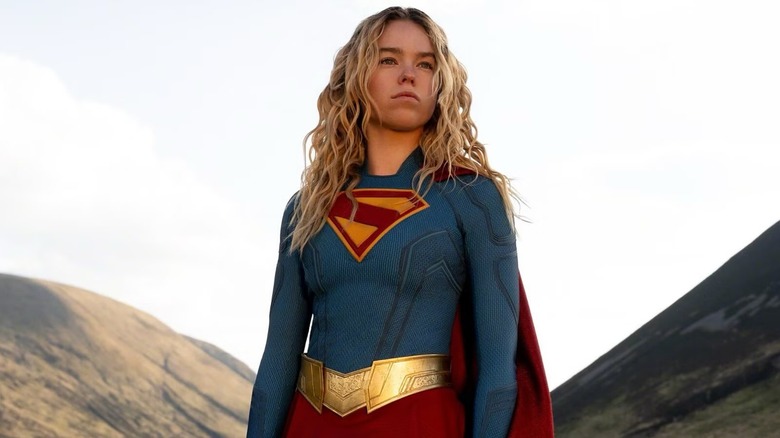
The biggest surprise about "Supergirl" is how little it resembles the film audiences likely expect to see. A space-faring superhero adventure with a needle-drop heavy soundtrack sounds like it should occupy the same tonal neighborhood as "Guardians of the Galaxy" or even James Gunn's own "Superman," but Craig Gillespie and Ana Nogueira's "Supergirl" — itself a relative adaptation of the comic book miniseries "Supergirl: Woman of Tomorrow" by Tom King and Bilquis Evely — has as much in common with the legendary Western "True Grit" and the grimy, post-apocalyptic landscape of "Mad Max" as it does the world of capes and tights. It's a revenge odyssey and a race against time to save Krypto through hostile worlds populated with grotesque villains, led by a hero who is as likely to self-destruct as she is to save the day.
Fortunately, "Supergirl" is still packed with a sharp sense of humor and plenty of spectacle, but unlike the majority of superhero movies that seem allergic to sincerity, Gillespie's film is unafraid of letting the titular character feel the full spectrum of human emotion. "Supergirl" isn't always "fun," and that's exactly why it works. It follows through on the set-up from "Superman" that Kara Zor-El (Milly Alcock) is the thematic opposite of her famous cousin — trading in his earnest optimism for messy impulsiveness and the crushing weight of survivor's guilt.
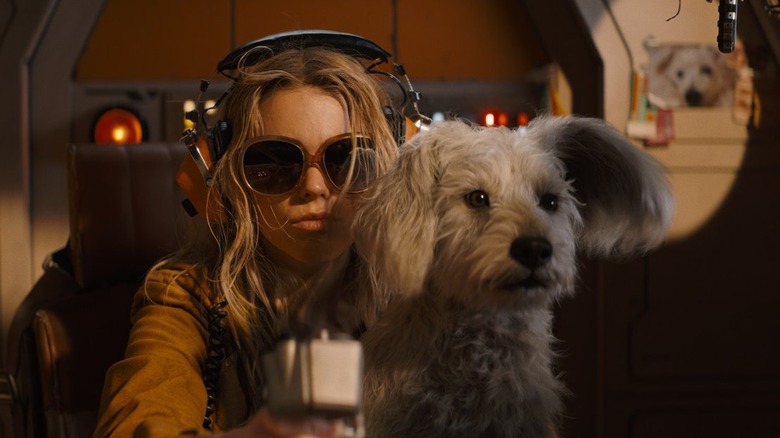
That sense of displacement is the emotional core of "Supergirl," a refreshingly small-scale story about a girl trying to save her dog's life, joined on her journey by Ruthye Marye Knoll (Eve Ridley), an honor-bound girl seeking to take down the man who killed her family. The stakes seem small by contemporary superhero standards of planet-eating Gods and multiverses folding in on themselves, but the personal nature of "Supergirl" is key to the film's success.
Milly Alcock is the perfect Supergirl
DC Studios
Kara is often portrayed as just a "girl-version" of Superman, but Milly Alcock's version thrives in the ways she is nothing like him. Like Superman, she's ultimately trying to Be Good, but she's also nihilistic, intimidating, and intentionally reckless after experiencing the death of Krypton. While audiences are likely already familiar with her work as young Rhaenyra on "House of the Dragon," Kara Zor-El is a star-making turn that burns brightly even as the film's various universe-building detours occasionally pull focus.
As I've noted before regarding Kara Zor-El, Hollywood has no problem depicting women who exhibit disastrous behavior, but those women are seldom allowed to be heroes as well. It's a frustrating double standard where male heroes are allowed to be complex, unlikable, chaotic, flawed, and morally ambiguous while saving the world, but women are held to a higher standard of ethical purity. Alcock is the perfect Supergirl because she allows Kara to be a fully realized woman who binary classifications cannot box in.
Ruthye, meanwhile, functions as the annoyingly determined Mattie Ross to Kara's cynical Rooster Cogburn. She's stubborn, self-righteous, and downright exasperating at times, but she's a teenager. She's going to be annoying. It's a canon event at this age, and we mustn't interfere. Her bond with Kara is the beating heart of the story, and while "Woman of Tomorrow" is a bit stronger with regard to character development (obviously, it's a whole series of comics compared to a movie), "Supergirl" hits all of the necessary beats to make their story work.
Everything is an uphill battle for them both, making every victory — no matter how small or how short-lived — feel earned. And by emphasizing the personal nature of their troubles, Gillespie's film feels universal.
Anyone who doesn't think Krem of the Yellow Hills is a great villain is wrong
DC Studios
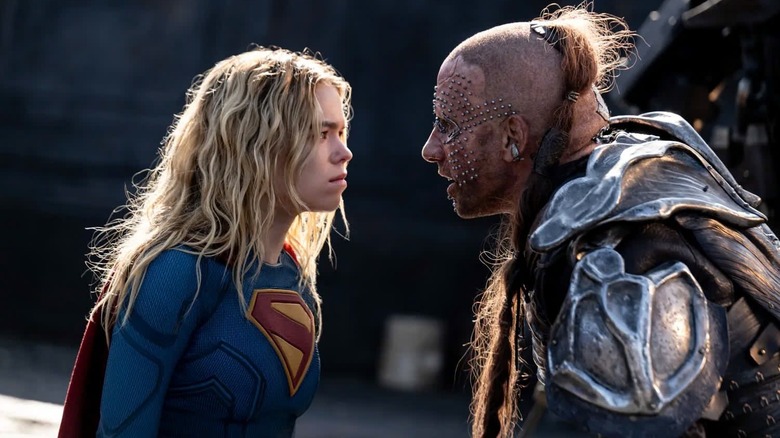
The main baddie of the film, Krem of the Yellow Hills (Matthias Schoenaerts), might not bring the same threat level as someone like Galactus in "Fantastic Four: First Steps" or even Lex Luthor in "Superman," but he's instantly an all-time great superhero villain simply because his crimes are so disgustingly true to life in a way a planet-eating cosmic horror will never be. For a four-quadrant movie, the fact the big bads in "Supergirl" are a group of space pirates who specialize in human trafficking young women before disposing of them once they've "served their purpose" of birthing sons is pretty harrowing. It's doubly impressive that this incredibly dark plotline is presented in a way that is age-appropriate for the PG-13 audiences flooding theaters, without downplaying the viciousness of their actions.
The Brigands have ravaged planets and kidnapped countless young women, forcing an immeasurable number of people to forego their own moral code as a means of survival. The casualness with which Krem kills Ruthye's family is gut-wrenching, but it's impossible not to see the butterfly effect of how the Brigands have corrupted entire planets' worth of denizens living in fear and not recognize the parallels to our own existence. At least, that's how it felt to me, but what would I know? I'm just a girl who has never known a life where grown men weren't saying the most vile nonsense imaginable about what my body is good for (regardless of my age), watching a movie where bad guys might as well live on a planet called "Epstein's Island."
Jason Momoa was born to play Lobo

DC Studios
"Supergirl" also has me convinced that Jason Momoa was built in a lab specifically to play Lobo, and his lifelong love of the character is palpable every moment he's on screen. At times the film feels like a backdoor pilot for an eventual standalone movie (or perhaps a series like "Peacemaker"), but he brings a necessary, cartoonish energy to such a dramatic story. Momoa effortlessly reminds us that no one else can play charming pricks quite like he can, and watching two young women match wits with him is an absolute joy. He's also at the center of one of the film's best action set pieces, and is surely going to inspire a generation of kids to want their own Spacehog.
The action set pieces are pretty effective by American superhero standards, with solid fight choreography and an editing style that actually values the physicality of each scene and doesn't have to chop around to hide the actor's face when they're not doing their own stunts. Alcock absolutely put in the work in making Kara a fighter, and the movie is better for it, if only because there's a seamless blend between her performance and her stunt double, Mickey Facchinello. Unfortunately, any time Kara is floating in space or flying through the air, the CGI struggles to keep up with the demands of the scene. CGI movement technology is just no match for a character with unwashed hair packed with three days' worth of dry shampoo buildup. The look of the film is also somewhat inconsistent, with some planets boasting the washed-out blah currently plaguing all blockbusters, while others capture the bold, colorful beauty found in the "Woman of Tomorrow" comics.
Supergirl is the hero we need
DC Studios
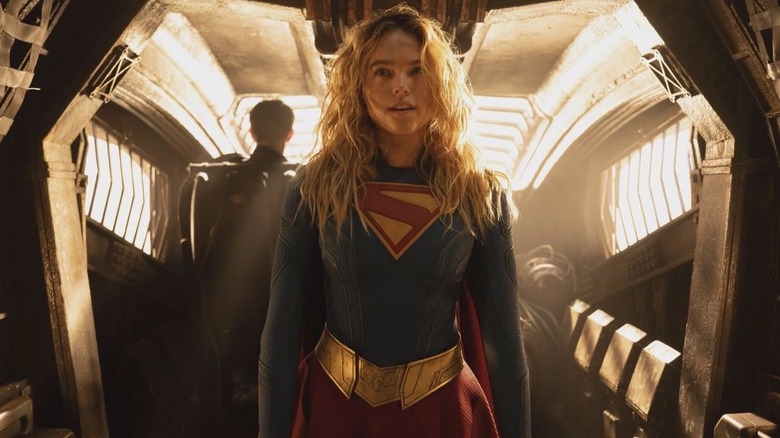
There's a misconception that "strong female character" is synonymous with "positive role model," or "without fault." Given everything that's already stacked up against superhero movies with women in the hero position, there's a desire to reinforce the unrealistic expectation that women must always be admirable, emotionally healthy, and morally upright, even in the face of unimaginable hardship — lest they be deemed "problematic." And that's a standard impossible to maintain. Real people don't always navigate their pain constructively, and sometimes the path through suffering is messy and selfish. Seeing Kara Zor-El spend an entire movie crashing out makes her resilience all the more authentic. She's not perfect; she's a hero who stumbles and still finds a way forward to remind us that our lowest moments do not dictate the limits of what we're capable of accomplishing.
And when things look bleak, and the heroes we depend on seem to be out for the count, it's our responsibility to figure out how to get through it on our own. Or, as the best needle-drop in the film says, "It just takes some time / Little girl, you're in the middle of the ride / Everything, everything'll be just fine / Everything, everything'll be alright, alright."
Most superhero films are about someone saving the world, but "Supergirl" is about learning to save ourselves. Kara Zor-El is a worthy and necessary addition to the DC Universe, and this installment only makes me more excited for what James Gunn and Peter Safran are shaping up. "Supergirl" is an aspirational film because it does not demand perfection of its characters or their journeys, thereby modeling for those watching at home that we too can say the wrong thing or make the wrong decision and still find a path toward heroism.
/Film Rating: 7 out of 10
"Supergirl" is in theaters everywhere June 26, 2026.




 English (US) ·
  Indonesian (ID) ·