
 2 months ago

Zack Fellman/20th Century Studios
When it comes to the highest-grossing directors of all time, there are two who have raced far ahead of the rest of the pack. In first place is Steven Spielberg — who, according to his own recent Quote of the Day spotlight, makes movies instead of going to therapy. But just barely trailing Spielberg's record is James Cameron, who would have probably already topped the chart if not for the 13 years he spent squirreled away working on his "Avatar" sequels.
James Cameron was born in the small town of Kapuskasing, Ontario, and moved down to California with his family in his late teens. In his early 20s, he quit his job as a truck driver to pursue a career in Hollywood, which ended up working out well.
Cameron's reputation for making eye-boggling amounts of money has perhaps overshadowed the fact that he's also one of the most influential filmmakers of all time. His back-to-back '80s hits "The Terminator" and "Aliens" were deeply imprinted upon the impressionable young minds of future filmmakers. And that's before we even get to "Terminator 2: Judgment Day," easily one of the greatest action movies ever made.
"Terminator 2" also saw the beginning of a trend: studios signing off on enormous budgets for James Cameron movies and continuing to sign checks (albeit, with increasing volumes of flop sweat) when his movies blow past their original projected costs. Even James Cameron has had his doubts about James Cameron. "We labored the last six months on 'Titanic' in the absolute knowledge that the studio would lose $100 million," Cameron once told The Times. "It was a certainty."
Instead, "Titanic" became the highest-grossing movie of all time. And these days, Cameron is done being admonished over his giant movie budgets.
Quote of the Day by James Cameron
!["I used to be really defensive about [my budgets] because it was always the first thing anybody would mention. And now I'm like, if I can make a business case to spend a billion dollars on a movie, I will f***ing do it. Do you want to know why? Because we don't put it all on a pile and light it on fire. We give it to people ... If the studio agrees and thinks it's a good investment, as opposed to buying an oil lease off of the north of Scotland, which somebody would think was a good investment, why not do it?"](https://www.slashfilm.com/img/gallery/quote-of-the-day-by-james-cameron-if-i-can-spend-a-billion-dollars-on-a-movie-ill-do-it/quote-of-the-day-by-james-cameron-1785507764.jpg)
Static Media
As of this writing, three of the highest grossing movies of all time were directed by James Cameron. That's enough to cure anyone's imposter syndrome. In a 2022 profile by GQ, Cameron made it clear that he no longer has any patience for people questioning how much his movies cost to make:
"I used to be really defensive about [my budgets] because it was always the first thing anybody would mention. And now I'm like, if I can make a business case to spend a billion dollars on a movie, I will f***ing do it. Do you want to know why? Because we don't put it all on a pile and light it on fire. We give it to people [...] If the studio agrees and thinks it's a good investment, as opposed to buying an oil lease off of the north of Scotland, which somebody would think was a good investment, why not do it?"
The great thing about this quote is that it's not even centered on Cameron's well-earned box office confidence. The declaration would stand even if he made a movie that cost a billion dollars and only made $100 at the box office. And it's a point that's easy to forget for those of us who enjoy getting lost in the weeds of ticket sales, production budgets, and figuring out whether a movie has "broken even" for the studio (a nebulous concept in the world of Hollywood studio accounting).
Making money isn't the goal. Making movies is the goal.
Deeper Meaning of James Cameron's Quote - Art for art's sake
Paramount Pictures
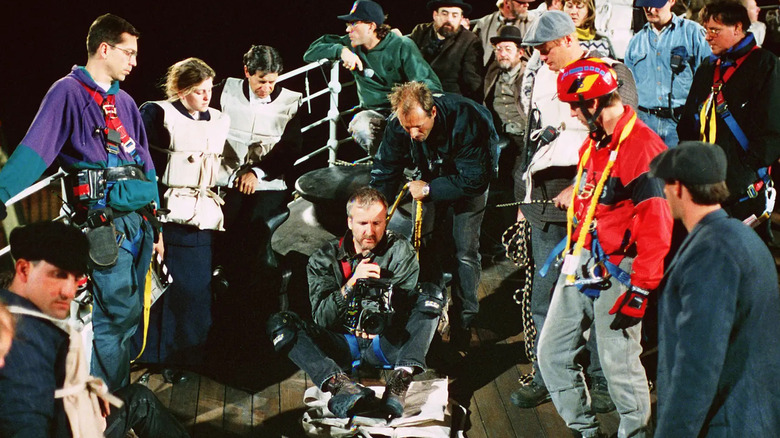
It's all to easy to confuse a company's financial balance sheets with actual worth. You can look at a movie that lost $100 million for its studio and conclude that it was a net negative and should never have been made. There is some logic to this: If a studio gambles on a movie, and loses, the studio might theoretically be less likely to take risks on interesting movies in the future.
These days, though, corporate finance seems ever more detached from the humble reality of cash-in, cash-out. Investors continue to pour trillions into tech companies' AI ventures even as the promised profits fail to materialize. Meanwhile, in the constant search for growth potential, some of those tech companies have begun exploring new verticals — including film. Apple has been casually dropping a billion dollars a year on mega-budget movies from the likes of Martin Scorsese ("Killers of the Flower Moon") and Ridley Scott ("Napoleon"), and since the main goal right now is to establish a foothold in filmed entertainment, Apple TV losing money isn't really a big deal.
As James Cameron points out, those mega-budgets don't just vanish into thin air. They pay the wages of makeup artists, stunt performers, assistant directors, costume designers, editors, gaffers, cinematographers, and the hundreds of other people whose names appear in the end credits of the movies we love. The money goes into the pockets of ordinary people, and empowers them to do extraordinary things. Now, quite often those extraordinary things will give studio executives palpitations, but the results are worth the beta blockers. Every dollar of corporate finance that can be funneled into people producing art is a victory in its own right.
More quotes from James Cameron
Christopher Jue/Getty Images for Disney
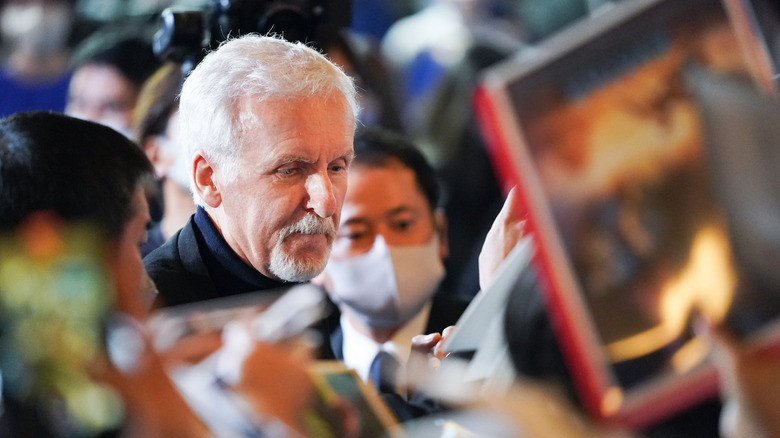
- "I like difficult. I'm attracted by difficult. Difficult is a f***ing magnet for me. I go straight to difficult [...] There are lots of smart, really gifted, really talented filmmakers out there that just can't do the difficult stuff. So, that gives me a tactical edge to do something nobody else has ever seen, because the really gifted people don't f***ing want to do it."
- "I absolutely make Hollywood movies to pay for exploration. It's important that we actually have a goal that is greater than just the making of that film, that we shine a light into the unknown and bring back the data."
- "All my films ultimately say the same thing: we're screwed."
- "I believe in starting with a great opening and knowing my ending, then figuring out the pesky bit in-between."
- "Being attracted to strong independent women has the downside that they're strong independent women — they inherently don't need you!"
- "People ask me all the time, 'What would your advice be to a young filmmaker?' It used to be, pick up a camera and start making a movie. Now my advice is, live a bit of life, then pick up a camera and make a film about what you know and what you've experienced. Don't go from being a superfan in high school to film school, and come out knowing nothing about life except what you've seen in movies."





 English (US) ·
  Indonesian (ID) ·