
 2 months ago

s_bukley/Shutterstock
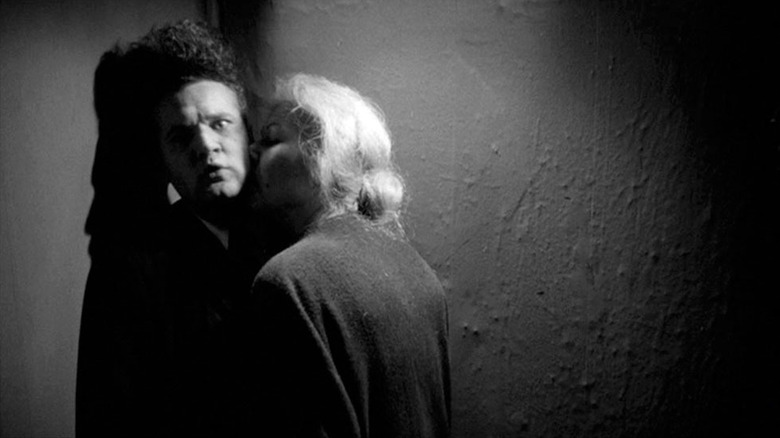
Most people who've seen the works of David Lynch find themselves confused at first. If they were lucky enough to meet the man while he was alive, or have watched some vintage interviews with him, they often become even more baffled. That's because, to many, Lynch was an enigma wrapped in quintessential Americana. Born in Missoula, Montana, in 1946, David Keith Lynch began as an aspiring painter and only found his way into cinema out of a desire to see his paintings move. His early short film work eventually led him to his five-years-in-the-making feature directorial debut "Eraserhead." Upon its release in 1977, the film became an underground hit thanks to its strikingly bizarre imagery, playing a role in the "midnight movie" trend. Yet despite being largely inexplicable, "Eraserhead" has an undeniable, indefinable logic operating beneath the surface. In other words, Lynch wasn't indulging in strange imagery for its own sake, he was actually a surrealist.
Over the course of his career, Lynch proved masterful at using seemingly ordinary, even obvious concepts and genres as ways of smuggling in his surrealism. Lynch's elliptical dream logic appeared in everything from prestige dramas ("The Elephant Man") to sci-fi adventures ("Dune") to neo-noir flicks ("Blue Velvet"). Every Lynch film, no matter its conclusion (or lack thereof, as the case may be), contains an abundance of mystery. And while Lynch was more than happy to raise multiple questions with his films, he was just as steadfast in refusing to provide concrete answers to them. For as many people as this delighted, it frustrated an equal amount, leading to Lynch constantly being asked for explanations. As it happens, it wasn't just that Lynch didn't wish to give any explanations. He also couldn't understand why people didn't get that the ongoing mystery was the point.
Quote of the Day by David Lynch
Static Media
When profiled by the Los Angeles Times in August 1989, on the eve of the release of "Twin Peaks" and "Wild At Heart," David Lynch was asked how conscious he was of the messages and subtext in his films. He responded:
"That's a very dangerous thing. It's important to think about it, but it's like money — if you think of it first, then you're like a politician. You're gearing your campaign around winning, and everything you say is to make the message known — and a message is a load of crap. I don't know what I want to say to people. I get ideas and I want to put them on film because they thrill me. You may say that people look for meaning in everything, but they don't. They've got life going on around them, but they don't look for meaning there. They look for meaning when they go to a movie. I don't know why people expect art to make sense when they accept the fact that life doesn't make sense."
In his later years, Lynch's admonishment of being asked to explain his films became more playful and pointed. Hence the frequently memed moment from a BAFTA interview in 2007 where Lynch referred to "Eraserhead" as his "most spiritual film," and when asked to elaborate, he offered a polite but firm "no." In the above quote, the younger Lynch is clearly more thoughtful and searching, trying to find the right way to explain himself. The thing is, there are deeper meanings to Lynch's work, and there is decoding of imagery that can be done. Again, Lynch's work is all intentional. Yet, for him, the magic of his art laid in its mystery, and explaining it would break the spell.
Deeper Meaning of David Lynch's Quote — Deeper meanings are subjective
Libra Films
In addition to David Lynch's aversion to explaining himself and his art, the director hit upon an even deeper meaning in his aforementioned response to the LA Times. He's absolutely right to say that people are desperate to find meaning in movies while simultaneously being fine with the inexplicable real world around them. Of course, the answer to that paradox lies within itself. If one accepts that reality is devoid of meaning or intention, then it's only logical that people would wish to impose understanding over a human-made fictional universe. Yet, Lynch is correct to be baffled by this since, as an artist himself, he knows that the value of art doesn't lie solely in pandering entertainment. If art, ultimately, is a reflection of reality, then its lack of sense is absolutely fair play.
Lynch is also correct to point out that, with his "politician" metaphor, an artist shouldn't be putting a message first when making a film. To be sure, themes and messages are important, even vital, yet their presence should be more inherent than explicit. Most filmmakers understand this; see "Obsession" director Curry Barker saying basically the same thing earlier this year. Unfortunately, many people have a big problem with mystery and ambiguity in films. Which is a shame, because those qualities are what fuel many of the best movies ever made. Deeper meanings are just like any other aspect of reviewing art: Some consensus can be reached, but, ultimately, it's all subjective. Lynch's goal was less about delivering a message than it was giving us things to experience and mull over for a long time afterward. Judging by how beloved his work has been and continues to be, I'd say his mission was accomplished.
More Quotes from David Lynch
The Samuel Goldwyn Company
•"The art spirit sort of became the art life, and I had this idea that you drink coffee, you smoke cigarettes, and you paint, and that's it. Maybe, maybe, girls come into it a little bit, but basically, it's the incredible happiness of working and living that life."
•"Ideas are like fish. If you want to catch little fish, you can stay in the shallow water. But if you want to catch the big fish, you've got to go deeper. Down deep, the fish are more powerful and more pure.They're huge and abstract. And they're very beautiful."
•"Keep your eye on the doughnut, not on the hole."
•"It makes me uncomfortable to talk about meanings and things. It's better not to know so much about what things mean. Because the meaning, it's a very personal thing, and the meaning for me is different than the meaning for somebody else."
•"Even bad coffee is better than no coffee at all."






 English (US) ·
  Indonesian (ID) ·