
 2 months ago
Evening Standard/Getty Images
We may receive a commission on purchases made from links.
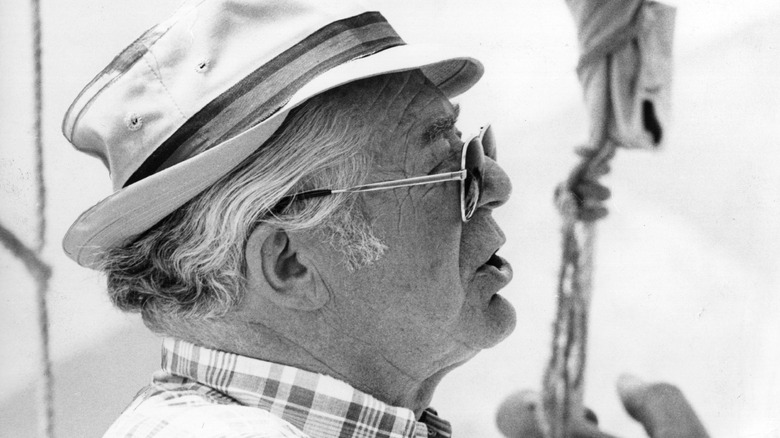
Billy Wilder was one of the most inventive motion picture storytellers. Born on June 22, 1906 in Austria-Hungary (now Poland) to a husband-and-wife team of cake shop franchisers, he quickly exhibited a talent for writing fleet, witty tabloid copy. In 1930, he made a splash in movies by co-writing the naturalistic drama "People on Sunday" with Curt Siodmak. Directed by the Hollywood-bound duo of Edgar G. Ulmer and Robert Siodmak, and featuring camerawork from a young Fred Zinnemann, the film could've heralded the beginning of a German neorealist movement. Then Adolf Hitler seized power, and much of the region's cinematic talent wisely fled the country.
Upon arriving in the United States, Wilder joined forces with a kindred screwball comedy spirit in Ernst Lubitsch. Wilder earned his first Oscar nomination for his screenplay collaboration with Charles Brackett and Walter Reisch on the Lubitsch-directed masterpiece "Ninotchka," and, for the rest of his career, he sung the praises of his Hollywood mentor. He preached the gospel of "The Lubitsch Touch" (a sensibility observed by Luca Guadagnino's "Challengers"), which was an aesthetic that combined elegant verbal and visual wit with sotto voce naughtiness. Lubitsch could be wickedly funny. In "To Be or Not to Be," the traitorous Professor Alexander Siletsky attempts to woo Carol Lombard's Maria Tura with "Shall we drink to a blitzkrieg." "I prefer a slow encirclement," replies Tura.
The Lubitsch Touch would not work well in 2026. It requires a moviegoer's full engagement, which is nigh impossible to capture given the normalization of second-screen viewing. Setups are missed, and payoffs have nowhere to land. But if you can pay attention, a great filmmaker will reward it handsomely.
Quote of the Day by Billy Wilder (via Ernst Lubitch)
Slashfilm
Wilder shared this nugget of wisdom with Cameron Crowe in his essential book "Conversations with Wilder." The writer-director of "Some Like It Hot," "The Apartment," and "Double Indemnity" included this quote as part of a list of 10 screenwriting tips — none of which will guarantee you a seven-figure sale, but which will get you thinking about storytelling in a non-conventional way.
During a Q&A at the American Film Institute, Wilder elaborated on Lubitsch's advice. "Make it clear to them," he said, "But don't spell it out like the audience are just a bunch of idiots. Just aim it slightly above their station and they're going to get it."
Wilder played his comedy more broadly than Lubitsch, but, like Steven Spielberg, he left the right I's and T's deftly undotted and uncrossed.
The Deeper Meaning of Billy Wilder's Quote
Warner Bros.
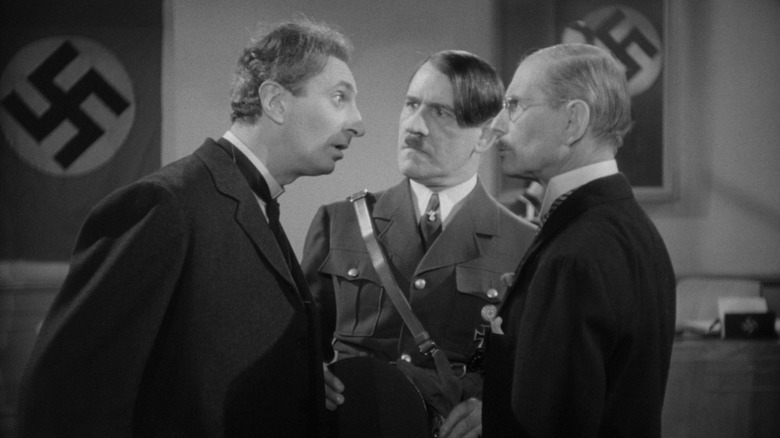
One of the great joys of moviegoing is sensing a payoff and watching it come together. In Lubitsch's "To Be or Not to Be," there's a slow setup involving the long-suffering company actor Greenberg (Felix Bressart), who longs to play Shylock in "The Merchant of Venice." When the company is up against it, and our heroes, Lombard and Jack Benny, are about to get captured by the Nazis, the Jewish Greenberg saves them with the "prick us, do we not bleed" monologue from Shakespeare's play. You sensed that this was coming, but you didn't know Lubitsch would pull that trigger until it happened. And your heart explodes. And this allows Lubitsch to rain down a joyous cascade of a denouement that fades out with a very cheap joke involving Robert Stack.
Set it up subtly in the first act, knock it out of the park like Dave Winfield in the third act. Telegraph it (like just about every MCU ever made), and you've made a film of disposable moments.
More Quotes from Billy Wilder
ABC
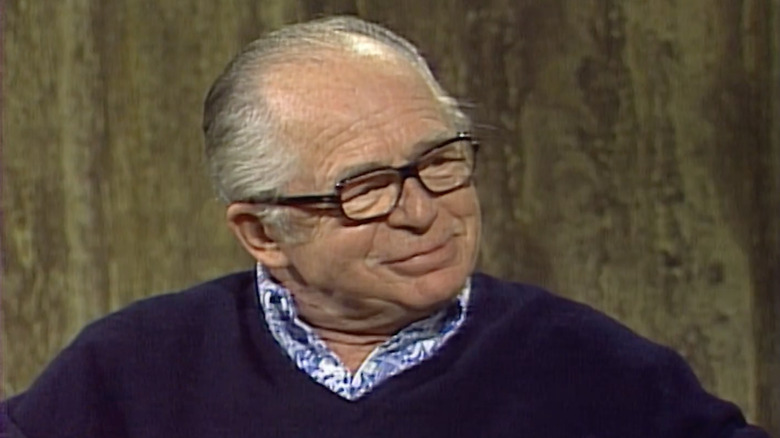
Like I said, you should read Crowe's "Conversations with Wilder" in its entirety. But in lieu of that, here are his ten screenwriting tips. Let a master take you to school.
- "The audience is fickle."
- "Grab 'em by the throat and never let 'em go."
- "Develop a clean line of action for your leading character."
- "Know where you're going."
- "The more subtle and elegant you are in hiding your plot points, the better you are as a writer."
- "If you have a problem with the third act, the real problem is in the first act."
- "A tip from Lubitsch: Let the audience add up two plus two. They'll love you forever."
- "In doing voice-overs, be careful not to describe what the audience already sees. Add to what they're seeing.
- "The event that occurs at the second act curtain triggers the end of the movie."
- "The third act must build, build, build in tempo and action until the last event, and then — that's it. Don't hang around."



 English (US) ·
  Indonesian (ID) ·