
 2 months ago
Universal Pictures
I spend a lot of time on Twitter. That's bad. The social media platform has transmogrified into a cesspool of bots, bad-faith actors, and buffoonery. I've tried to break free from the site's grasp on me, but it's proven to be difficult. Since movies are my beat, I tend to see a lot of posts from the hellscape that is Film Twitter, which means I see a lot of movie takes. And I've been slowly building towards the realization that these days, a large number of people have seemingly forgotten how to watch movies.
This is all part and parcel of the death of media literacy, and there's also the very likely scenario that many of the poor takes are coming from bluecheck grifters embracing Twitter's hate-driven algorithm to post the most rage-bait-inducing comments imaginable. But I still have the sneaking suspicion that ordinary movie-watchers have lost the plot.
There's no better demonstration of this theory than the recent reactions to Christopher Nolan's "The Odyssey." Nolan's epic is one of those rare modern films that has broken containment into a large group of people, which means the takes have been plentiful. But there's something potentially insidious going on here, mixed with the likelihood that people viewing this film — and others — don't seem to understand the difference between legitimate criticism and pointless, annoying nitpicking. If you're someone like me who has pretty much devoted their entire life to movies, it's rather depressing. I'd like to believe things haven't tipped over into full-blown hopelessness. I'd like to believe there's still a chance to right this ship.
The Odyssey and Emily Wilson
Universal Pictures
Any talk of "The Odyssey" must be prefaced with the fact that before the film even hit theaters, it became engrossed in an exhausting, stupid culture war driven by some of the worst people on the planet. The fact that Nolan dared to cast a Black actress, Lupita Nyong'o, as Helen of Troy, as well as casting trans actor Elliot Page, drove bigots absolutely insane. While some went all-in on embracing racism and discrimination, others tried to couch their outrage with lame comments about how Nolan was mocking Homer (c'mon folks, I promise Homer, who may not have even existed, doesn't care about this) or bastardizing a classic. These critics proclaimed that Nolan's film would flop, because real moviegoers were sick of all this wokeness.
Of course, they were wrong. The film was a huge hit, and while some grifters are still beating a dead Trojan horse, it's obvious that Nolan's movie is a massive success. Recently, though, more fuel was thrown on the fire when Emily Wilson, who produced a popular (and controversial) translation of "The Odyssey," weighed in with a scathing critique of Nolan's movie. At last, the haters had proof!
This is ironic, since many of these same people slandered Wilson's translation before the film was released because Nolan made comments about how it influenced his approach. In any case, I'm not here to pick apart Wilson's take. She's an academic who has devoted a large portion of her life to "The Odyssey" and obviously knows what she's talking about. That said, the running theme of her piece seems to be that Nolan committed the mortal sin of ... changing stuff. But does that actually make the movie bad?
How did we get here?
Universal Pictures
With all due respect to Wilson, I'll say that while she unquestionably understands "The Odyssey" in an academic sense, she seems to not understand how movies work. (I'm talking specifically about movie storytelling here, not behind-the-scenes details.) And she's not alone. A large chunk of movie watchers these days are hellbent on picking apart a movie's carcass until only the bloody bones are left.
Why are so many people taking this approach? At the risk of sounding like an old man, I'm going to say that online culture is probably to blame. Online platforms like Twitter and TikTok have incentivized the concept of scoring points. Society at large has become one big, loud casino, where everyone is placing bets and hoping to win big. And everyone wants the inside track to score a sure-thing win.
I'd also venture that the once-popular CinemaSins, which posted online videos picking apart popular movies, played a part in this mindset. To give CinemaSins the benefit of the doubt, I think many of their "criticisms" were meant to be tongue-in-cheek jokes, but that nuance was lost on many viewers who simply assumed this was how you went about criticizing movies: you break down a list of issues like some sort of math equation. But gosh, what a boring way to look at movies!
You can't 'prove' if a movie is good or bad
Warner Bros.
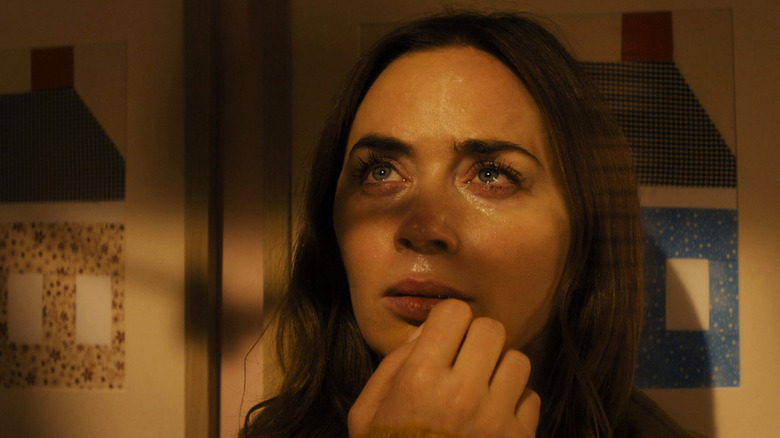
I want to be clear: I'm not saying "The Odyssey" is above criticism. Hell, I have some issues with the movie myself. No movie is completely beyond critique. The problem, as I see it, is that there's a difference between normal criticism — "This actor's performance was unconvincing" — and nitpicking nonsense — "That would never happen in real life!" This last statement has been foolishly applied to another recent big movie, Steven Spielberg's "Disclosure Day."
That pic ends with a big emotional sequence in which the world learns the truth about extraterrestrials. When the public at large got to see the movie, they rushed online to say Spielberg was naive and that this wouldn't happen in the real world. Hey, no s***! This isn't the real world, folks. It's a movie. I also don't think Spielberg wants us to think this is the "real world." This is his idealized vision — something he wishes would happen, even if it probably won't.
Here's the thing: Even if you think these are valid criticisms, they don't prove anything. While I don't agree with Emily Wilson's "Odyssey" review, I think it's perfectly fine that she wrote it. But others holding it up as some kind of proof that the movie is bad is a problem. And I think that's where the disconnect is arising. Many like to hold up Rotten Tomatoes scores — primarily the dreadful audience score, aka the "Popcornmeter" — as some kind of empirical proof that a movie is good or bad. But art doesn't work like that. All art, including movies, is subjective. One person's trash is another's treasure. Sure, there can be widespread consensus, but that doesn't mean a movie being good or bad is some kind of irrefutable fact.
Adaptation, accuracy, and interpretation
Warner Bros.
I've noticed that some people take the approach that every adaptation has to be a kind of 1:1 translation that never strays from the source material. We see this prominently in video game movie adaptations, and I think Disney's soulless live-action remakes of their animated hits have also played a part in making people think this is the "correct" way to adapt something. But it's not.
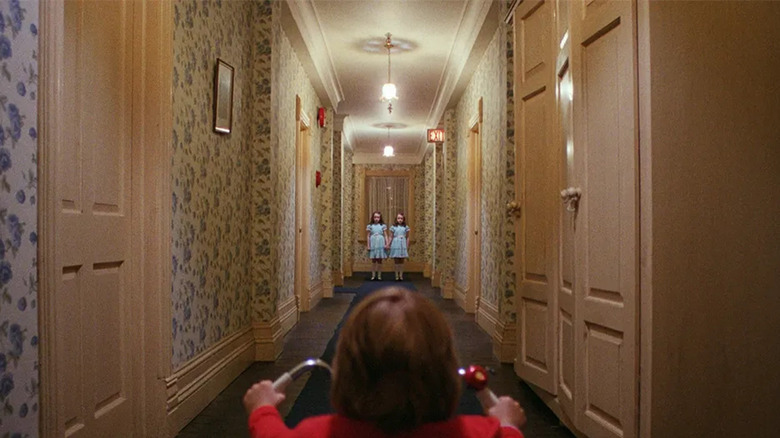
The very nature of adapting something involves reinterpretation and evolution, and in some cases, improvement. Spielberg's "Jaws" is immensely better than the book that inspired it. And while Stephen King loathes Stanley Kubrick's loose adaptation of "The Shining," most folks agree that Kubrick still made something special — even though he diverged wildly from the book.
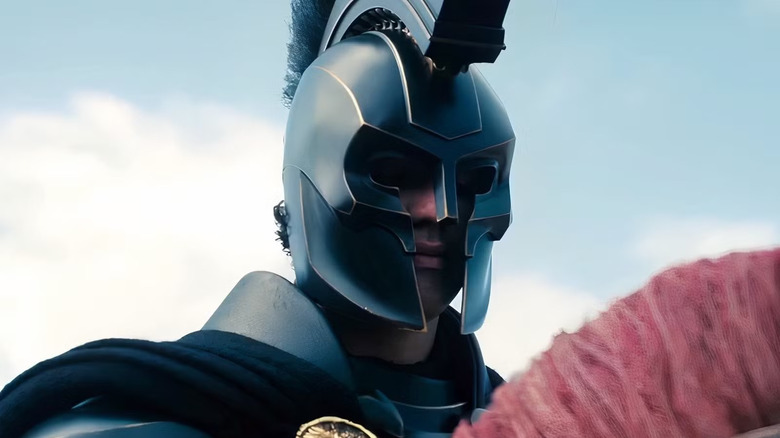
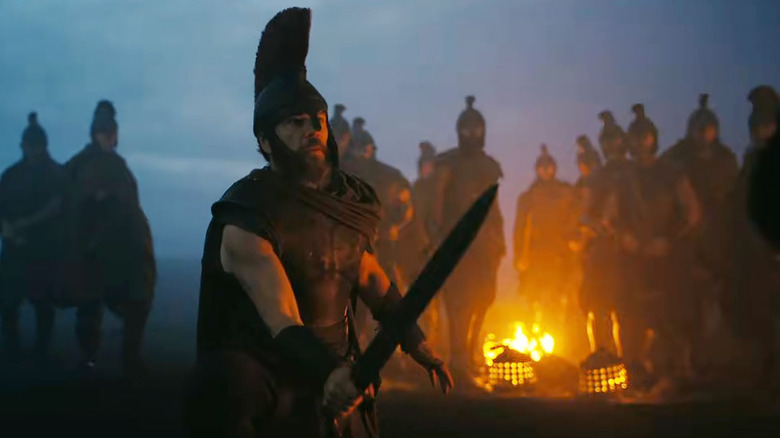
"Accuracy" seems to be another big sticking point, and excuse my bluntness, but: Who the hell cares? When the first images of "The Odyssey" started popping up online, people were quick to say the armor the characters were wearing isn't historically accurate. First of all, "The Odyssey" isn't a true story. It's a fantasy filled with gods and monsters. Second of all, it doesn't matter. Movies don't have an obligation to be historically accurate — even if they're based on a true story. In my opinion, a movie only has to be accurate to the story it's telling. In other words, if "The Odyssey" had a scene where Odysseus whipped out a cellphone to call up Penelope, I would've balked. But I sure don't give a damn if his armor isn't "right." In the context of the film, it is right.
How to watch a movie
AMC
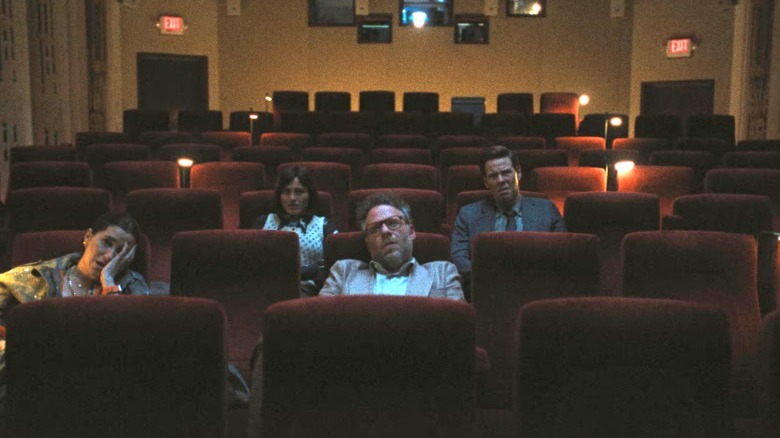
So how, exactly, should you watch a movie — and engage with it? I think the most important thing you can do is examine what the movie is trying to say (whether or not it's successful is another issue). With "The Odyssey," Nolan clearly isn't attempting to give us the definitive take on the immortal poem. Instead, he's using this classical text to examine very modern themes. He's not subtle about this, either — it's all pretty heavily spelled-out in the film's dialogue.
Another key thing to keep in mind is that you should engage with movies on their own terms. Everyone (including me!) goes into a movie with a preconceived notion, inspired by either the trailers or some other information. But if the film in question doesn't perfectly reflect those notions, it doesn't mean it's bad. You can argue that the advertising was misleading, but once you get that out of your system, why not try to look at the film on its own terms? Don't say: "This movie didn't give me exactly what I wanted." Instead, ask: "What is the movie actually trying to give me?"
Movies have so much more to offer than a checklist of things to like or dislike. Why even bother watching them if you're not going to try to take something away from the experience? Even if you come out of a film disliking it, I promise that asking yourself why you disliked it rather than holding up some sort of aggregated percentage or regurgitating someone else's talking points will be more rewarding in the end. So take my advice: Go see a movie. Sit back, open your eyes, and see what you learn.



 English (US) ·
  Indonesian (ID) ·