
 5 months ago
Marvel Studios
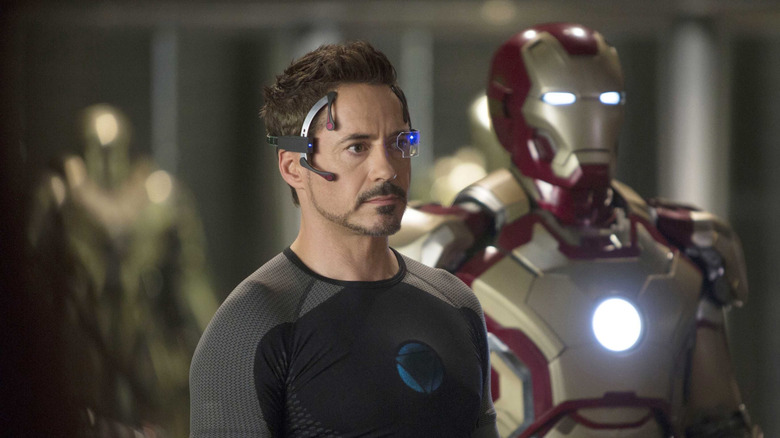
The Marvel Cinematic Universe is a masterwork of commercial filmmaking. Since its inception in 2008, the crown jewel of all superhero universes has generated more than $32 billion at the global box office across nearly 40 movies, spanning multiple individual franchises and crossovers. It all started with "Iron Man," the unlikely superhero movie that changed Hollywood forever. But while the MCU is generally associated with Disney, it actually started with Paramount.
Disney purchased Marvel in 2009, but Paramount was the original distributor of Marvel Studios' movies. The deal was extended in 2008, with Paramount set to distribute "Iron Man 2," "Thor," "Captain America," and "The Avengers." However, after Disney's purchase of Marvel, things changed. Disney naturally wanted to take over marketing and distribution of what was rapidly becoming a profitable enterprise.
In October 2010, it was confirmed that Disney would distribute "Iron Man 3" and "The Avengers," with Paramount selling the distribution rights to the House of Mouse for a reported $115 million. On paper, it seemed like a fine deal at the time. In practice, Paramount left a fortune on the table. Brad Grey, then-Chairman and CEO of Paramount Pictures, had this to say about the deal at the time:
"Five years ago, when Paramount and Marvel made our initial deal, both our businesses were in very different places. We are grateful for the partnership we have had with the terrific Marvel team over these years and proud of the work we have done together. Today, this new agreement is the right deal for Paramount, for Marvel and for Disney. We look forward to working together on Thor and Captain America, and we wish Disney and Marvel the utmost success, in what we know will be a very productive and wide-ranging partnership."
The Avengers and Iron Man 3 were some of the biggest movies of all time
Marvel Studios
Paramount released "Thor" in 2011, which became a rare blockbuster fantasy hit, taking in $449 million worldwide. Then came "Captain America: The First Avenger," which was less successful but still did $370 million globally, decent for the time. As Deadline explained in 2010, Paramount's distribution deal earned them 8% on each title. So the $115 million fee, based on the box office numbers they were getting from Marvel movies, seemed like a good deal for "The Avengers" and "Iron Man 3."
Paramount also had to pay marketing fees up front, which they would eventually be reimbursed for. As Deadline noted at the time, "If those movies perform more strongly than expected, Paramount will earn more than $115 million advance." The problem? The movies earned a lot more than anyone expected, meaning Paramount missed out big time.
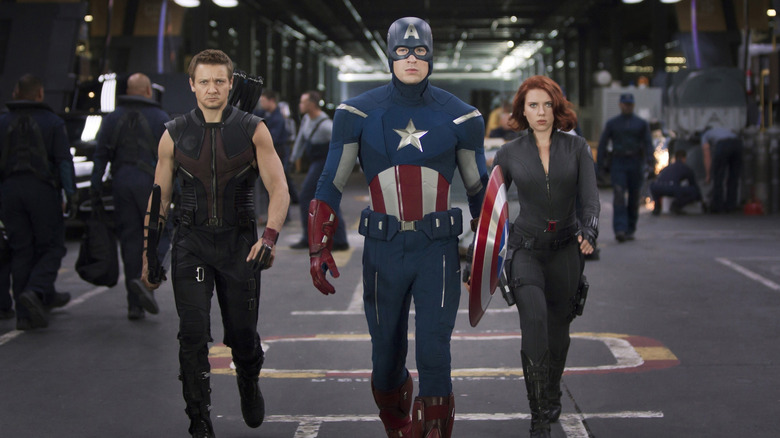
Directed by Joss Whedon, 2012's "The Avengers" redefined blockbuster filmmaking and broke box office records, taking in $1.52 billion. At the time, it was one of the highest-grossing movies ever. Based on Paramount's 8%, they would have earned nearly $122 million from that movie alone. "Iron Man 3" was a similarly huge hit, pulling in $1.21 billion. That would have netted the studio just shy of $97 million. All told, that's $219 million. A massive fortune in profits for a studio that was, at the time, rumored to be having cash flow issues (per Huffpost).
This is where things go from bad to worse. Paramount's potential losses don't end here, as the studio may well have had the opportunity to cash in on further MCU sequels, even after Disney's $4 billion merger with Marvel was approved in December 2009.
Did Paramount lose out on even more money with other Marvel sequels?
Marvel Studios
In the 2005 SEC filing regarding the Paramount deal with Marvel Studios, there's clear language regarding sequels that is (or at least was) of great consequence:
Provided Paramount is not in breach hereunder, Paramount shall have the right to distribute any sequels to Committed Pictures and Additional Committed Pictures if the applicable Committed Picture or Additional Committed Picture has generated worldwide box office gross (as reported by the Daily Variety) of at least two (2) times its Final Audited Budget for such Picture (each, a "Qualifying Sequel").
Without getting too far into the weeds, this deal meant that Paramount had the right to distribute sequels to any Marvel movies it committed to. This would have included "Iron Man 3" and "The Avengers," were it not for them selling those rights to Disney. Even though "Iron Man 4" wasn't in the cards for Robert Downey Jr., "The Avengers" got several sequels, all of which were gigantic hits.
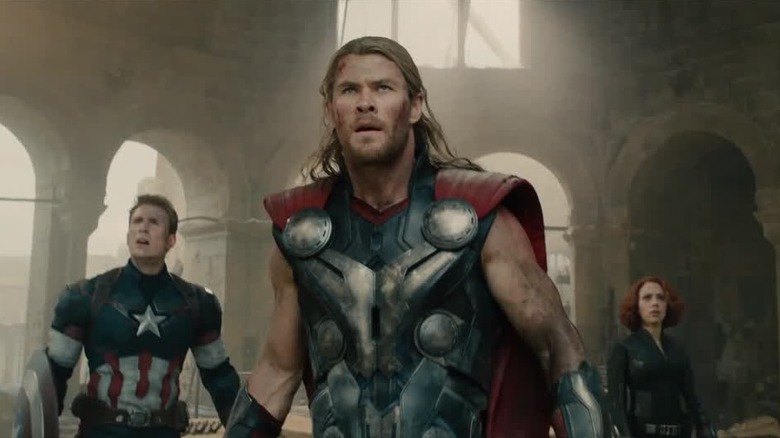
"Avengers: Age of Ultron" taught Marvel a lesson that backfired years later. Essentially, they got away with one creatively. All the same, it made $1.4 billion, which would have meant $112 million for Paramount. Then came 2018's "Avengers: Infinity War" and 2019's "Avengers: Endgame," which made $2 billion and $2.79 billion, respectively. All told, another $383 million left on the table.
Now, realistically, there's almost no way Disney wouldn't have bought out Paramount from the deal at some point. Nor is it clear whether or not Disney's purchase of Marvel might have altered Paramount's contract. Even so, if Paramount's sequel clause stood, they would have milked a fortune out of Marvel before Disney fully took over.
Instead, they walked away with a drop in the bucket, relatively speaking.
![This Resident Evil Scene Was 'the Most Complicated' Of The Vfx Supervisor's Career [exclusive]](https://www.slashfilm.com/img/gallery/this-resident-evil-scene-was-the-most-complicated-of-the-vfx-supervisors-career-exclusive/l-intro-1791476965.jpg "This Resident Evil Scene Was 'the Most Complicated' Of The Vfx Supervisor's Career [exclusive]")




 English (US) ·
  Indonesian (ID) ·