
 8 hours ago
Paramount
The 2009 film "G.I. Joe: The Rise of Cobra" was panned, including by fans for making drastic changes to the source material. The 2013 sequel "G.I. Joe: Retaliation" tried to get things back on track with a largely new cast and more faithful story ... and got the same underwhelmed response.
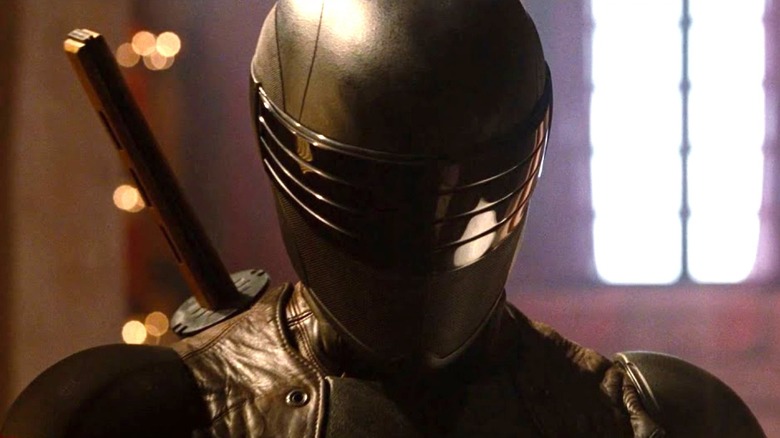
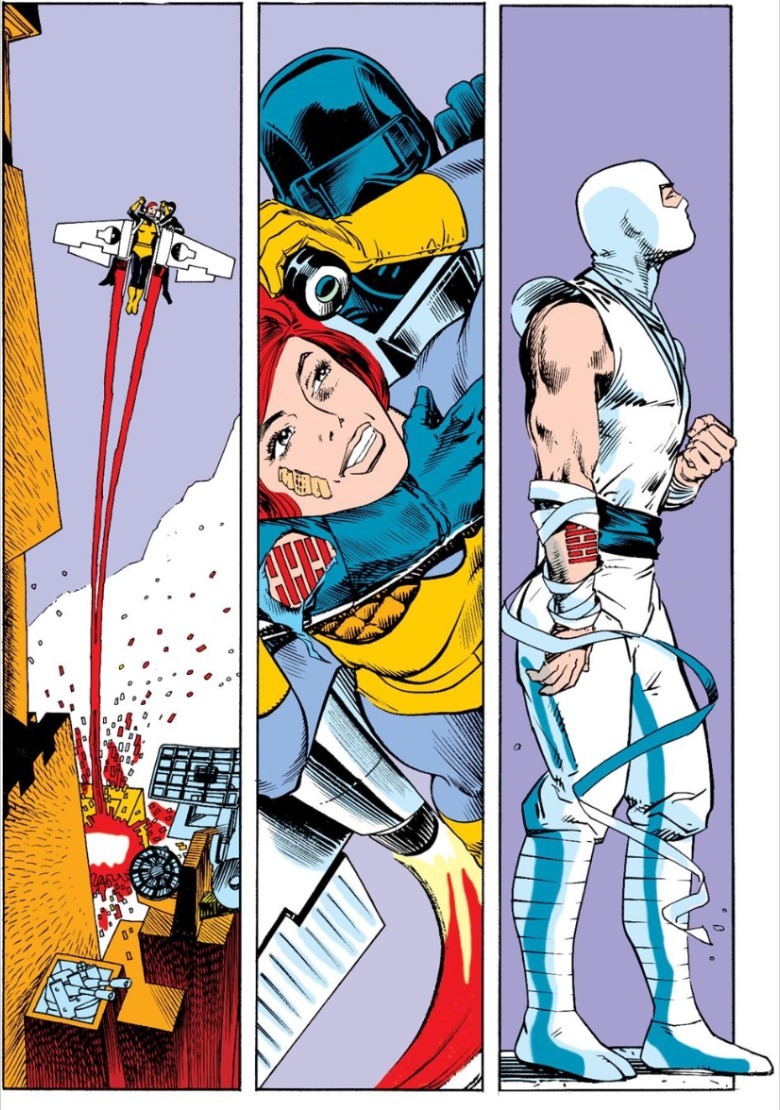
But as part of the effort to do right by "Joe" fans, there's a stunning sequence nestled in "Retaliation." Silent ninja Snake Eyes (Ray Park) and his apprentice Jinx (Elodie Yung) are sent to the Himalayas to capture Storm Shadow (Lee Byung-Hun), a Cobra agent and supposed traitor to their Arashikage Clan. The sequence features almost no dialogue, in homage to a classic issue of Larry Hama's "G.I. Joe: A Real America Hero" comics: #21, "Silent Interlude." Marking the first ever appearance of Storm Shadow, "Silent Interlude" similarly depicted Snake Eyes infiltrating a fortress and dueling Storm Shadow.
"The journey to retain the honor of what 'Silent Interlude' is was a challenge," "Retaliation" director Jon M. Chu told USA Today in 2013. When Storm Shadow and Snake Eyes meet in a hallway, alternating close-ups and long shots frame it like a gunslinging duel in a Western. Storm Shadow uses throwing stars; when Snake Eyes destroys them with a submachine gun (the same gun he wields in "Silent Interlude"), that allows Storm Shadow to close the gap and the battle turns mano-a-mano.
After Jinx knocks Storm Shadow out, our heroes have to escape the mountain with his body while dozens of ninjas chase after them. The action culminates in a zipline chase sequence and an acrobatic duel with Snake Eyes and Jinx repelling off the mountain.
While the quick cutting obstructs the fight choreography a bit, the near-wordless sequence is otherwise the high point of "G.I. Joe: Retaliation."
G.I. Joe's 'Silent Interlude' is a groundbreaking Marvel comic
Marvel Comics
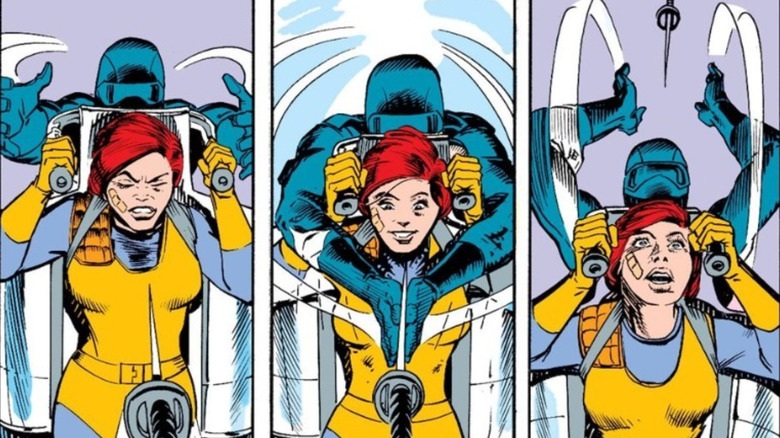
"Silent Interlude" is the most famous of the 300+ "G.I. Joe" issues written by Larry Hama. That's even more amazing since its whole existence stems from an accident. According to Hama, his editor Denny O'Neil had misplaced an issue draft, leaving them only three weeks to put together a new one. To save time, Hama simultaneously scripted and penciled "Silent Interlude." The comic is almost all his in a way most of his other "Joe" issues aren't.
The issue's lack of dialogue was another time saving crunch, but it helped that "G.I. Joe" already had a hero on the cast who said nothing: Snake Eyes. The quick turnaround also explains why "Silent Interlude" is the most classical story imaginable; the hero has to rescue a damsel in distress from a fortified castle.
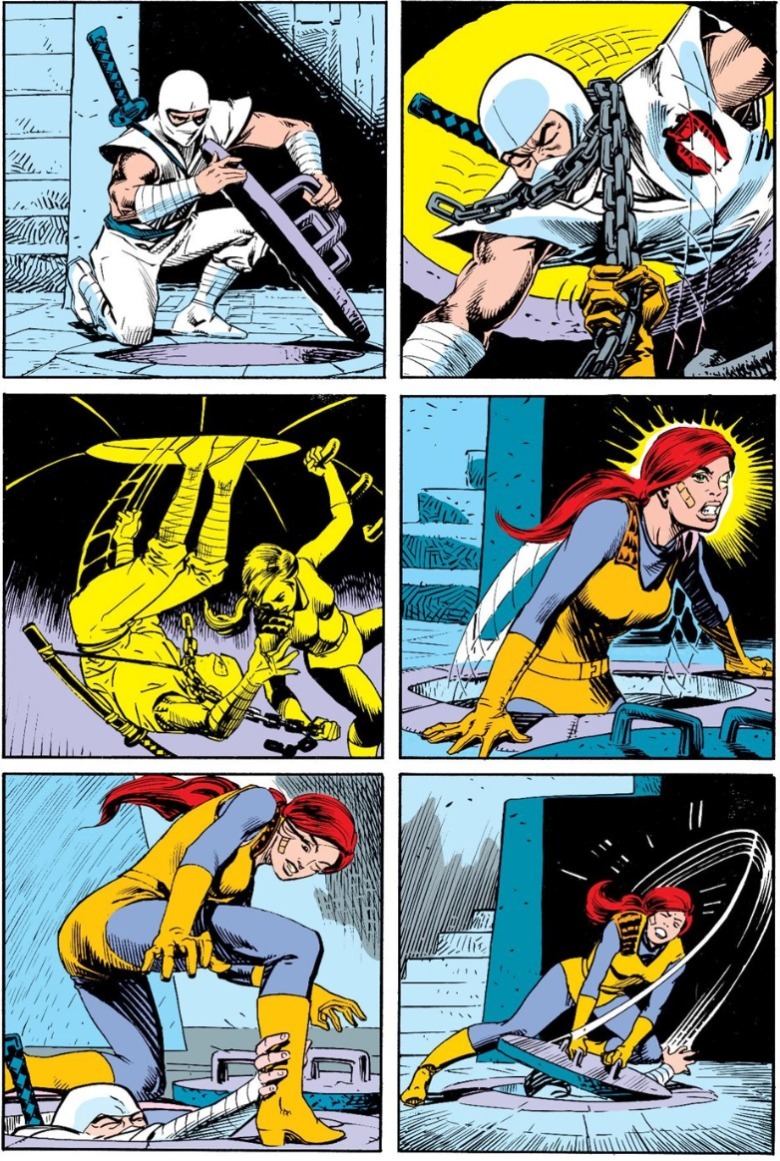
In "Silent Interlude," one of the Joes, Scarlett, has been captured by Cobra. Snake Eyes sky dives into their mountain base to extract her. But the silence isn't the only subversive part. Unlike a typical damsel, Scarlett frees herself instead of waiting for Snake Eyes.
 Marvel Comics
"Silent Interlude" relies on Snake Eyes' own wordlessness, something the movies respect. ("Rise of Cobra" originally had Snake Eyes speak briefly as a gag, before wisely cutting that at Hama's suggestion.) But the "Retaliation" mountain sequence isn't quite a silent interlude. There's sound effects and music cues, characters make grunts as they fight, etc.
Technically, all comic books are silent. The reader has to imagine the noise from the word balloons and written sound effects. With those absent in "Silent Interlude," the reader can rely on only imagery and how action moves across panels. It's some of the purest comic book storytelling imaginable.
Silent Interlude became a foundation of G.I. Joe
Skybound Entertainment
"I don't really write, I do the whole story in my head as a series of pictures," Larry Hama once said. "I write and draw page-by-page, I don't know what's on page three until I get to page two."
In writing and drawing "Silent Interlude" page-by-page, Hama stumbled on a twist that redefined the whole book. The final page reveals Snake Eyes and Storm Shadow, sleeves torn from their fight, have the same red tattoo on both their arms.
 Marvel Comics
Hama filled out their backstory in later issues, revealing them as former brothers in arms and their tattoos as the Arashikage clan symbol. Storm Shadow still thought of Snake Eyes as a brother; he'd only joined Cobra to find the man who'd killed the Hard Master, his uncle and Snake Eyes' sensei. The killer turned out to be Cobra's shapeshifting assassin Zartan.
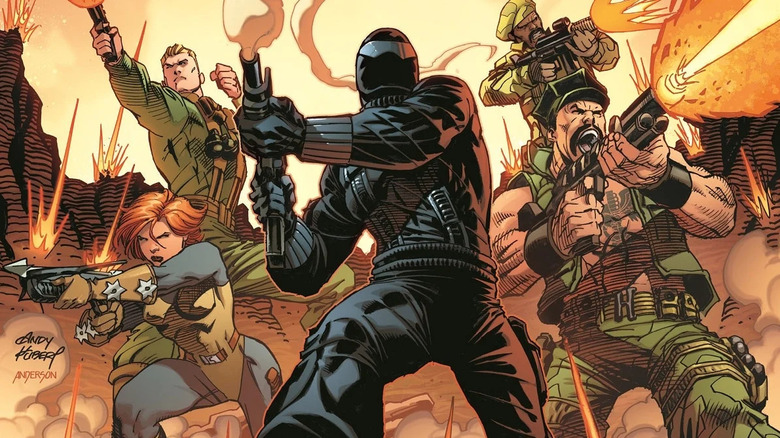
"Silent Interlude" looms large over not just "G.I. Joe" but comics in general. In late 2001, Marvel launched "'Nuff Said," a thematic, cross-title series where many Marvel comics put out an issue with minimal to no dialogue in the style of "Silent Interlude." Skybound Entertainment, current holder of the "G.I. Joe" comic license, published dialogue-free one-shots called "Sssilent Missions." Then, of course, there's "GI. Joe: Retaliation," which hewed close to the Larry Hama comics to win over Joe fans. In the end, though, that homage wasn't enough.
A 2021 spin-off movie about Snake Eyes was a flop as well. Now, the "G.I. Joe" movie franchise is in the hands of Danny McBride, a professed fan of the Larry Hama "Joe" comics. We'll see which, if any, of the Hama story arcs McBride takes inspiration from, but "G.I. Joe: Retaliation" beat him on adapting "Silent Interlude."


 English (US) ·
  Indonesian (ID) ·