
 2 months ago
Jung Hae-in Keeps Playing Romantic Leads, but They Never Feel Like the Same Man
Jung Hae-in’s most memorable romantic scenes rarely depend on extravagant declarations. They are more likely to begin with a quiet look, an unfinished sentence or two people walking together after an ordinary day.
That understated quality has helped him become one of the most recognizable romantic leads among international K-drama viewers. His characters may share certain qualities, including warmth, patience and emotional sensitivity, but Jung changes the way those qualities appear depending on the relationship surrounding them.
His romances do not ask viewers to believe in an impossibly perfect man. They invite audiences to observe how affection develops through familiarity, discomfort, sacrifice and small choices. That distinction explains why viewers continue returning even when the genre itself is familiar.
 International Viewers Keep Returning to Jung Hae-in’s Romantic Dramas / News1
 Something in the Rain established a different kind of leading man
Jung’s first leading television role came in the 2018 drama Something in the Rain, opposite Son Ye-jin. He played Seo Joon-hee, a game designer who falls in love with his older sister’s longtime friend.
The relationship challenged expectations surrounding age, family approval and the behavior considered acceptable for a woman in her 30s. Rather than presenting Joon-hee as a commanding romantic hero, the drama showed him teasing, waiting, listening and gradually recognizing the social pressures affecting the woman he loved.
Jung told The Korea Times that the character allowed him to display several sides of himself, ranging from playful and affectionate to passionate and determined. The drama became a turning point in his career and expanded his popularity across Asia. In a 2018 interview, he described the attention as an opportunity to continue developing rather than proof that he had already succeeded.
The series also established one of his defining strengths: making physical and emotional intimacy feel spontaneous. His chemistry with Son was created not only through scripted romantic moments, but through casual conversations, shared laughter and the impression that the characters remained aware of each other even when they were not speaking.
He performs romance by listening
Many romantic dramas focus on the person delivering a confession. Jung’s performances are often equally effective when his character is receiving one.
He reacts before answering, allowing uncertainty, happiness or disappointment to register in his expression. His pauses rarely feel empty because they show the character processing what another person has said. This makes his romantic partners appear emotionally important rather than simply positioned as recipients of his affection.
That quality became especially important in One Spring Night. Jung played Yoo Ji-ho, a pharmacist and single father who develops feelings for a librarian trapped in a stagnant relationship. Ji-ho’s vulnerability did not come from being helpless. It came from understanding that his status as an unmarried father could expose both himself and his son to social judgment.
The romance therefore required patience rather than conquest. Jung portrayed a man willing to express his feelings but unable to ignore the consequences that those feelings could have for other people. His controlled performance gave the relationship a mature emotional weight that could be understood by viewers regardless of their cultural background.
 International Viewers Keep Returning to Jung Hae-in’s Romantic Dramas / News1
 His characters make ordinary care feel romantic
Jung’s romantic appeal is closely connected to acts of attention. His characters notice changes in another person’s mood, remember small details and frequently communicate affection through practical behavior.
These gestures are not unique to his dramas, but Jung gives them credibility by resisting the temptation to overplay them. A smile can be brief, a moment of jealousy can remain contained, and concern can appear through body language before it becomes dialogue.
In Love Next Door, that familiarity took a different form. Jung played architect Choi Seung-hyo, whose long history with childhood friend Bae Seok-ryu, played by Jung So-min, made polished courtship unnecessary. Their relationship included arguments, embarrassing memories and the comfort of knowing each other before either became a successful adult.
The drama spent 10 weeks in Netflix’s Global Top 10, according to ContentAsia’s analysis of the platform’s rankings. Its durability demonstrated that Jung’s appeal was not limited to the more subdued melodramas that first established him. He could also carry a brighter romantic comedy built around childhood chaos and family relationships.
His darker projects protect his romantic image from becoming predictable
Jung has never worked exclusively in romance. In Netflix’s D.P., he played Ahn Jun-ho, a soldier assigned to locate military deserters while confronting violence and institutional abuse. He also entered science-fiction horror with Connect and played a violent antagonist in the crime film I, the Executioner.
These projects matter to his romantic career because they reveal tension beneath his gentle screen image. Audiences who have seen D.P. understand that his silence can communicate fear, anger or moral exhaustion as convincingly as affection.
When he returns to romance, his characters consequently feel less like variations of a fixed celebrity persona. His warmth appears to be an acting choice rather than the only quality he can perform.
Our Sticky Love turns his familiar sincerity into something riskier
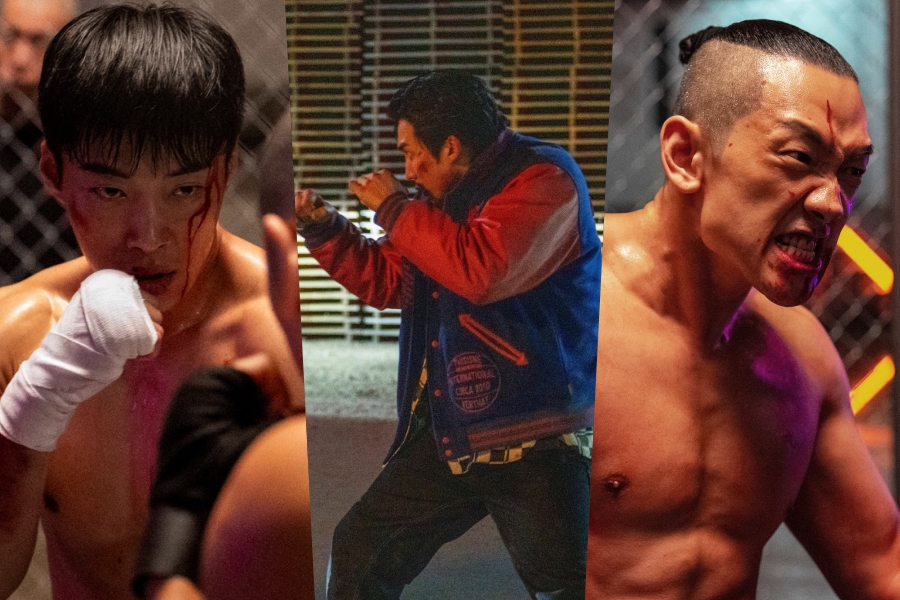
Jung’s next romantic role combines his approachable image with elements of crime drama. Premiering globally on Netflix on August 7, Our Sticky Love stars him as Jang Tae-ha, a former boxer who becomes a small-town boxing coach.
When prosecutor Go Eun-sae, played by Ha Young, loses her memory, Tae-ha claims to be her boyfriend. Their forced cohabitation develops into romance while an underworld threat follows them.
Director Kim Jang-han explained that the crime storyline was designed to demonstrate how far Tae-ha would go for love. “While the series is basically a romantic comedy, bringing in the genre of crime was a helpful tool in showing a romantic man who is not afraid to risk his life for love,” he said at the production’s press conference, according to Yonhap News Agency.
The premise gives Jung another opportunity to adjust his familiar romantic strengths. Tae-ha may possess the patience and loyalty associated with his earlier characters, but he also carries a physical history and morally complicated circumstances that place those qualities under greater pressure.
Familiarity without repetition
International viewers do not return to Jung Hae-in’s romances because he offers a completely different screen identity each time. They return because he understands how to preserve emotional familiarity while changing its context.
In one drama, tenderness must survive an age-gap relationship and family opposition. In another, it must accommodate single parenthood and social prejudice. In Love Next Door, it grows out of childhood familiarity, while Our Sticky Love places it alongside lost memories and criminal danger.
The common element is Jung’s ability to make affection appear attentive rather than performative. He does not simply show viewers that his character is in love. Through pauses, reactions and ordinary gestures, he lets them watch that love taking shape.





 English (US) ·
  Indonesian (ID) ·