
 2 months ago
Universal Pictures
We may receive a commission on purchases made from links.
Michael Crichton is unrivaled in some ways when it comes to finding success in "the business," as it were. He's the only author to ever have a number one movie, TV show, and book at the same time. Oh, and he managed to do that twice. As the writer behind novels such as "Jurassic Park," and one of the driving forces behind the colossal hit that was "E.R.," he was a titan. He was also accused of being "antiscience."
Despite many of his books taking place in the realm of science fiction, most notably "Jurassic Park" (which sparked a major Hollywood bidding war at the time), Crichton had been accused of, well, being against science thanks to his writing. In an interview with David Sheff for Playboy, Crichton once addressed these allegations and made his thoughts on the matter very clear:
"I've always been called anti-whatever. Antifeminist, anti-Japan, antiscience. There's a long list. The science thing was said to me directly. People said that by expressing concerns about the negative impact of science and technology, I was fueling people's fears and diminishing the ability of science to progress. But that's baloney. If it were true that 'Jurassic Park' is antiscience and impeding progress and people's interest in science, why are so many natural history museums in the U.S. now running shows called 'Jurassic Park' or 'The Real Jurassic Park?'"
"They perceive that the effect of these stories is to arouse tremendous interest and enthusiasm — more than scientists are generally able to," Crichton concluded.
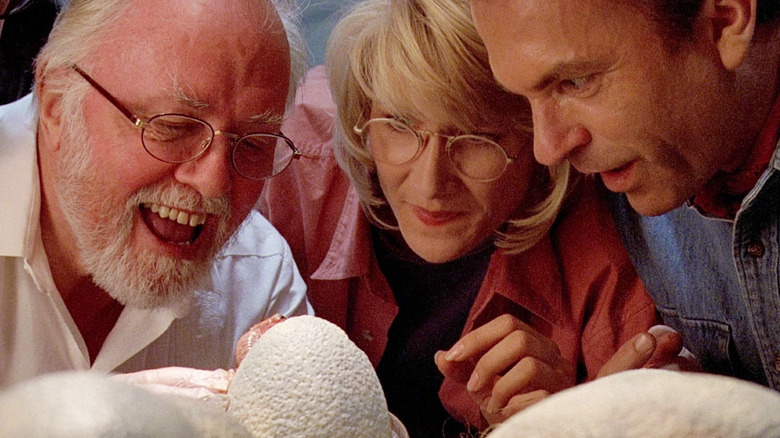
Crichton didn't write the script for the "Jurassic Park" movie, though he did contribute to some early drafts. But the larger public perception of the story was shaped by Steven Spielberg's 1993 film adaptation, which went on to become a massive hit.
Jurassic Park isn't an antiscience work of fiction
Universal Pictures
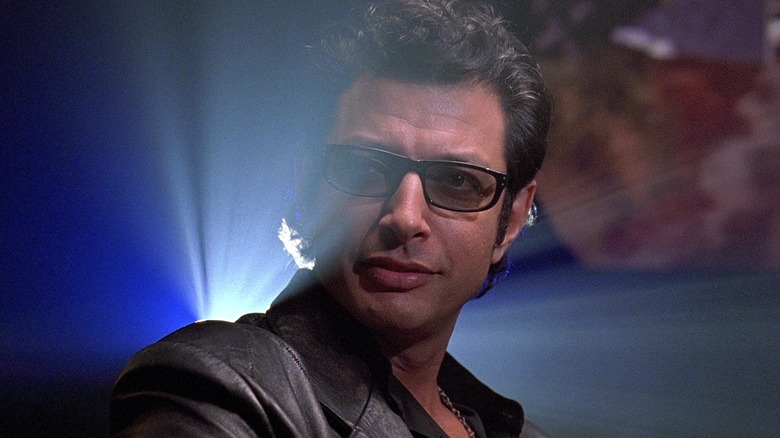
Steven Spielberg's "Jurassic Park" changed movies forever and was the biggest film of all time for a while. And while Michael Crichton's book differs greatly from the movie, the larger theme remains, which is essentially a cautionary tale about humanity's quest for unending scientific progress at all costs having consequences.
The fact that Crichton's cautionary view could be taken as antiscience is pretty wild, especially when we consider that "Jurassic Park" is largely responsible for the so-called "golden age of dinosaurs." Per a 2018 report from The Guardian, many people who came of age with Spielberg's movie ended up going into paleontology, leading to an explosion of discoveries in the field. That's pretty pro-science in a real-world way.
Speaking further in that same interview, Crichton elaborated on his thoughts:
"We live in a society that in many respects is a gigantic cheerleader for science and technology. None of these advances have been as good as they originally claimed to be. I'm old enough to remember a world without television. And I remember all the claims for television — about how it was going to produce universal education and there was going to be so much exposure to the world. Some of those claims have come true, but the overwhelming majority of the claims were just baloney. It's difficult now to make the claim that television is an educational medium. It's an advertising medium."
Crichton died in November 2008 and never got to fully see the impact his writing had on real-world science. In the end, though, it seems fair to say that he beat the antiscience claims.
You can grab a copy of Michael Crichton's "Jurassic Park" novel on Amazon.



 English (US) ·
  Indonesian (ID) ·