
 1 month ago
Columbia Pictures
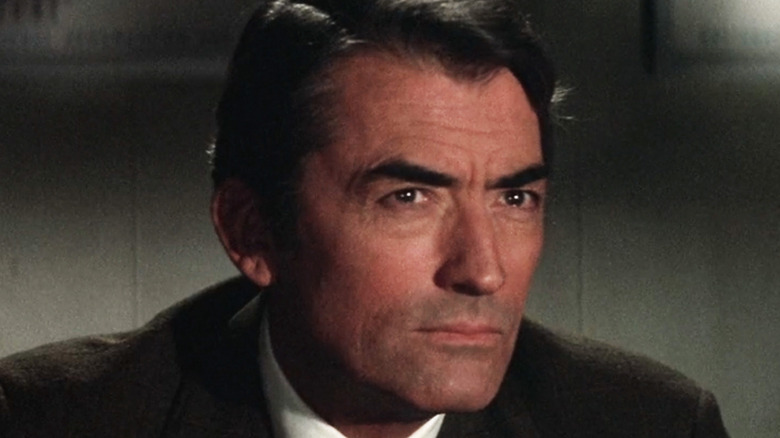
Gregory Peck made his big screen debut with RKO's war-romance "Days of Glory" back in 1944. He broke through that very same year with "The Keys of the Kingdom," for which he earned a Best Actor Oscar nomination. By the late 1960s, he was one of the biggest stars in Hollywood — an icon who was also known for his offscreen humanitarian efforts as much as he was for his legendary performances. 1969's "Marooned" isn't typically cited as one of Peck's best films, but it's arguably an unfairly overlooked entry in the man's filmography. The story of three astronauts who become stranded in space was based on Martin Caidin's 1964 novel of the same name and had a thrilling premise that was somewhat undermined by slow pacing and the fact that it debuted the same year Stanley Kubrick unveiled his masterful sci-fi epic "2001: A Space Odyssey." Nevertheless, "Marooned" had plenty working in its favor and is well worth a watch on Tubi, where it's currently streaming for free.
The film wasn't short on talent, that's for sure. For one thing, it was directed by John Sturges, who by that point had racked up a filmography as impressive as Peck's, with features such as 1957's "Gunfight at the OK Corral," 1960's "The Magnificent Seven," and of course 1963's "The Great Escape." Meanwhile, Peck was flanked by a great supporting cast that included Gene Hackman and Richard Crenna. "Marooned" also featured some impressively rendered production design that used real-life NASA equipment to create convincingly immersive sets that helped the film maintain an air of authenticity. Even with all this, however, the movie failed to make back its budget, which, considering its premise and the thrilling book on which it was based, was a real shame.
Gregory Peck oversees a space rescue mission in Marooned
Columbia Pictures
Martin Caidin's "Marooned" tells the story of a single astronaut, Major Richard "Dick" Pruett, who becomes stranded in Earth orbit as his oxygen runs out. Meanwhile, back on terra firma, his friend Jim Dougherty urges NASA to launch a rescue mission using a prototype spacecraft. Dougherty eventually pilots the ship, rendezvousing with Pruett and a Russian cosmonaut sent by the USSR before successfully returning his friend to Earth.
But this version of "Marooned" was heavily modified after Caidin was brought on as a technical advisor for the film adaptation. In the mid-'60s, director Frank Capra tried his best to get such an adaptation off the ground, but gave up amid budgetary concerns in 1966. Soon after, Columbia Pictures pushed ahead with the project, bringing in John Sturges and hiring Caidin to advise. The author then updated his original novel to more closely mirror the script for the upcoming feature.
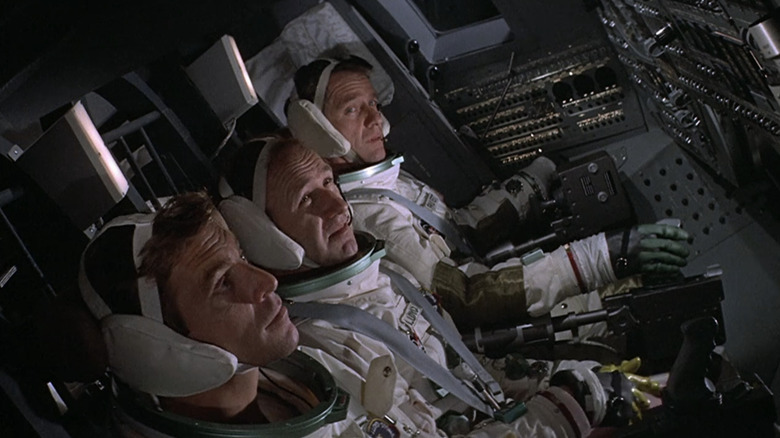
The screenplay, written by Mayo Simon, changed the story significantly, most notably by having three astronauts become stranded in space. Yes, long before Sandra Bullock found herself isolated in Earth's orbit for "Gravity," Gene Hackman, Richard Crenna, and James Franciscus found themselves in a similar situation. In "Marooned," the three spacemen are running out of oxygen in Earth's orbit with no way home. On the ground, Gregory Peck's space agency head Charles Keith initially argues against a rescue mission, but is overruled by the President, who's sympathetic to David Janssen's Colonel Ted Dougherty, an astronaut who suggests using the experimental X-RV craft. Caidin's updated novel essentially functioned as a tie-in to the movie, featuring three astronauts and an updated narrative. It hit shelves just weeks before "Marooned" the movie debuted. Alas, it didn't help the film's commercial performance.
Marooned was a solid but flawed attempt at adapting the novel
Columbia Pictures
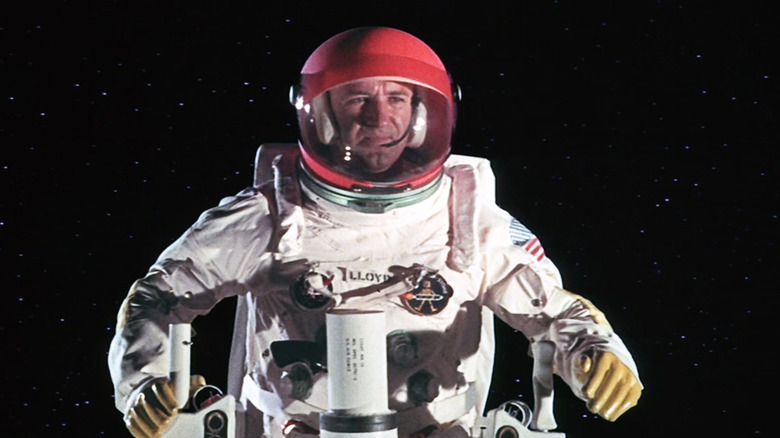
When "Marooned" went into production, American audiences were well-versed in NASA's Apollo missions. In fact, the film ultimately debuted around four months after the July 21, 1969 Apollo 11 moon landing. So, Columbia brought in NASA to advise and ensure set designs were accurate. The agency provided real Apollo hardware to the movie, but it didn't seem to impress audiences, with "Marooned" making just $4.3 million on a budget of between $8 million and $10 million. That said, visual effects maestro Robbie Robertson did win the Best Visual Effects Oscar for his work on the movie.
Still, as Roger Ebert put it in his review of the film, "John Sturges' 'Marooned' demonstrates convincingly that it will be a long time before a space movie comes along to outclass '2001: A Space Odyssey.'" The critic even went so far as to say, "Sturges should have hired a better technical consultant," but he couldn't have gotten much better than NASA itself. Regardless, Ebert remained unimpressed, and it's not hard to see why considering the genius production design of "2001: A Space Odyssey."
Despite his quibbles with the special effects, the critic did admit that "Marooned" worked "very nicely as an entertainment," and praised Hackman for being "particularly good" as a man who "gradually goes nuts." Still, there are definite pacing issues in the film, with dialogue being delivered between extended moments of silence. What's more, Peck wasn't given enough to do for "Marooned" to become one of his best performances, and the feature as a whole falls short of being one of the best space movies ever made. That said, the production design and moments of real tension make "Marooned" a solid attempt to adapt Martin Caidin's novel.

![Why Project Hail Mary Used An Animatronic Rocky Instead Of A Puppet In One Scene [exclusive]](https://www.slashfilm.com/img/gallery/why-project-hail-mary-used-an-animatronic-rocky-instead-of-a-puppet-in-one-scene-exclusive/l-intro-1791817996.jpg "Why Project Hail Mary Used An Animatronic Rocky Instead Of A Puppet In One Scene [exclusive]")






 English (US) ·
  Indonesian (ID) ·