
 1 month ago
Metro-Goldwn-Mayer
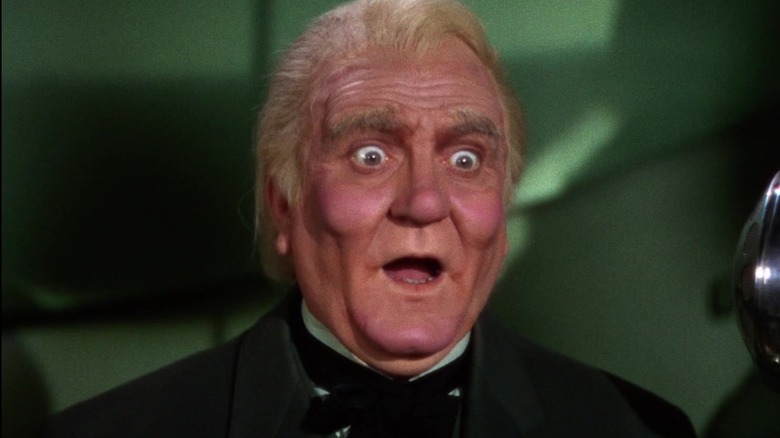
First released in theaters on August 25, 1939, "The Wizard of Oz" has become probably the most famous movie of all time. Its images, dialogue, characters, and story are now templates unto themselves, with filmmakers and storytellers imitating them to this very day. And I don't just mean in other movies set in Oz like the "Wicked" films. Any story about an ordinary person who is unexpectedly whisked away into a magical realm of wonder, only to be joined by eccentric locals and tasked with an act of heroism, owes its existence to "The Wizard of Oz." Joseph Campbell, in particular, could have made a meal of "The Wizard of Oz," as it might serve as one of the primary pop examples of the Hero's Journey. The movie is 87 years old as of today, and it might not be an exaggeration to state that more people have seen "The Wizard of Oz" than any other film.
Loosely based on L. Frank Baum's 1900 book "The Wonderful Wizard of Oz," the film had an infamously long road to the big screen. Victor Fleming is the movie's credited director, but he was only one of several filmmakers who oversaw the project. Indeed, it's well-known among film historians that King Vidor directed some of the film's Kansas-set sepia-toned scenes, while Norman Taurog oversaw some of its color tests, Mervyn LeRoy helmed some transitional scenes, and George Cukor and Richard Thorpe each briefly sat in the director's chair. Reading about the production of "The Wizard of Oz" is a litany of horrors, and it's astonishing the film got made at all.
And, perhaps surprisingly, "The Wizard of Oz" initially underperformed at the box office. As noted by the AFI, the movie actually lost money at first.
The Wizard of Oz initially lost money
Metro-Goldwn-Mayer
Per AFI, "The Wizard of Oz" had a, for its time, large $2.77 million budget but lost about a million dollars during its original theatrical run due primarily to its advertising and distribution costs. As a result, the movie didn't recoup its losses until it was re-released in theaters from 1948 to 1949. It had a long path to break even.
According to History.com, "The Wizard of Oz" was first broadcast on television in 1956. Millions of people tuned in to watch what was now a retro-classic, and the film's reputation only grew from there. In addition, "The Wizard of Oz" has been re-released in theatres several times since 1949, usually once a decade or so, raking in a little extra cash each time. As documented by Box Office Mojo, the film was later re-released in 1955, 1989, 1998, 2002, 2006, 2009, 2013, 2019, and 2024. Yet, even then, it's never grossed more than roughly $14 million in actual ticket sales in any single release.
Of course, throw in its physical media sales and numerous licensing deals, and "The Wizard of Oz" is surely a legitimate cash cow by now. Reportedly (via The Numbers), the movie has made over $103 million in DVD and Blu-ray sales alone. It also broke a Fathom Events record in 2019, and the recent "remix" of the movie at the Sphere in Las Vegas has apparently raked in about $2 million a day (per USA Today). The actual profits earned by "The Wizard of Oz" may be impossible to accurately track, but one can see that the movie has clearly made its money back by now (and then some).
The Wizard of Oz endures
Metro-Goldwn-Mayer
It's hard to talk about "The Wizard of Oz" in any kind of fresh way, sadly, just because it's been so widely analyzed and relitigated over the decades. Few films have been written about more, and one can easily find retrospectives and essays on the movie online with simple search engines. It's nearly impossible to look at the movie with fresh eyes.
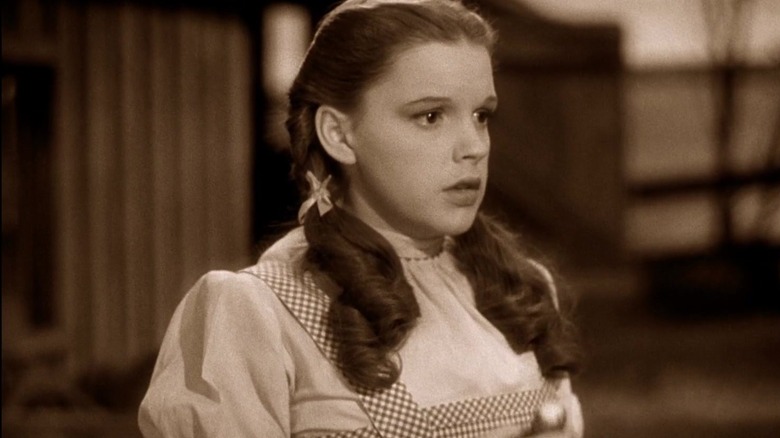
I can say that I re-watched "The Wizard of Oz" earlier this year for reasons of comfort, having already memorized the movie. Nothing was revealed with this new re-watch, but I was struck at how childish Dorothy behaves when compared to Judy Garland's actual age. She was 16 during production, yet her dialogue and impetuous behavior would have felt more natural coming from an 11 or 12-year-old. Likewise, I was struck by the broad, vaudeville performances by Frank Morgan (who plays The Wizard himself and four other characters), Jack Haley (Hickory/Tin Man), Ray Bolger (Hunk/Scarecrow), and Bert Lahr (Zeke/Cowardly Lion). Garland is acting in a movie, yet the supporting cast plays to the rafters as if they're on stage. I also giggled at hearing Haley's Bostonian accent coming out of a Kansan farmer. ("If I only had a hahht." Snicker.) Bolger, as it were, was from Boston as well, while Lahr and Morgan were from New York, so none of them had a very "Hollywood" sensibility despite being film stars.
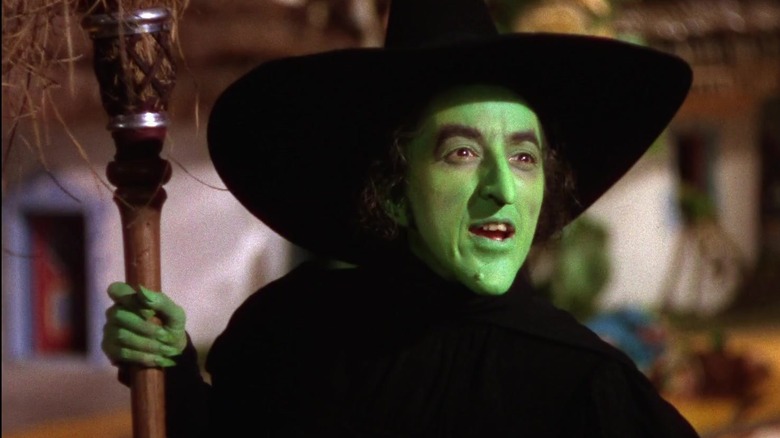
Finally, Margaret Hamilton (Almira Gulch/Wicked Witch of the West) is the real hero of the movie. Thanks to Hamilton, we all know what witches look and sound like. And, yes, it's true that she was once a Kindergarten teacher. I'm sure she was wonderful with kids.



 English (US) ·
  Indonesian (ID) ·