
 2 hours ago
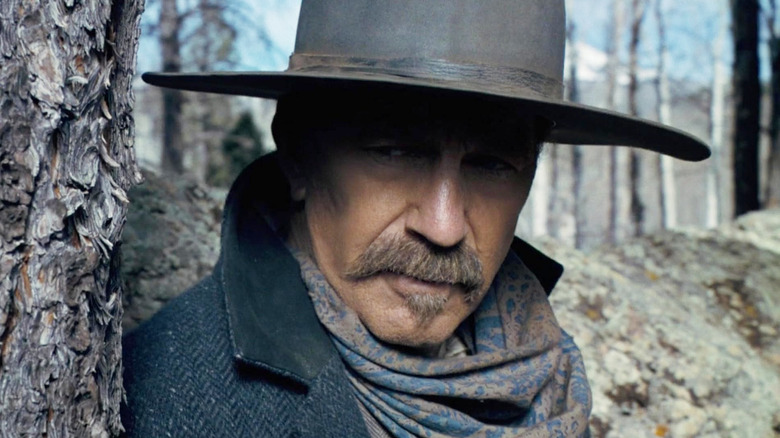
New Line Cinema
We may receive a commission on purchases made from links.
The American Western was so popular for so long that the genre still casts a long shadow over the modern entertainment industry. Certain types of Western clichés — lone strangers, beleaguered small towns, brave gunslingers, stalwart sheriffs, cheery cowboys, evil cattle rustlers, white hats, black hats, etc. — are now practically Jungian archetypes. From the 1940s to the 1960s, Hollywood turned out one Western after another, largely because they were so easy to produce. Indeed, movie studios had Western sets where they could shoot films and TV shows incessantly. More usefully, the deserts of California were within driving distance of Hollywood, so it was easy to haul out some camera gear and horses and pretend that, once again, it was 1890.
However, in spite of all this, there have been some Western films that got too ambitious for their own good. Westerns, I personally feel, function best when they play small, focusing on character, setting, and story. When they start tipping into the vastness of U.S. history, leaning toward intergenerational epics, they begin to flounder. Western epics can work, of course (the James Dean-led "Giant" being one such example), but those types of films need a great script and committed director to function.
Ambition has toppled many Western movies over the years, causing several notable projects to fail to live up to their potential. Indeed, the following films are all star-studded oaters that were based on good ideas, but they ended up — for various reasons — bombing at the box office, leaving audiences crestfallen. There's no good reason the following movies should have failed, either. It just so happens that they did.
The Lone Ranger (2013)
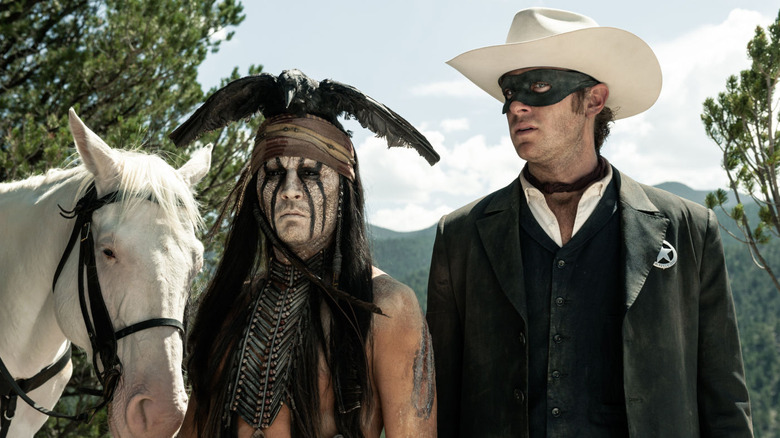
Disney
One can see the thinking at work with Gore Verbinski's "The Lone Ranger." After Disney scored a surprise hit with Verbinski's "Pirates of the Caribbean: The Curse of the Black Pearl" in 2003, the studio scrambled to find another genre of pulp heroism it could exploit. "The Lone Ranger," based on the radio and TV hero born in the 1930s, seemed to fit the bill perfectly. Just hire the star (Johnny Depp) and the director of "Pirates," and add "cowboys." What's more, "The Lone Ranger" offered an opportunity for shootouts, train chases, and other kinds of action that a mainstream audience would crave. Throw in a very handsome, charming lead actor like Armie Hammer, and folks will come in droves, right?
Guess again. Instead, "The Lone Ranger" became one of Disney's biggest box office flops upon its arrival in 2013. Part of the issue is that it cost roughly $250 million to produce and runs a bloated 149 minutes. The bigger problem, however, is that the film's script is terrible, weaving in too many plot threads amongst its tiresome action set pieces. The only time "The Lone Ranger" works is when Verbinski wisely includes the "William Tell Overture" during his movie's climax. It's hard not to be exhilarated while listening to the ol' "Lone Ranger" theme.
There's no reason why "The Lone Ranger" should have failed, but it sure did — and that's to mention nothing of Depp and Hammer's much-publicized off-screen conduct, making it all the less likely this film will ever be re-litigated. Quentin Tarantino loves it, though, so that's ... something.
Cowboys & Aliens (2011)
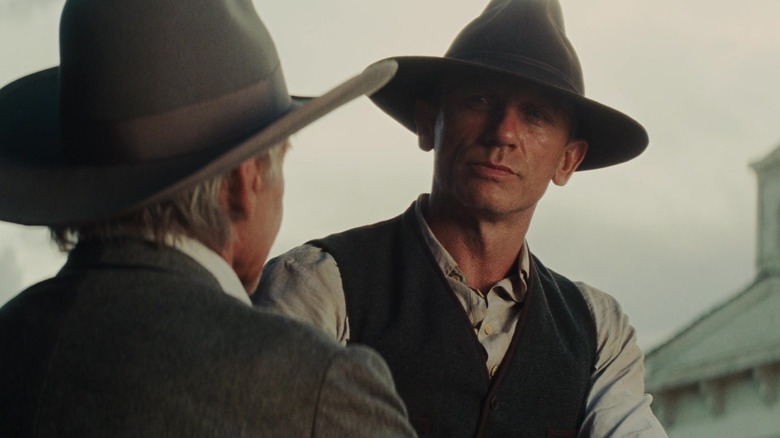
Universal
Jon Favreau's "Cowboys & Aliens" is another Western (this time, naturally, a sci-fi hybrid) that looks great on paper but is lackluster in execution. Three years prior to the film's release in 2011, Favreau had become a Hollywood darling thanks to "Iron Man," the movie that launched the Marvel Cinematic Universe. He followed that with the less impressive "Iron Man 2," yet he was seemingly given carte blanche to helm whatever blockbuster project he wanted afterwards. He selected "Cowboys & Aliens," based on the 2006 comic book by Scott Mitchell Rosenberg.
And the idea was fun, embedded right there in the title. The film is about an alien invasion in the Old West. Space creatures vs. gunslingers. It's pulp perfection. Daniel Craig was cast as the star, while Harrison Ford plays an aging, stalwart cattle-hand. Other notable actors like Sam Rockwell, Olivia Wilde, and Paul Dano appear as well.
But, like "The Lone Ranger," the script just isn't there. There are five credited screenwriters on "Cowboys & Aliens" and three story-by credits, which feels like a sign that a lot of tinkering happened. Also, the budget was an unexpectedly high $163 million. Sure, actors like Ford and Craig fetched high prices, but too much money was spent on the film's visual effects. As such, the movie feels muddy and rushed, failing to stick in the imagination. What should have been a slam dunk turned out to be an ill-fated non-blockbuster with no interesting ideas or action set pieces.
Favreau is a good director, and he certainly knows how to make fun blockbusters. But when it comes to sci-fi Westerns, he did much better with "The Mandalorian and Grogu."
Horizon: An American Saga (2024)
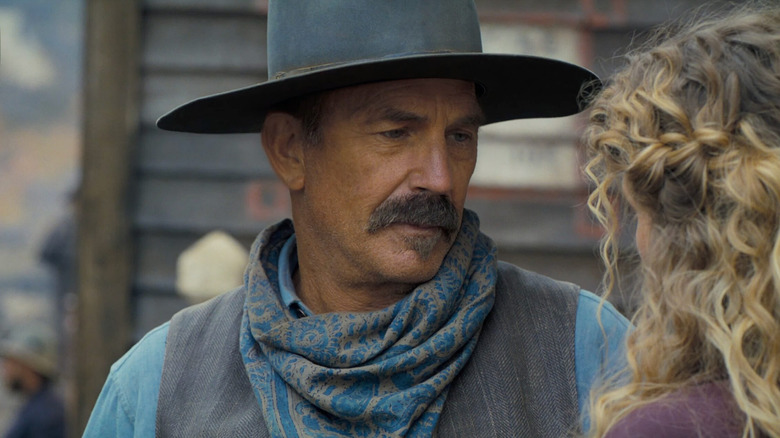
New Line Cinema
Kevin Costner's directorial debut, 1990's "Dances with Wolves," was a massive success. It's hard to describe the cultural presence the movie had, especially because it's a slow-moving, downbeat film about a Civil War soldier (Costner) going to live with a local Sioux community. This movie cemented Costner as a "Western guy," and he went on to work on the oaters "Wyatt Earp," "The Postman" (a sci-fi Western), and "Open Range," in addition to starring in the neo-Western TV series "Yellowstone."
Then, Costner unveiled what was supposed to be the first of four (!) long epics about nothing less than the rise of the United States. The films were to be released under the title of "Horizon: An American Saga" and star Costner as a horse trader alongside a wide panoply of characters that don't always interact. The story begins in 1859 and treks forward through the years, with several parties all keen on traveling west and settling. "Chapter 1" was released in theaters in 2024 and ran 181 minutes, with "Chapter 2," running 190 minutes, already being completed and ready to go. If you're going to play, play big, right?
But "Chapter 1" flopped at the box office, causing "Chapter 2" to be delayed (seemingly indefinitely) and leaving it unlikely "Chapter 3" and "Chapter 4" will ever be made at all. One certainly can't fault "Horizon" for ambition, but one can certainly fault "Chapter 1" for turgid filmmaking, bad pacing, and unclear goals.
Heaven's Gate (1980)
United Artists
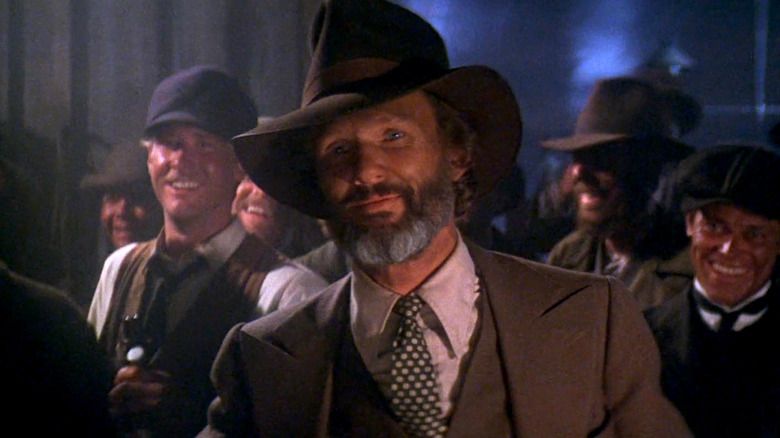
The box office failure of "Heaven's Gate" not only killed the Western genre of yore, it was also a big enough flop to kill New Hollywood with it. After that, the old guard of 1970s auteurs were no longer trusted by studios. It's a pity, too, since "Heaven's Gate" isn't at all terrible. It's just that it went wildly over-budget.
The joke most widely circulated about "Heaven's Gate" is that, on its sixth day of production, the movie was already five days behind schedule. Many books have been written about what went wrong with Michael Cimino's 1980 epic (Steven Bach's 1999 book "Final Cut: Art, Money, and Ego in the Making of Heaven's Gate, the Film that Sank United Artists" is pretty thorough), and you might have heard the legends about how Cimino was a perfectionist who made large, expensive orders at the last minute.
So, what's the film even about? The short version: It's a sweeping, romantic Western involving land barons and immigrants coming to loggerheads in Wyoming circa the 1890s, as brought to life by a cast that includes Christopher Walken, Kris Kristofferson, John Hurt, Brad Dourif, Isabelle Huppert, and Sam Waterston. Despite everything, it was still nominated for an Oscar (for its art and set design), and it might have been great. Unfortunately, its budget and box office woes overshadow anything positive one might say about the movie.
Wild Wild West (1999)
Warner Bros.
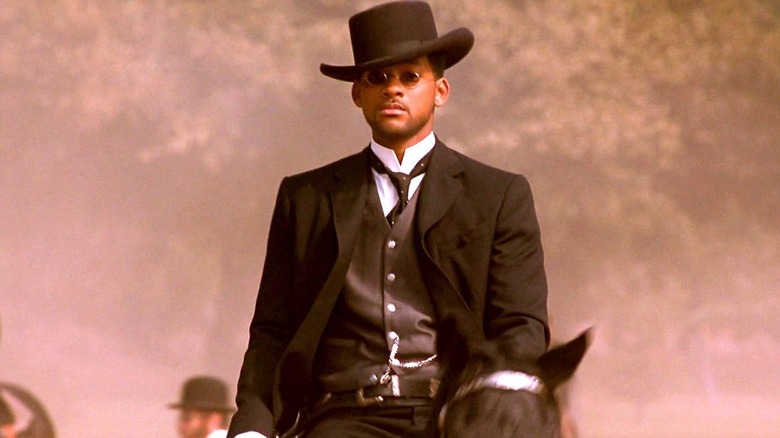
At the beginning of 1999, it seemed that Will Smith could do no wrong. By the end of 1999, he most certainly had. Barry Sonnenfeld's "Wild Wild West," based on the 1960s TV series "The Wild Wild West," was a notable low point in a year marked by its high points. Smith stars as a dashing and heroic do-gooder tasked with protecting President Grant (Kevin Kline) from an evil former Confederate (Kenneth Branagh) equipped with a 10-story mechanical tarantula. Kline, meanwhile, pulls double-duty as the skilled engineer and scientist who works with Smith's character.
Like all the Western films above, "Wild Wild West" looked good on paper. Smith and Kline are both capable, charismatic actors, and Branagh makes for delicious villains. On top of that, Salma Hayek is part of the cast, and the movie has a steampunk aesthetic that, in fits, is gorgeous to behold. And with Smith and Sonnenfeld coming off their 1997 hit "Men in Black," there was no reason to think this film couldn't work.
But, like so many other failures before it, the movie's budget was too high, and its script stunk. This, in turn, led to "Wild Wild West" becoming the biggest misstep of Smith's career, earning the disdain of critics and leaving mainstream audiences baffled. As for why's there a gigantic mechanical spider in the movie? Blame "Wild Wild West" producer Jon Peter's weird obsession with giant spiders (something that's been well documented by filmmaker Kevin Smith).



 English (US) ·
  Indonesian (ID) ·