
 13 hours ago

Warner Bros.
Sometimes hits are forgotten, and sometimes bombs become hits. Some of the greatest sci-fi movies of all time bombed at the box office.
Any cineaste will be able to tell you that box office success doesn't necessarily mean the same thing as cultural impact. Films can make money hand-over-fist at the box office, even becoming the highest-grossing movies of all time, only to be forgotten two generations later. I often like to point to the "Francis the Talking Mule" movies as a prime example of this. From 1950 to 1956, there were seven hit comedies about Francis the Talking Mule, most of which starred Donald O'Connor. The films were immensely popular in their day, and yet, no modern media outlets have exhaustive retrospectives on them. Ditto the "Police Academy" franchise (click here to learn about the correct viewing order), which saw seven movies and two TV shows from 1984 to 1998. Those films were massive hits, and yet there remains no nostalgia for them in the pop zeitgeist.
And, just as often, the opposite will occur. A box office bomb can be hastily swept out of theaters, ignored by audiences, and sometimes even lambasted by critics. But then, years later, repertory screenings and home video consumption will invite a grand relitigation of said movies, and the critical tide will turn. Additionally, some important young filmmakers will be influenced by those bombs, make movies in their likeness, and the one-time box office failure will suddenly be culturally important. It's like what Brian Eno said about the Velvet Underground. "The first Velvet Underground album only sold 10,000 copies, but everyone who bought it formed a band."
The following five movies all notoriously tanked at the box office, but are now considered sci-fi standards among the genre's fans.
Blade Runner (1982)
Warner Bros.
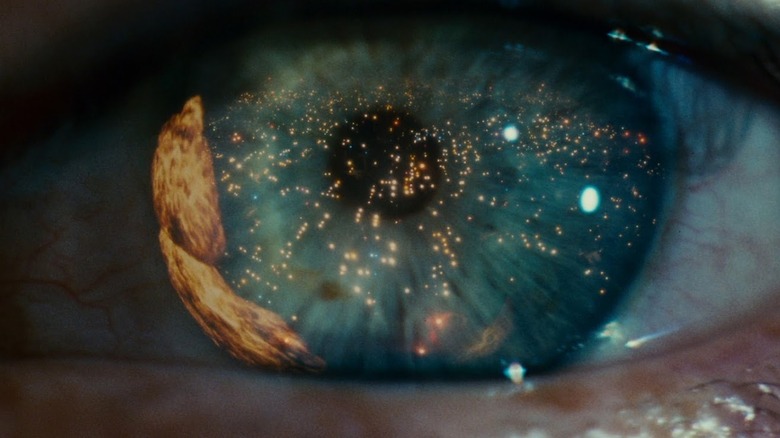
Ridley Scott's 1982 film, based on the 1968 Philip K. Dick short story "Do Androids Dream of Electric Sheep?," follows the travails of one Rick Deckard (Harrison Ford), a professional blade runner living in 2019 Los Angeles. "Blade runner" is a cool-sounding nickname for special detectives who have to track down and identify rogue replicants, that is: robot laborers with a finite lifespan. Replicants are meant to serve as slaves, but some of them have a pesky habit of developing free will, hence why blade runners need to find and "retire" them.
"Blade Runner" has been endlessly scrutinized since its release in 1982, and Ridley Scott has famously tinkered with the film repeatedly, resulting in multiple known cuts of the film (and you can read all about the film's multiple endings). Some of the film's fans find it to be deeply profound, questioning the value of life and the nature of mortality. The film is notoriously slow-paced, especially by today's action-hungry standards, so if you're a "Blade Runner" neophyte, research the cut you want and settle in for a long haul.
The most impressive thing about "Blade Runner" is its production design. Ridley Scott and his team created something unique with 2019 Los Angeles. It was a lived-in, dirty city, full of interesting fashion and a bracing mishmash of cultures. Moving electric billboards festooned large glittering towers, and the city stretched well beyond the horizon. Every future-set sci-fi movie since has taken some kind of visual note from "Blade Runner," making it perhaps one of the most ripped-off movies of all time.
And it was an infamous bomb. Made for $30 million, "Blade Runner" only made $32 million domestically. In 1982, audiences wanted Steven Spielberg's lighthearted "E.T. the Extra-Terrestrial." "Blade Runner" was well beyond the population's interests.
The Thing (1982)
Universal
Speaking of "E.T.," John Carpenter's "The Thing" was another one of its victims. "E.T." was released on June 11, 1982, and it was a box office bonanza. It was a gentle story about a friendly alien who emotionally bonds with a young boy, and it's exhilarating, sweet, and life-affirming. Then, on June 25, both "Blade Runner" and "The Thing" were released (yes, on the same day), and both fell flat on their faces. Audiences didn't want the headiness of "Blade Runner," and they certainly didn't want the outright apocalyptic cynicism of "The Thing."
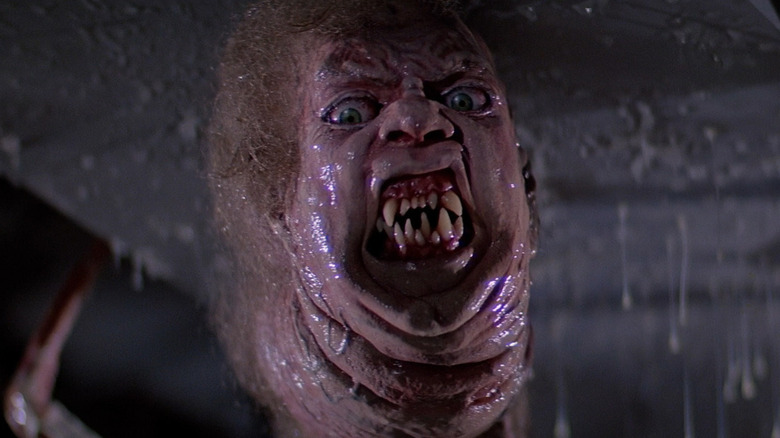
"The Thing" is a remake of Christian Nyby's 1951 classic "The Thing from Another World," only stripped down and minimalist. It takes place at an Antarctic research station, which is manned by bored, burly dudes who have been trapped there for a spell. They rescue a dog that is mysteriously being shot at by a passing Norwegian helicopter. We soon learn that the dog is not a dog at all, but a shape-shifting creature from outer space. It can sprout wet tentacles and bony limbs; the body parts of anything it has previously absorbed. Soon, it has taken the form of one of the human characters ... and none of them know which one.
"The Thing" is expert filmmaking, pumping every scene with fear and paranoia. Kurt Russell and Keith David capably lead the cast, although one or both of them may be infected by a monster before the film's end. Discussions of "The Thing" always mention Rob Bottin's memorable practical effects; the titular thing is one of the scariest monsters in movie history. The film has been ripped off endlessly, all the way up to the video game "Among Us."
What happened at the end? Wait here a little while and see what happens.
Gattaca (1997)
Sony Pictures Releasing
Andre Niccol's 1997 sci-fi film "Gattaca" (you can read on /Film about how "Gattaca" got its title) took a lot of cues from Aldous Huxley's "Brave New World," depicting a dystopian future wherein a citizen's caste in society will be determined by their genetic tinkering. In the near-future, many babies have been born with genetic enhancements, making them immune to diseases and more prone to good health and, chillingly, good looks. They are considered "valid." Those without genetic tinkering are considered "in-valid," and prejudice against them has kept in-valids from getting good jobs.
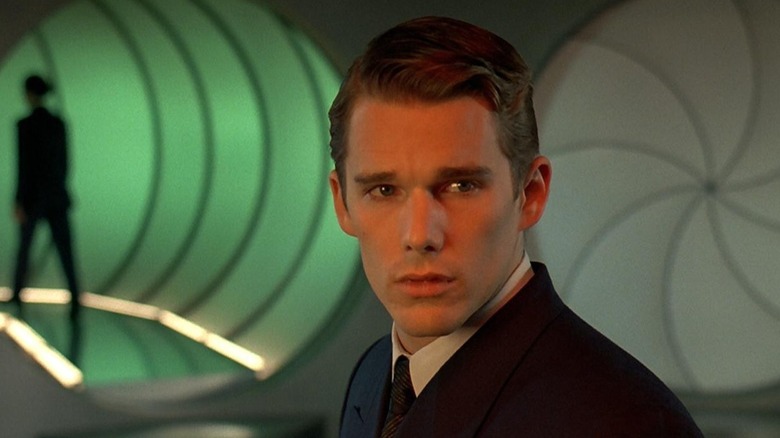
Ethan Hawke plays Vincent, an "in-valid" who dreams of working for the space program. In order to get such a job, though, he has to swap identities with a valid named Jerome (Jude Law). Vincent is able to get into his preferred job, but has to be very careful to bring samples of Jerome's cells with him; genetic scanners are always buzzing, making sure everyone is valid. "Gattaca" mines a lot of drama from the fact that human beings shed 600,000 skin cells in a day. Eventually, the drama begins to turn dark, as when a star pianist is revealed to have been genetically altered to have twelve fingers. Vincent becomes more and more paranoid about being caught.
"Gattaca" may be the best eugenics-based sci-fi movie out there, and its concepts have leaked into the public consciousness in a big way; any other mention of sci-fi genetics has people evoking "Gattaca's" name, right down to a reference on "The Simpsons." And yet, no one saw it. On a modest budget of $36 million, Niccol's film only made $12.5 million domestically. The film soft-launched a subgenre, and no one actually went to the theaters to witness the birth.
Starship Troopers (1997)
TriStar Pictures
Paul Verhoeven's "Starship Troopers," based on the novel by Robert A. Heinlein, was released the same year as "Gattaca," so it seems something about that time prevented audiences from seeing two of the sharpest sci-fi satires that Hollywood could provide. I recall when it came out, and anecdotally, most audiences didn't seem to understand it. Some felt that it was a straight action film with corny dialogue. Few seemed to pick up on the fact that it was (quite brazenly) a spoof of wartime propaganda, wherein the humans are the bad guys.
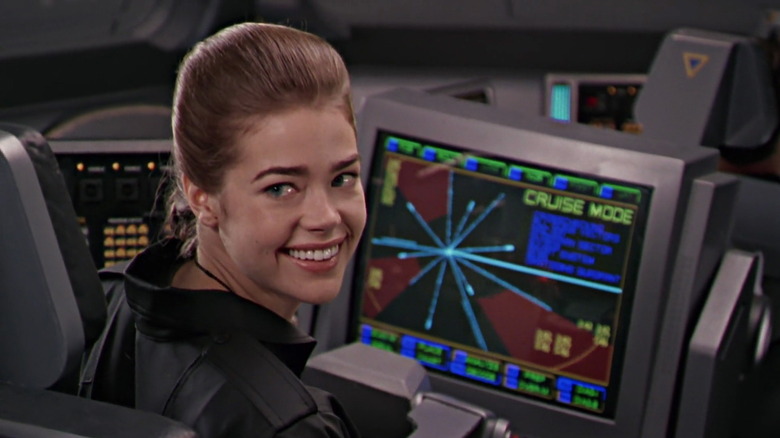
The story follows a war between Earth and a distant species of giant intelligent insects from the planet Klendathu. The film, however, tells everything from the perspective of the soldiers sent to fight in the war, and the war-hungry state that feeds them propaganda. There are many on-screen ads about brave human soldiers "doing their part." It's never stated in the ads what the insects' grievances actually are. By the end of "Starship Troopers," human characters are wearing Nazi-like uniforms and cheering that they have made the insects terrified. Actors like Casper Van Dien and Denise Richards were cast because they capably represent fresh-faced, good-looking empty husks.
Although a satire of fascism, some critics accused "Starship Troopers" of just being fascist. Audiences might also have been burned out on sci-fi after the release of "Independence Day," "Mars Attacks!," "The Lost World: Jurassic Park," and a few others in the last few years. Another super-violent, effects-based space thriller was just old-hat by late 1997. So audiences stayed away. Luckily, the film has since been critically reassessed and is now enjoyed as the satire that it was meant to be. Once, though, the vicious satire of "Starship Troopers" was too smart for its own good.
Speed Racer (2008)
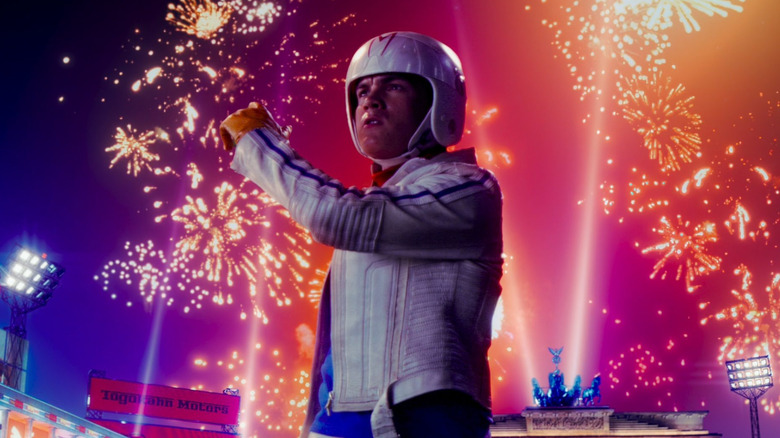
Warner Bros.
When it was released in 2008, the Wachowski's "Speed Racer" was praised and lambasted for its overwhelmingly colorful visual explosiveness. J. Hoberman wrote a fantastic review back in the day that said the film has "a beyond-Bollywood color scheme wherein telephones are blood orange, jet planes electric fuchsia, and ultra-turquoise is the new black." The film was considered too stylistically aggressive, especially for an adaptation of a static, shallow anime series from the 1960s. Watching "Speed Racer" in 2008 felt like drinking liquid Twizzlers, overstimulating audiences to the point of exhaustion. Also, the film is a whopping 135 minutes long. Audiences hated it, and "Speed Racer" only made $94 million on a $120 million budget.
But here's the thing. "Speed Racer" was just ahead of its time. I recall watching James Gunn's blockbuster "Guardians of the Galaxy, Vol. 2" in 2017, and that film opened with a noisy pop song undergirding an action scene wherein a talking raccoon and some green-skinned aliens fought a pink extraterrestrial octopus that pukes rainbows. And that was a mainstream hit, widely accepted by a mass audience. The bold, colorful artificiality of "Speed Racer" slowly became the norm in blockbuster filmmaking. The Wachowskis were merely too ambitious for their own good, trying to make a super-movie almost a decade before the public was ready.
Is the film good? I would argue that it's weirdly great. The simplicity of the story and the characters allow the style to thrive, making a hyperkinetic sugar world that hasn't yet been fully replicated, despite all the imitators. The right people found "Speed Racer," and it's now accepted as a classic. /Film covered an early review back in 2008, so we have the time capsule of what opinions were like at the time.







 English (US) ·
  Indonesian (ID) ·