
 2 months ago

A24
We are all interested in the future, for that is where you and I are going to spend the rest of our lives. And we are all quite interested in our fate as a species, evidenced by the fact that just about every culture throughout human history has a speculative version of how the world might end. In modern times, a lot of our secular myths have been re-interpolated through the science fiction genre, which ponders the end of the world through a subgenre of post-apocalyptic texts. Science fiction allows us to look into the future and ponder cataclysm. What could happen to the world to wipe out most of its human population in one fell swoop? Who will survive, and what will be left of them?
Many find it tantalizing to ask these death-infused questions. Some might fear living through a post-apocalyptic wasteland, fighting for whatever remaining food there might be left and fending off hungry attackers. Others might enjoy the idea of living in the post-apocalypse, as all laws and rules will essentially be suspended, and one can construct the world to their dark whims. There's a segment of zombie movie fans who likely picture themselves as rugged, weapons-toting survivalists, lords of the wasteland, able to shoot as many zombies as they want and be hailed as heroes. The best post-apocalypse is a matter of debate.
If given the chance — or if forced by circumstance — how would we rebuild? Would we even try? Would we go gentle into that good night, or rage, rage against the dying of the light?
The five following movies may be obscure to the casual reader, but they are all marvelous examples of how we might ponder the end of the world. Some are trashy B-movies. Some are heady contemplations. They're all worth seeking out.
Robot Monster (1953)
Astor Pictures
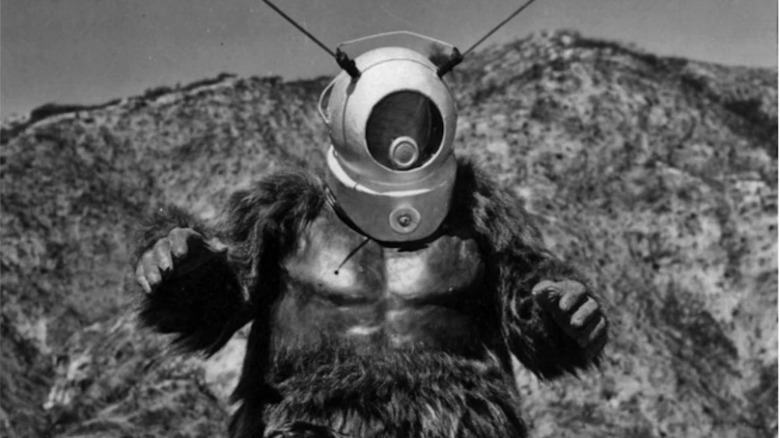
Often called one of the worst movies of all time, Phil Tucker's 1953 B-movie "Robot Monster" is actually one of the more fascinating movies to come from the 1950s sci-fi drive-in circuit. "Robot Monster" takes place in the very distant future when the world has been ruined and now looks suspiciously like Bronson Canyon in Los Angeles. Larry Blamire, who made "The Lost Skeleton of Cadavra" (one of the best forgotten movies of the 2000s), definitely saw this.
The main character of the movie is Ro-Man, played bodily by George Barrows and voiced by John Brown. Ro-Man has the body of gorilla, and his head is covered by an antenna-festooned diver's mask. Ro-Man has been using his powerful calcinator ray to vaporize all of humanity, hoping to leave his species unchallenged by the puny humans. He's been successful: Only eight humans remain.
But Ro-Man is stymied, as the last few humans seem immune to his death ray. He is instructed by his eerie boss, the Great Guidance, that he must complete his task of eradicating all humans before the end of the day. Among the eight humans is a woman named Alice (Claudia Barrett) to whom Ro-Man is attracted, so his quest is only going to be that much harder.
There are subplots about two of the boring human characters getting married, but if we're to focus on Ro-Man, "Robot Monster" becomes weirdly lonely. Think of this poor, absurd creature. It looks like it stumbled out of a flooded costume shop, and it tragically has to commit the last step in a planet-wide genocide. "Robot Monster" is a goofy-ass movie with gloriously dumb dialogue that sticks in the memory. "I cannot, yet I must," Ro-Man says. "How do you calculate that? At what point on the graph do 'must' and 'cannot' meet? Yet I must, but I cannot!" Deep stuff.
The Quiet Earth (1985)
Cinepro / Pillsbury
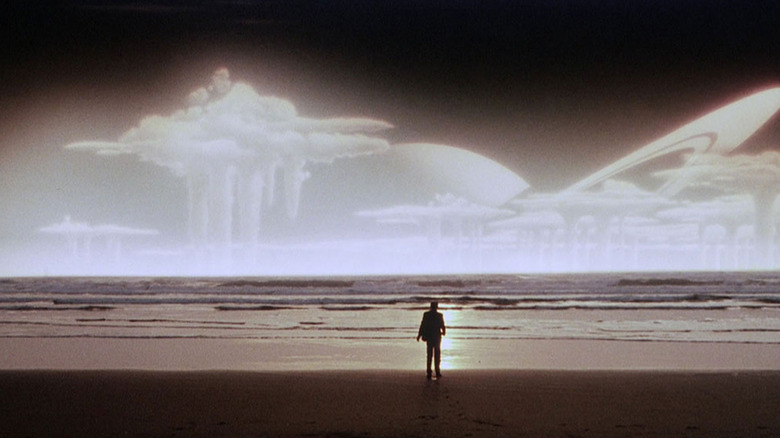
Geoff Murphy's New Zealand sci-fi film "The Quiet Earth" has a very bizarre apocalyptic scenario indeed. One morning, Zac (Bruno Lawrence, who also co-wrote) wakes up to find that there are no other people on Earth. They have all mysteriously vanished. Zac finds that the vanishing might have something to do with his own work as a scientist and the power grid he was putting together. A long portion of "The Quiet Earth" is devoted to the way Zac reacts to sudden, ultimate solitude. He sets up mannequins in his yard, declaring himself the king of the world while he weeps at his own absurdity. There is a gentle, relatable sadness to "The Quiet Earth" that sets it apart from other "Where Is Everybody?" stories. We once called it one of the best end-of-the-world movies ever.
Zac will eventually find two other survivors in Joanna (Alison Routledge) and Api (Pete Smith). There is also an explanation as to why they happened to survive the "blip," and it's mighty grim. The film ends on a strange note, with audiences questioning if the human disappearances were scientific or somehow connected to something spiritual (although not religious; this is not a Rapture movie ... or is it?). The film is suffused with both humanity and mystery and is not talked about nearly enough.
In a 2014 Los Angeles Times interview, Neil deGrasse Tyson spoke of his favorite sci-fi movies of all time, and named "The Quiet Earth" as one of them. It's a movie to inflame the imagination, asking what you might do if you should find yourself the last person on Earth. Would you enjoy the silence, or go mad? Or both?
Flaming Ears (1992)
Kino Lorber
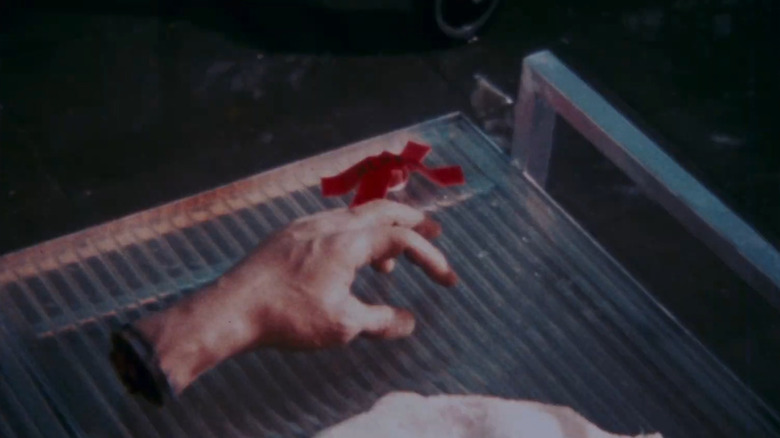
It's likely you haven't heard of trans artist A. Hans Scheirl's Austrian post-apocalyptic lesbian arthouse freakout "Flaming Ears," because it was actually lost for many years. Luckily, Kino Lorber restored it in 2022 and now a whole new generation can be treated to this bizarre end-of-the-world oddity. It's a strange convergence of movies like "Liquid Sky," "Tetsuo: The Iron Man," Lizzie Borden's "Born in Flames," and maybe even "Tank Girl." There are bizarre costumes, some fun stop-motion animation, and deliciously low-fi 8mm photography. "Flaming Ears" is the kind of cult oddity you hope you'll discover someday. Well, I'm happy to say that it's here.
"Flaming Ears" doesn't have much of a structure, and instead explores the loosely overlapping lives of three central characters in the futuristic wasteland of AD 2700. The three characters are Nun (Scheirl), Volley (Ursula Pürrer), and Spy (Susana Helmayr). Spy is a comic book artist, while Volley is an oversexed arsonist who sets her printing presses on fire. Volley is dating Nun, a rodent-eating space alien in a plastic suit. Volley also performs at a local ramshackle lesbian bar.
Scheirl has been making experimental movies since the late 1970s, usually all between 40 and 300 seconds in length. "Flaming Ears" and 1998's "Dandy Dust" are his only features, the latter following "Flaming Ears" as another sci-fi epic, this time about a genderfluid cyborg from the future. Most of his films explore sexuality, the blurred lines of gender, and other trans/queer themes. If I haven't found your new favorite filmmaker, I'll eat my hat. Look up "Flaming Ears" today.
Time of the Wolf (2003)
Les Films du Losange
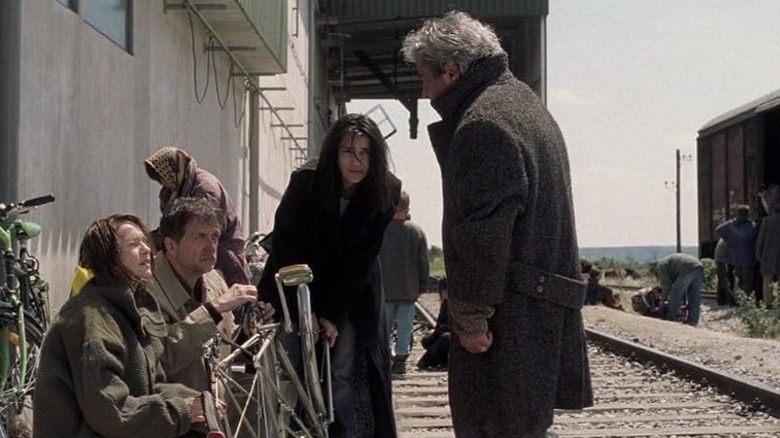
In Michael Haneke's 2003 post-apocalypse movie "Time of the Wolf," we never find out what happened that caused the end of the world. All we really know is that it happened just recently, and that people are already killing each other over resources that will soon run out. The film opens with Anne (Isabelle Huppert) going to her country house with her family, only to find another family is squatting there. Rather than let anyone in, the squatters murder Anne's husband, and she is forced into the wilderness with her kids. They get lost in the darkness a lot. There are signs that something has gone horribly wrong — villages are abandoned, livestock is burned — but Haneke never makes the details explicit.
Eventually, Anne and her family find a railway station occupied by friendlies, and they spend the bulk of "Time of the Wolf" there, trying to get along with the strangers and waiting for ... something to happen. Something that might solve the crisis, perhaps? There are a lot of apocalyptic images and stories being told. An old man tells tales of animals who burn themselves alive.
In not revealing the plot details, Haneke focuses on how a post-apocalyptic scenario would affect its characters personally. When survival is your only recourse, what does it do to morality? What happens when the squatters from earlier, for instance, try to join the refugees at the train station? Justice is sort of gone. Death is everywhere. How should life be protected? Or not? Humanity is stripped of all its manners, and all that's left is ... well, what would be left?
"Time of the Wolf" is chilling and philosophical and most certainly underrated in Michael "Funny Games" Haneke's filmography.
It Comes at Night (2017)
A24
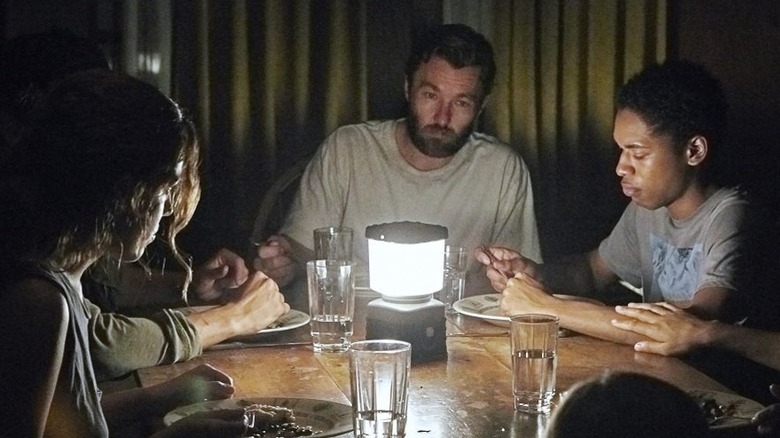
Like with "Time of the Wolf," Trey Edward Shults' post-apocalyptic drama "It Comes at Night" doesn't give any full explanations. This time, however, there is definitely, at the very least, a world-threatening disease running rampant. The film follows a family of three — played by Joel Edgerton, Carmen Ejogo, and Kelvin Harrison, Jr. — who live in a remote cabin out in the woods in an attempt to avoid the disease. How deadly is this thing? When grandpa (David Pendleton) catches it early in the movie, they kill him and burn his corpse as soon as they can. No one goes outside alone, and they only go in pairs. And you definitely don't go outside at night. It comes at night. What does? It's never said out loud ...
The plot of "It Comes at Night" is more about paranoia and misplaced terror than apocalyptic survival, though. A second family of three — Christopher Abbott, Riley Keough, and Griffin Robert Faulkner — become interlopers in the story, and while they might seem only slightly sus at first, they become more sus as the film progresses. And what exactly is in the woods at night that everyone fears so much?
It's been noted that post-apocalyptic movies are rarely about the mechanics of the cataclysm that caused the apocalypse and more about what human elements will come to the fore in the immediate aftermath. "It Comes at Night," like "Night of the Living Dead" before it, reveals that people will turn to isolationism as a survival tactic. If several people are forced to live together in a boarded-up house, death lurking outside the windows, at least one person will erupt into a rage. We all become beasts when desperate, even if the real death is outside the door.





 English (US) ·
  Indonesian (ID) ·