
 3 months ago
Warner Bros.
It's always a little frustrating to see sci-fi and fantasy books lumped together at a bookstore. While both genres are speculative, they come at history from opposing angles. Sci-fi looks to the future and posits how human society might react to changing technology, interaction with aliens, or extensive space travel. Fantasy, meanwhile, looks to the past, inventing alternate histories of Earth's medieval period. A fantasy movie may posit that it is set in an alternate universe or even on a distant planet, but in effect, they're all about Earth's Middle Ages, most commonly staying in Western Europe.
"Lord of the Rings," for instance, is set in Middle-earth, but, judging by the level of technology on display, it's equivalent to England in the 13th century.
This means, of course, that a vital element of all great fantasy stories is the setting. Many fantasy stories are set in a faraway kingdom or a magical realm where eldritch spells and arcane knowledge can actually alter the laws of physics. Or, at the very least, they're set in a more recognizable setting where magic exists. Indeed, there are many, many films and TV shows about creatures, witches, or sorcerers walking among us.
And if the setting is key, then fantasy would be better suited to TV than to cinema. A TV series can last for many, many hours over multiple seasons and give viewers more time to live in a fantasy world. Not to mention, it can help them understand the rules of a secret society of magical beings all the more clearly.
Many fantasy stories take their cues from oral, ongoing bardic traditions, so continuous televised adventures are more in-keeping with that medium. Here are a few fantasy movies that would work just fine as ongoing TV shows.
Nausicaä of the Valley of the Wind (1984)
Toei Company
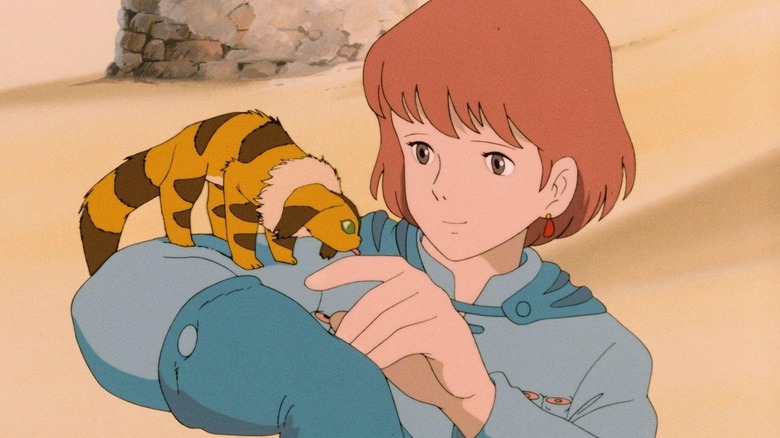
Hayao Miyazaki's 1984 animated epic "Nausicaä of the Valley of the Wind" has one of the maestro's most ambitious premises. Based on his own manga, "Nausicaä" is set a full millennium after a nuclear holocaust nearly wiped out all of humanity. There are still large toxic wastelands across the world — the Sea of Corruption — and giant mutant semi-intelligent bugs called Ohms have evolved in these places. The title character is a benevolent princess who regularly treks into these dangerous areas on a personal glider to study them and get to know the local fauna better.
Like many Miyazaki movies,"Nausicaä" takes place in a rich, detailed universe. The sci-fi machines, as well as the outside monstrous creatures, while both wholly fantastical, are animated to have weight and reality. It would be a great film even if there were no story; audiences would just enjoy living in that world.
The story of "Nausicaä" involves a crashed air freighter, a lost princess from a neighboring kingdom, and the regrowth of a massive, kaiju-like superweapon, the same one that wiped out much of humanity a thousand years before. And while that story could easily be explored in a long-form, big-budget TV series, "Nausicaä" could also easily be an episodic adventure show that is merely set in Miyazaki's weirdly peaceful but definitely perilous universe. Nausicaä herself (voiced by Sumi Shimamoto in the Japanese language version and Alison Lohman in the Disney-released English dub) is an aspirational character, more devoted to curiosity and kindness than war. The world may be a ruined landscape that hangs in the balance, but it's still a world of pacifism that's worth saving. Maybe those Ohms aren't so bad.
The Adventures of Baron Munchausen (1988)
Columbia Pictures
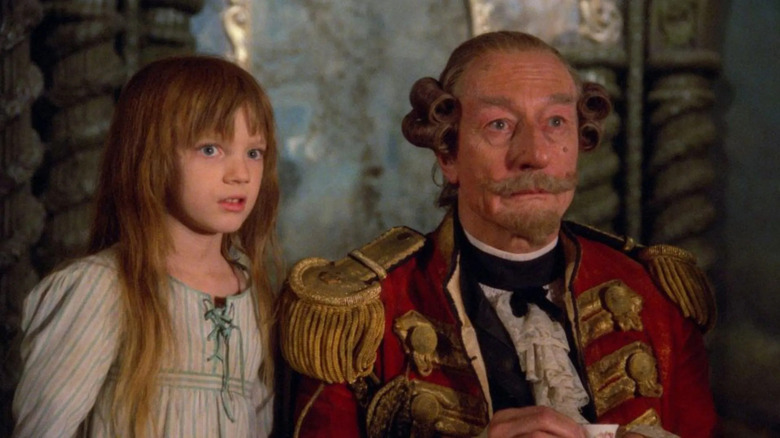
Terry Gilliam's bizarre, opulent epic "The Adventures of Baron Munchausen" (go here to see where it ranked it among Gilliam's movies) is all about death. It concerns the fate of the title character, played by John Neville, as he approaches the end of his life. He was once known for broad, zany adventures with a retinue of superpowered chums, but he's since fallen on hard times and now wastes away, barely remembered. Death is a character in the movie, and the Baron often sees him, angling to outrun his inevitable scythe. There is a dour, downbeat tone to the film that makes it appealing yet undercuts the "adventures" part of the title.
Apart from one notable sequence, however, audiences don't get to see the Baron and his compatriots in their heyday. The Baron once tooled around with a veritable Avengers of Victorian heroes. There was Adolphus (Charles McKeown), who had eagle-like eyesight and was an exceptional sharpshooter. There was Berthold (Eric Idle), a man who could run so fast that he had to wear weights on his feet. There was Albrecht (Winston Dennis), the world's strongest man. And there was Gustavus (Jack Purvis), who not only had supernatural hearing but also lungs that could blow over a caravan.
In the movie, these characters have one act of heroism as young men and then one additional scene of action where they are elderly. What I would like to see is the Baron and his retinue, all in their prime, touring a fantasy landscape in an episodic structure, engaging in acts of heroism and foolhardy shenanigans alike. After all, the Baron is a flawed hero given to ego and appetites. I want to see what he was like before Death was breathing down his neck.
Nightbreed (1990)
20th Century Studios
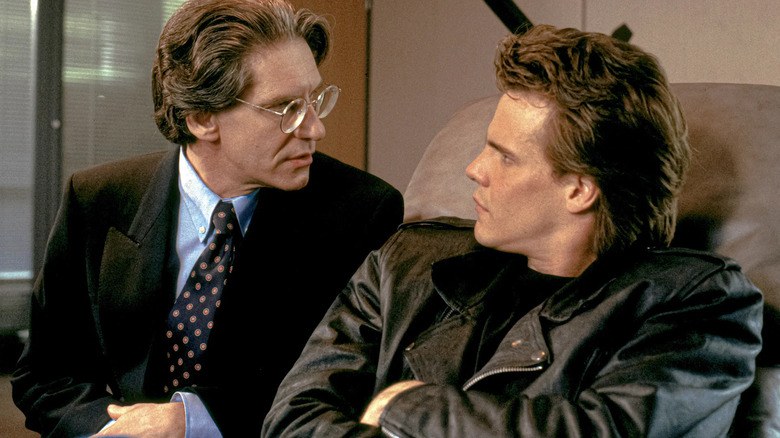
Based on his novel "Cabal," Clive Barker's 1990 film "Nightbreed" — like many of the author's stories — has a fascinating mythology. Boone (Craig Sheffer) is having dreams of alluring and terrifying humanoid monsters that live in a secret subterranean city underneath a graveyard, a city called Midian. He tells his shrink, Dr. Decker (played by filmmaker David Cronenberg), about it, which seems reasonable until audiences learn that Dr. Decker is actually a serial killer and plans to pin his murders on Boone.
Boone, of course, eventually discovers that Midian is real, and the dreams he has been having are visions. What's more, Boone is actually a monster himself, able to transform into a feral creature with glyphs on his skin. The monsters are of a striking, disturbing variety, and their ranks include both benign creatures — like one that transforms into helpless rodents when exposed to the sun — as well as more dangerous ones like porcupine women and men with giant snakes living in their bellies.
The thesis of "Nightbreed" is that we all secretly envy monsters. We admire their outsider status and dream of their unusual superpowers. Boone may find himself in a strangely bureaucratic hellscape of monsters, but he has also freed himself. Some critics have argued that "Nightbreed" is a metaphor for the queer community, coming as it does from a queer author. But even without metaphors, the movie takes place in a fascinating world.
"Nightbreed" is notoriously messy and has multiple known cuts, but its universe has been explored in comics and other expanded-universe media. A "Nightbreed" TV series has been developed on-and-off for many years. It's time to finally get this thing into proper production.
The Witches (1990)
Warner Bros.
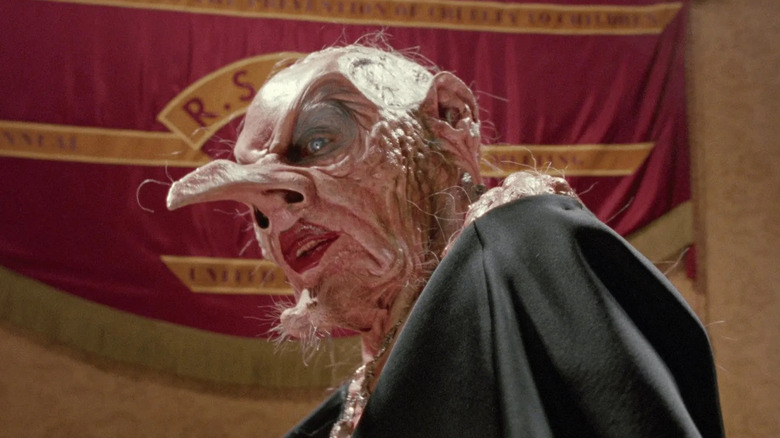
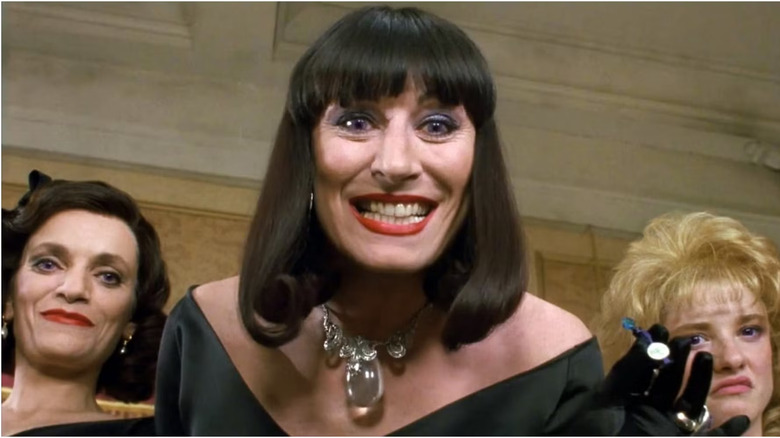
It's hard to say what was going on in the U.S. in 1990 that we had two horror movies about monsters secretly living among us, but, clearly, something was on our minds. In addition to "Nightbreed," Nicolas Roeg directed a high-profile adaptation of Roald Dahl's 1983 novel "The Witches," and it was pretty excellent. Dahl's book posits that most English cities are crawling with witches who want to capture and kill children, and it's wise to keep an eye out. In Dahl's vision, witches have purplish eyes and need to wear wigs to cover up their bald heads. They also have no toes, their saliva is blue, and they have an exceptionally good sense of smell, leading them to hate children because they smell of "dog's droppings."
The movie follows a young boy who, while on vacation with his cigar-smoking grandmother, finds that his hotel is playing host to a witch convention. The witches, he learns, have developed a serum to turn all the children in England into mice. The leader of the witches in Roeg's film, the Grand High Witch, was played by an excellent Anjelica Houston. Robert Zemeckis later adapted Dahl's novel to film in 2020, with Anne Hathaway playing the Grand High Witch. That version wasn't very good.
Additionally, the book has been turned into a play, an opera, and a musical, so why not a full-blown TV series? The question would first have to be, though, is it a series about heroic children who avoid and oust witches in their community — which feels uncomfortably Salem adjacent — or do you make it about the witches themselves and their concerted effort to murder children? Either way, Dahl and Roeg created an amazing world that would make for excellent episodic fodder.
Big Fish (2003)
Sony Pictures Releasing
Special thanks to /Film's own BJ Colangelo for suggesting this.
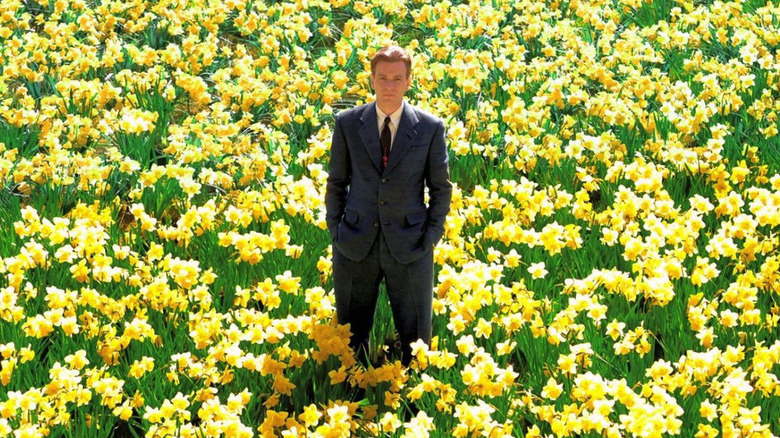
I defy you to watch Tim Burton's 2003 film "Big Fish" — based on the novel by Daniel Wallace — without crying. The film is about Will (Billy Crudup), a beleaguered son who has grown weary of his father Edward (Albert Finney) always telling clearly fictional stories of his own adventurous life. Edward is dying, and Billy is frustrated that even under such dire circumstances, his father never gets to the truth. In flashbacks, we see Edward's life as a young man (when he's played by Ewan McGregor) and how he met the love of his life, Sandra (Alison Lohman in the past, Jessica Lange in the present).
The movie is largely episodic, exploring Edward's tall tales and incorporating notable actors like Danny DeVito, Helena Bonham Carter, and many others. Even Miley Cyrus, still a child at the time, has a small role. The movie is about how Will eventually comes to accept that his father's stories all contain a nugget of truth, but more so, that mythologizing one's own life into glorious tales of danger and romance is not a bad way to see oneself.
A "Big Fish" TV series could be a sweet, heartfelt anthology series about the young Edward and his fantastical adventures involving dangerous witches, werewolves, traveling circuses, and a lot of romance. Each episode could be bookended with the old Edward telling his stories around a fireplace, at a local bar, or anywhere else that anyone might listen. If the stories contradict each other, so be it. Edward is large. He contains multitudes. And because he's telling tall tales, there can be magic, fantasy, and outsized production design. It could be like a more homespun version of the Jim Henson series "The Storyteller."


 English (US) ·
  Indonesian (ID) ·