
 2 months ago
United Film Distribution Company
Back in 2024, Michael Phillips of the Chicago Tribune wrote a lamentation for the cinema of the 1970s, recalling it as a glorious time when movies were made for grown-ups. The world was bleak, Phillips recalled, and the films reflected that. But rather than flee into escapism, the bulk of 1970s cinema continued to focus on the bleakness, the entropy, the fact that everything had been falling apart. One doesn't need to be a scholar to recall the horrors of the era, from the Vietnam War to the corruption of the Nixon administration, so a constant analysis of the U.S.' lost soul was appropriate and expected. Audiences wouldn't get a break from all this until the unexpected success of "Star Wars: Episode IV — A New Hope" changed things in 1977. The 1980s were, thereafter, ruled by fantasy and escapism.
Not all American films of the 1970s were bleak, of course (some of the funniest comedies of all time came from the decade as well), but "bleak" is typically how the decade is categorized in broad critical essays. More so, the 1970s were marked by the rise of a new generation of filmmakers who had actually gone to film school. Movies were more studied than ever before, more erudite, and more aware of their own history. Filmmakers like Martin Scorsese, Francis Ford Coppola, Steven Spielberg, and George Lucas were acutely aware of the cinema that preceded them and operated from a deep font of knowledge of the medium's language.
Many 1970s classics are available on Prime Video, including the five listed below in alphabetical order. The list is a great starting point for those just starting on their journey into the decade's movies, and watching these five movies will make you cinematically conversant.
The Conversation (1974)
Paramount
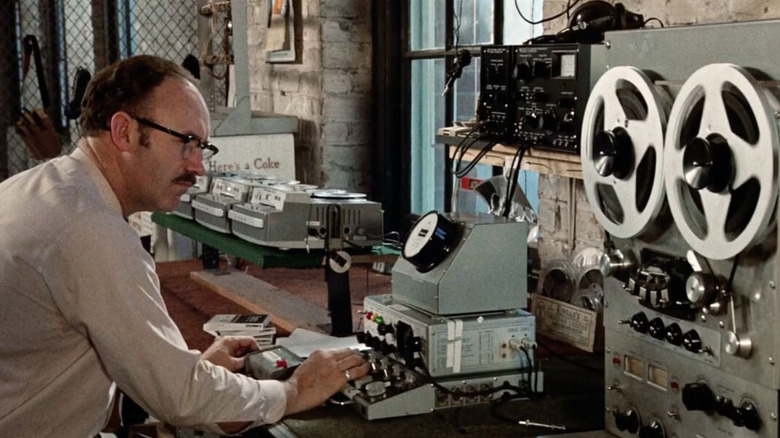
It's astonishing to think that Francis Ford Coppola directed "The Conversation" and "The Godfather Part II" in the same year, as they are both among the best films of the decade. "The Conversation" is the more cerebral of the two, affecting an intense tone of abstract paranoia. Gene Hackman plays Harry Caul, a professional eavesdropper who is hired by various clients to spy on and record the conversations of others. He's recently captured a couple cryptically intoning, "He'd kill us if he got the chance."
Harry tinkers with his high-tech recording equipment to get clear audio and then intends to hand over the recordings to his current client (Robert Duvall). A taciturn man, Harry doesn't talk about his personal life. He knows that his recordings may be used in crimes of passion, but he washes his hands of the matter. His conscience does occasionally bother him from time to time, but Harry rarely lets it show. John Cazale Teri Garr, and Cindy Williams also appear in the movie, as does Harrison Ford as a subtly queer supporting player.
"The Conversation" is just as much a tale of moral emptiness as it is an intense techno-thriller. One will be fascinated by all the buttons, knobs, and switches that Harry flips while eavesdropping (and analog audio fetishists will drool in admiration), but they will be equally fascinated by the man's stone-faced, cold-hearted efficiency. And dangling above all of it is the sense that modern recording technology has reached the point that privacy is no longer possible. Someone somewhere can listen to you, watch you, follow you, and report on you.
It's a good thing that paranoia stopped in the 1970s.
The Kentucky Fried Movie (1977)
United Film Distribution Company
Not everything in the 1970s was gloom-and-doom. After all, this was the decade when Mel Brooks made "Blazing Saddles" and "Young Frankenstein." This was also the era of "Monty Python and the Holy Grail." "The Jerk," "What's Up, Doc?," and several "Pink Panther" movies. These films, overall, tended to lampoon the very idea of cinema, presenting spoofy, slapstick universes where the laws of physics have been rewritten a little bit. One can make their own decisions about whether or not they want to see his movies, but Woody Allen was, in the 1970s, presenting a fresh type of wry, neurotic character comedy that drew in huge audiences.
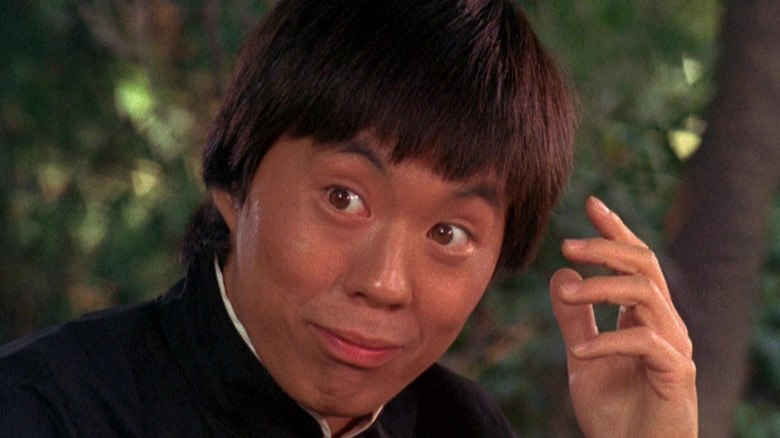
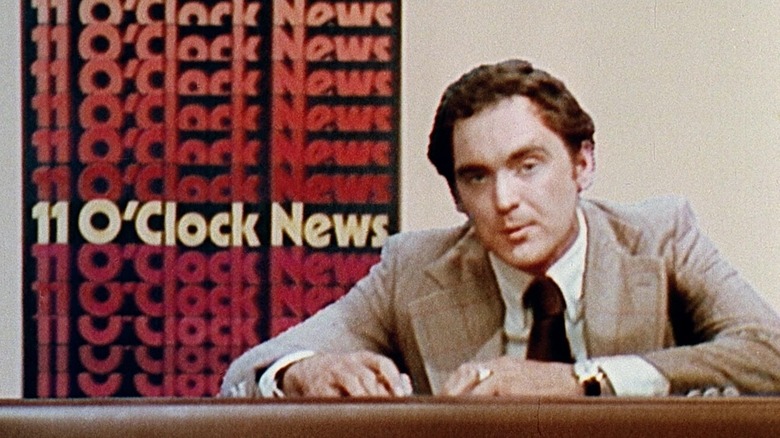
Likewise, 1977 saw the release of "The Kentucky Fried Movie. Directed by John Landis (who forever tarnished his legacy during production on "Twilight Zone: The Movie") from a script by David Zucker, Jim Abrahams, and Jerry Zucker or ZAZ (the eventual impresarios behind "Airplane!," "Top Secret!," and "Police Squad!"), the film is a string of disconnected vignettes that emulates the experience of channel flipping through late-night television. There are snippets of fictional movies (most notably, a martial arts flick titled "A Fistful of Yen"), commercials, talk shows, fake previews, and PSAs, all of them jumbled together into a glorious mess of hilarious clownery.
The movie is crass, smutty, and low, and it was most certainly designed that way. There's a lot of nudity and sex jokes. Like "Nashville," it serves as a media deconstruction but in the MAD Magazine mold. Everything swimming through an increasingly busy media landscape is fodder for parody. If media has no meaning, we may as well play around a little bit.
Nashville (1975)
Paramount
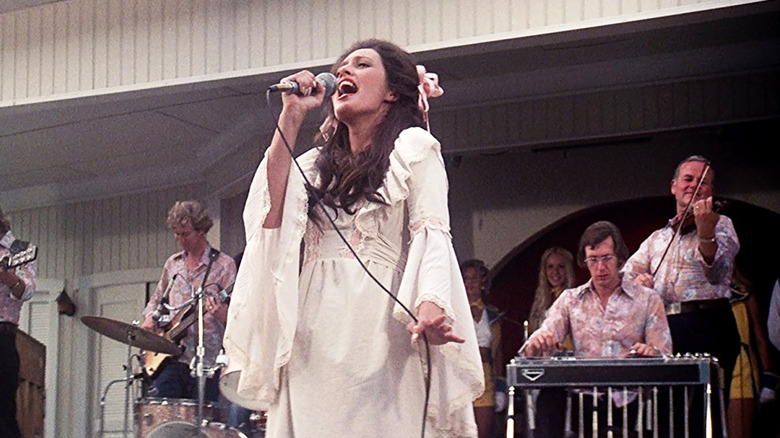
The films of Robert Altman might be a hard sell to those weaned on tighter, melodramatic screenplays. Altman's movies, by their design, ramble. Characters have more natural conversations, and dialogue frequently overlaps. Altman likes to put his camera, metaphorically, in the corner of the room just to observe. However, he also loves music and performance, and he's able to marry his dual passions in 1975's "Nashville," an epic musical about various musicians in the country/gospel scene in the titular Tennessee town.
Altman lets the music play, keeping the camera on the singers. About 60 of the film's 160 minutes is devoted to musical performances, practically making "Nashville" a concert movie. What's more, the movie has several main characters, so there's a lot to follow. Its cast includes Ronee Blakley, Ned Beatty, Jeff Goldblum, Henry Gibson, Scott Glenn, and many, many others. And while "Nashville" is an enjoyable, exhausting cinematic concert, it's simultaneously a strange deconstructionist text about the way cinema is structured. It doesn't crest or climax in a way that most films do. Rather, it's open-ended on both sides, only temporarily stopping in Nashville to take in the many, many stories of the talent, ambition, and struggles of the average U.S. civilian.
And, of course, it's political. "Nashville" came at a very cynical time in the United States, and the film's overwhelming U.S. Flag imagery is very much a comment on the meaninglessness of patriotism. We can scream rah-rah-America all we want, but "Nashville" points out that patriotism has some dark meaning behind it. The U.S. was trying to hang on to its self-love, but real life kind of prevented that. And yet, with its music, there's still beauty lurking somewhere in the nation's heart.
Rolling Thunder (1977)
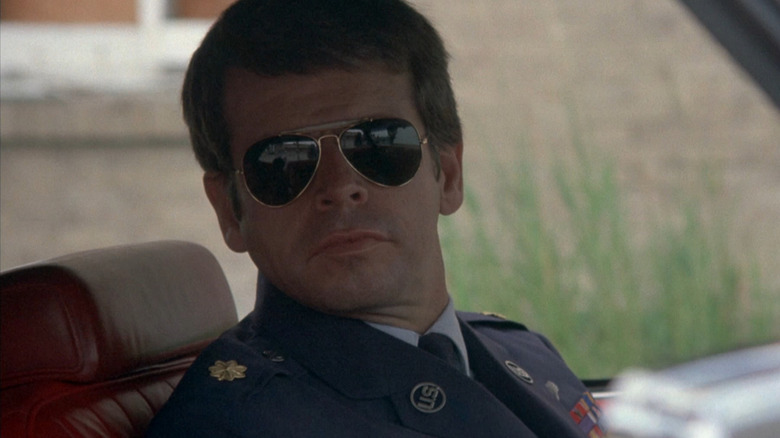
American International Pictures
There were many, many notable films about the post-Vietnam War experience in the 1970s and stretching into the early 1980s. In addition to "Taxi Driver," there was also Hal Ashby's "Coming Home" and Michael Cimino's controversial Best Picture Oscar winner "The Deer Hunter." Later, we'd get films like "Birdy," "First Blood," and "Born on the Fourth of July," all of which analyzed how the Vietnam War experience was horrific and traumatic.
John Flynn's "Rolling Thunder" was one of the more intense of the lot. The film, which was (quite tellingly) co-penned by "Taxi Driver" writer Paul Schrader, stars William Devane as Charles Rane, an Air Force major who's just returned home to San Antonio after spending months as a prisoner of war in Vietnam. Charles finds that his wife left him in his absence and that his young son doesn't remember him. None of this seems to bother him, though, as he just takes the pain in stride after his wartime experience. He doesn't even seem to care when the town awards him a big cash prize in honor of his military service. All of this is meaningless to him after the harm of combat. Charles, however, can't ignore it when thieves break into his house, steal his money, harm his hand with a garbage disposal, and ... well, other violent things also happen.
Charles is thereafter "activated," knowing that he must, coldly and logically, take bloody revenge. He enlists his old war buddy (Tommy Lee Jones) and sets to work. "Rolling Thunder" is part war tragedy and part ultra-violent '70s revenge thriller, and it does both things perfectly. And it's all anchored by Devane, who gives one of the decade's better performances up there with Robert De Niro's in "Taxi Driver." Speaking of which...
Taxi Driver (1976)
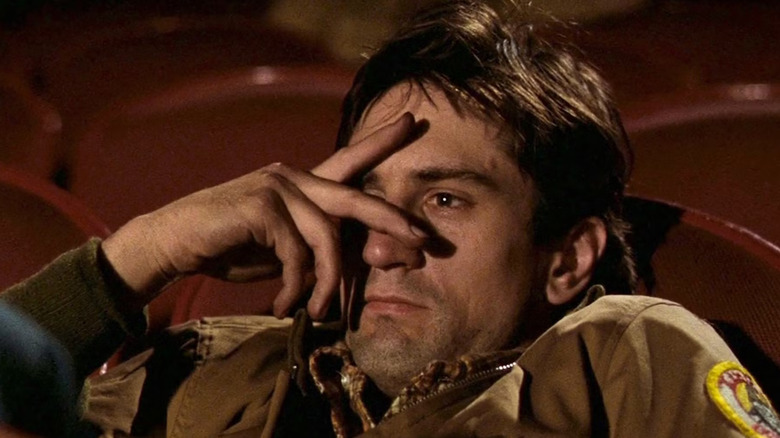
Columbia Pictures
Many film students have seen Martin Scorsese's "Taxi Driver," a drama about the people who slip through the cracks. Robert De Niro plays Travis Bickle, a Vietnam veteran who returns to the United States with a lot of psychological trauma and no one to make sure he's okay. Travis makes ends meet as a nighttime taxi driver, and the people he meets in the middle of the night in New York only reveal that the world is a desperate, lonely place. He watches XXX movies at the local adult theater, but he doesn't seem moved to passion. If anything, he appears to perceive humanity as an outsider, someone who doesn't quite understand how social interactions and happiness are supposed to work. Soon, his fantasies begin to skew violent. Someday, he feels, a rain will come and wash the streets clean.
Scorsese, of course, was exploring how emotionally disconnected veterans are ignored, and how there are violent, mentally unwell people among us who are developing fantasies we couldn't possibly imagine. Scorsese was so good at making Travis Bickle understandable that some critics have accused him of sympathizing with his dangerous viewpoint in "Taxi Driver." I'll repeat it for those in the back: depiction does not equal endorsement. Quite so, Scorsese is often accused of endorsing the lives of the criminals he films, but he's far more sophisticated than that. He's merely interested in outsiders, intrigued by the casual sociopaths who see themselves as unmoored from conventional morality.
Most cinema syllabi of the 1970s will begin with "Taxi Driver," and it's easy to see why. It's one of the most harrowing, intense, violent, and terrifying movies of the era, containing the decade's bitterness and hopelessness perfectly. Travis Bickle is a tragic figure, and we weep that he never gets help.




 English (US) ·
  Indonesian (ID) ·