
 1 day ago
MGM
With two energy crises, the Vietnam War, and the resignation of President Richard Nixon in the rearview, the world exited the 1970s and looked ahead to an uncertain future where multiple catastrophes seemed possible. The ongoing Cold War was heating up again thanks to the election of hawkish U.S. President Ronald Reagan, stoking fears of a nuclear holocaust. Technology was advancing at an ever increasing pace, leading some to worry that these innovations would undermine human autonomy. And the planet's energy situation grew more complicated with growing concerns of global warming (which Exxon's own scientists knew was a very real threat dating back to 1977, but the company denied it anyway).
These concerns would be reflected in the science fiction movies of the 1980s. Post-apocalyptic movies, largely inspired by George Miller's "Mad Max" films, cluttered multiplexes and video stores, while speculative works tackled the worrying potential of robots, artificial intelligence, and the surveillance state. You know the classics of the decade: "Blade Runner," "Robocop," John Carpenter's "The Thing," "The Terminator," and "The Fly." But there is a long list of good to great sci-fi pictures that, for a variety of reasons, didn't receive the attention they deserved. It's difficult to narrow this list down to just five movies, but here are the works that leapt instantly to my mind.
Death Watch (1980)
Gaumont
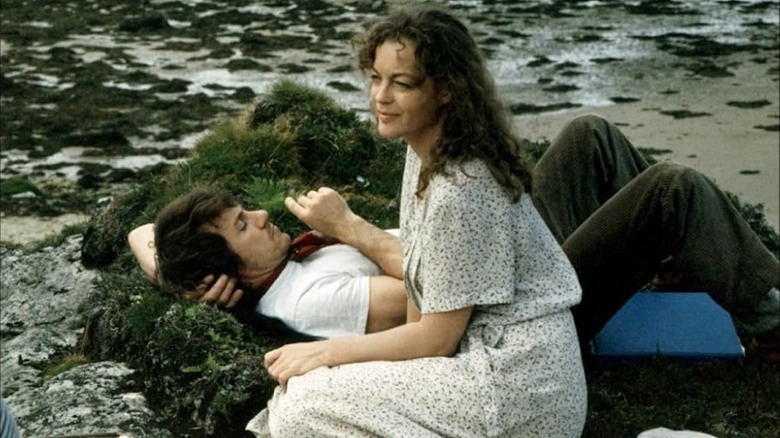
One year before French filmmaker Bertrand Tavernier transferred Jim Thompson's pulp novel "Pop. 1280" from a podunk Texas town to West Africa with the brilliant "Coup de Torchon," he made the startlingly prescient sci-fi thriller "Death Watch." The film is set in a not-far-off future where, due to medical advances, death from illness is uncommon. (Okay, that's not looking so prescient at the moment thanks to Robert F. Kennedy Jr.) So, when Katherine Mortenhoe (Romy Schneider) is diagnosed with a terminal disease, she's launched to uneasy fame. Seeking to capitalize on her rare condition, a television executive (Harry Dean Stanton) pitches her on a reality television show that will cover her remaining days. She accepts only to immediately give the money from the lucrative deal to her husband and go on the run.
From there, Katherine strikes up a friendship with a man named Roddy (Harvey Keitel), who is actually a cameraman for the network. Roddy's had cameras implanted in his eyes so he can transmit her every waking second to television sets all over the world. Unfortunately for Roddy, he can't fall asleep, as a period of darkness will leave him blind. Tavernier's film is deliberately paced, but its actors and striking footage of Glasgow and rural Scotland make it absorbing. The movie was certainly spot-on as to the growing intrusiveness of the media. The only difference between "Death Watch" and our current reality is that people now voluntarily violate their own privacy.
Android (1982)
New World Pictures
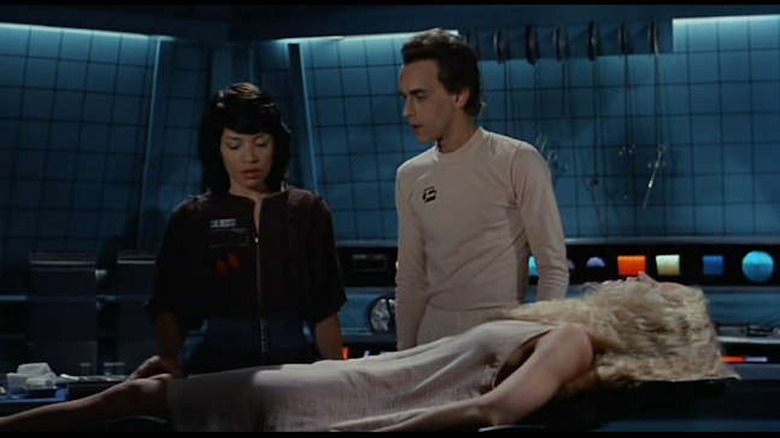
Aaron Lipstadt's "Android" is a strange, sexy reworking of "Bride of Frankenstein" where "the creature" is Max 404 (Don Keith Opper), a human-looking artificial intelligence who's beginning to exhibit a bit of a libido. This concerns his creator, Dr. Daniel (Klaus Kinski), who thinks he might be showing signs of "Munich Syndrome," a malfunction that led to an android rebellion on Earth. Nevertheless, Daniel is assembling a female android named Cassandra (Kendra Kirchner), but this is for his pleasure, not Max's. The trio are the only inhabitants of a space station — that is, until Max allows a damaged prison transport to dock. He knows this will displease Daniel, but he can't help it: the distress signal was sent from a woman. What neither of them immediately knows is that the three crew members are actually fugitives.
Opper (who also co-wrote the script) is a delight as Max, an android who loves classic cinema (though not "Lawrence of Arabia" like Michael Fassbender's David in Ridley Scott's "Prometheus"). He also gets jealous when Daniel invites the woman convict, Maggie (Brie Howard), to dinner. When Max sabotages the meal, Daniel records a log entry where he says Max will have to be deactivated once Cassandra is operative. But Max is a wily one. He's also a charmer and wins over Maggie, which is when everything goes haywire on the station. Lipstadt and cinematographer Tim Suhrstedt make the most of their reused Roger Corman sets. Most importantly, the plot is packed with surprises right down to its climax, which asks if Max and Cassandra are capable of genuine affection. I'm a hard no on that, but Opper is so damn likable that I want for Max's happiness.
Brainstorm (1983)
MGM
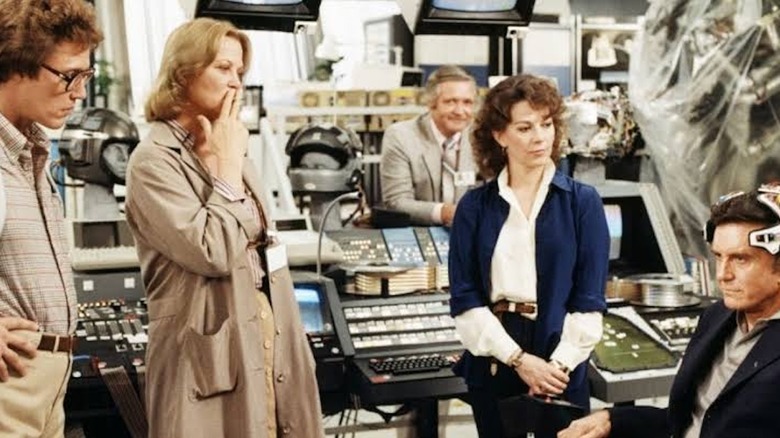
Douglas Trumbull's "Brainstorm" certainly got a load of attention in the early 1980s, but for a horribly tragic reason. While on a production break in November 1981, star Natalie Wood was discovered dead in the water off the coast of Catalina. The resulting investigation was tabloid fodder for months, and while it eventually joined the ranks of movies completed after the death of a lead actor, the public's focus was always going to be solely on Wood's death.
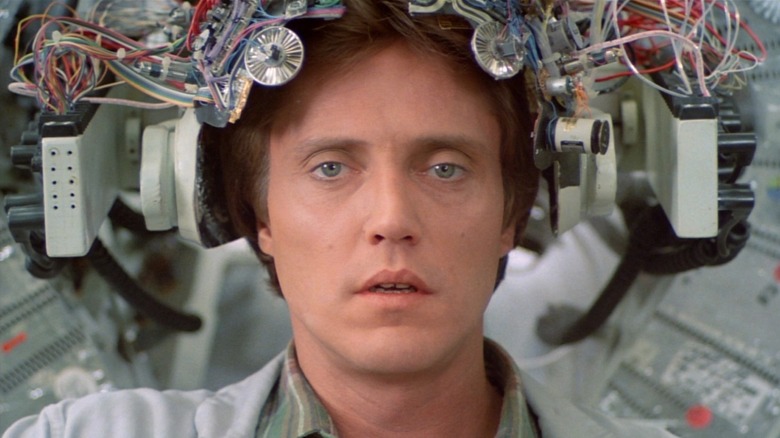
Trumbull pulled the film together, but, technically, "Brainstorm" was a compromised movie. It had to be rewritten due to Wood's absence, and, on the technical end, Trumbull's plan to flaunt his Showscan process, where footage from the movie's fictional brain-computer interface would be presented in 60-frames-per-second 70mm film, had to be scrapped. Yet, even with all that baggage, Trumbull's sci-fi thinker, based on a story by Bruce Joel Rubin, explores the inspirational and frightening applications of a headset that can transmit heightened sensations (from an innocuous waterslide ride to sex and violence) to the user's consciousness. Christopher Walken is the creator of this revolutionary technology, and he is, of course, contending with the military's desire to weaponize the tech (á la MKUltra). The film goes to wild places, literally from Hell to Heaven (similar to Rubin's subsequent script for "Jacob's Ladder"). Backed by a lovely James Horner score, it's a hauntingly beautiful piece of speculative sci-fi.
Cherry 2000 (1988)
Orion
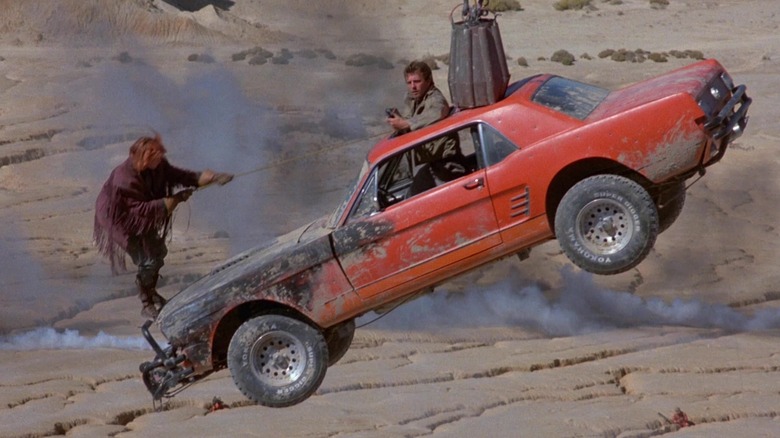
Steve De Jarnatt's "Cherry 2000" is a futuristic dystopian adventure about a recycling executive (David Andrews) who risks his life to find a replacement body for his damaged android betrothed (Pamela Gidley). Given its R-rated subject matter, it's a shockingly big movie powered by a subversive yet genuinely commercial screenplay by soon-to-be indie provocateur Michael Almereyda. The film was shot in 1985, but Orion Pictures had no idea how to sell an off-center movie about a vacuous corporate jerk who realizes he'd rather form a genuinely human bond with a real woman (Melanie Griffith). So, it languished, and, to this day, it's a cult curiosity at best.
There's so much to love about "Cherry 2000." De Jarnatt's Nevada imagery has a magnificent desert sweep, and Basil Poledouris' soaring score is worthy of John Barry. Griffith, meanwhile, outclasses Andrews at every turn. She's better than he deserves, but he has it in him to be a better man who, god forbid, could settle down with a flesh-and-blood mate. "Cherry 2000" is a rejection of artificial love. It's the Russo Brothers' worst nightmare.
Enemy Mine (1985)
20th Century Studios
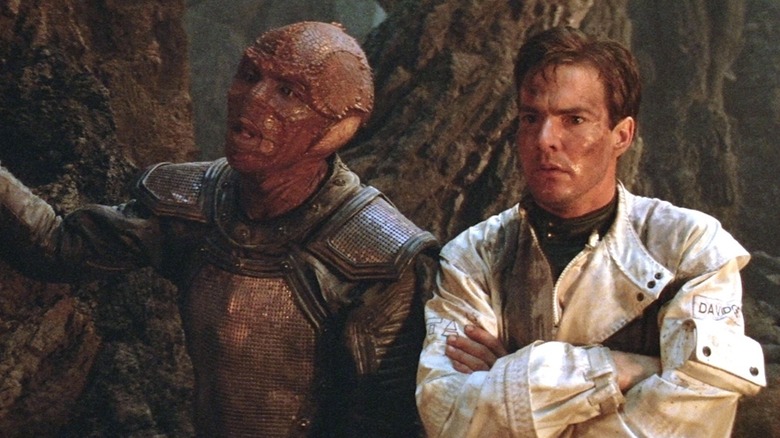
Wolfgang Petersen's "Enemy Mine" is "The Defiant Ones" in space. But it's less about racial unrest than national conflict. It's a Cold War movie, and the primary conflict is between humans and the Dracs, who will keep killing each other until nothing is left. Dennis Quaid's space pilot Willis E. Davidge engages in an aerial battle with Jeriba Shigan (Louis B. Gossett), which results in both beings crash landing on an uninhabitable planet. And I say "beings" because there's quite a twist coming down the pike in this movie.
"Emeny Mine" was a troubled production for 20th Century Fox, but once it got Petersen to replace Richard Loncraine in the director's chair, it found itself with a Cold War-era drama about two sworn enemies who have to band together to survive a hostile planet. And there's one more complication thrown into the mix, but I don't want to spoil it because, again, it left my jaw dropping the first time I saw this film. It's a great looking piece of science fiction from first-rate artists, and it reminds us that, as human beings, we have so much in common. We are better united than driven apart by petty grievances. Indeed, the best science fiction reminds us that humanity's salvation depends on our kindness and unity.





 English (US) ·
  Indonesian (ID) ·