
 1 month ago
Universal
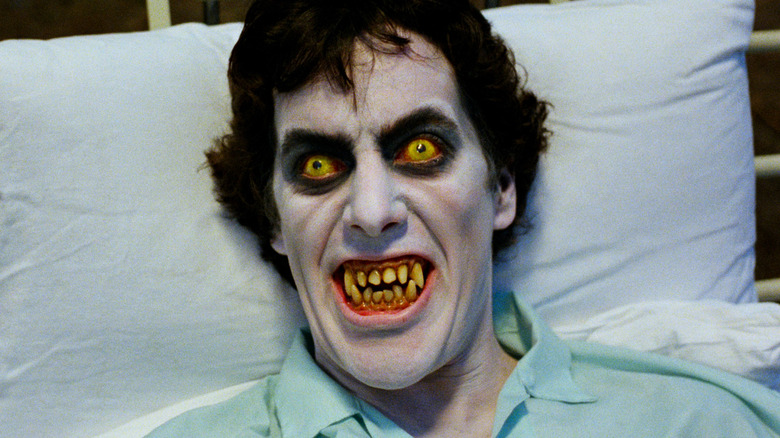
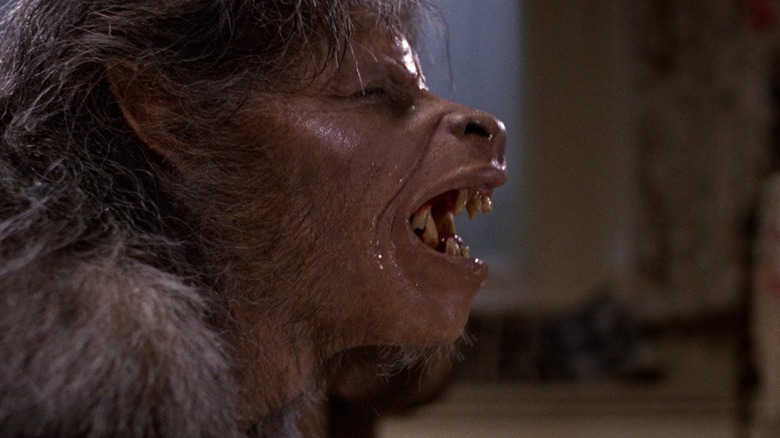
John Landis' horror-comedy "An American Werewolf in London" has one of the best werewolf transformation scenes in cinema history. There have been scads of crummy, low-budget werewolf movies to have been released since "The Wolf Man" in 1941, and one can count on one hand the number of times werewolf filmmakers bother to innovate when it comes to the inevitable transformation scenes. One might also include Joe Dante's "The Howling" on that list, and maybe the bizarro transformations from Neil Jordan's "The Company of Wolves," but "An American Werewolf in London" takes the bloody cake.
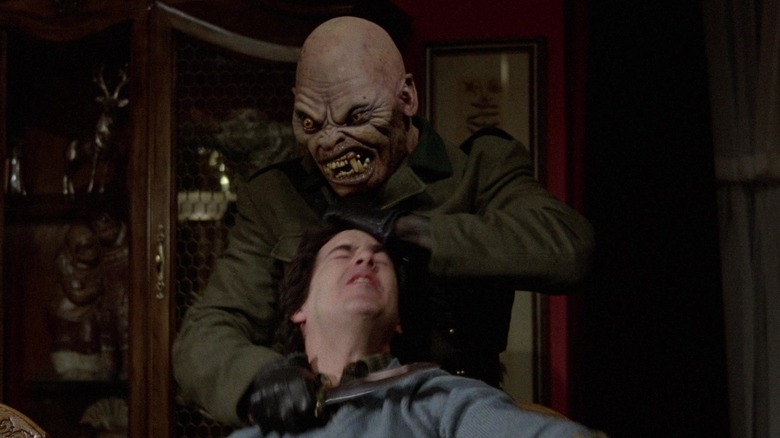
Master monster maker Rick Baker innovated the makeup and monster designs for the film, creating not just the wolves, but also a spate of mauled victims who appear throughout the film as ghosts. Griffin Dunne plays a character named Jack who is killed early in the movie, but who keeps reappearing to David (David Naughton), the film's werewolf protagonist, as a shredded-up living corpse. With Jack's every progressive appearance, he is a little more rotten until he is a near-skeletal zombie. There is also a disturbing nightmare scene wherein David pictures Nazi werewolves attacking him, and that scene gave me nightmares as a child.
Against a $5.8 million budget, "An American Werewolf in London" grossed $62 million worldwide, and was one of three notable wolf movies from that year (preceded by "The Howling" and "Wolfen"). However, it was the only one of the three to win an Oscar. Indeed, "An American Werewolf in London" won the very first Oscar for Best Makeup and Hairstyling. Weirdly enough, the category didn't exist until that year's Academy Awards. But if you're going to debut a new category, it's fitting that the inaugural award should go to such a revolutionary picture.
The saga of the Best Makeup and Hairstyling Oscar
Universal
The Academy Award for Best Makeup didn't exist until 1981, when "An American Werewolf in London" won over Stan Winston's work on "Heartbeeps," a bizarre robot comedy with Andy Kaufman and Bernadette Peters. Prior to 1981, only a few films had won special Oscars for their makeup work, notably "7 Faces of Dr. Lao" in 1964 and, of course, "Planet of the Apes" in 1968. According to Hollywood legends, there was a minor uproar in 1980 after David Lynch's biopic "The Elephant Man" wasn't recognized for its amazing makeup work, and the Academy decided to debut a Makeup category the following year.
Many genre film fans love the Makeup category because it's a chance for sci-fi and/or horror films to make a show at the usually prestige-drama-forward Academy Awards. In 1982, both "Gandhi" and "Quest for Fire" were nominated in the category, and "Quest for Fire" won. There were no nominees in 1983, weirdly enough, but Rick Baker was nominated again in 1984 for his ape work on "Greystoke: The Legend of Tarzan, Lord of the Apes." He was nominated alongside Michael Westmore for "2010: The Year We Make Contact," but both lost to "Amadeus." So much for genre films being highlighted. Michael Westmore won the following year for his work on "Mask."
All told, Rick Baker has been nominated 11 times for Best Makeup at the Oscars and has won seven times. Baker won in 1987 for "Harry and the Hendersons," in 1994 for "Ed Wood," in 1996 for "The Nutty Professor," in 1997 for "Men in Black," in 2000 for "Dr. Seuss' How the Grinch Stole Christmas," and in 2010 for "The Wolfman."
And how is An American Werewolf in London?
Universal
According to a retrospective on RogerEbert.com, "An American Werewolf in London" was met with considerable critical indifference when it was released in late 1981. Because it followed "The Howling" and "Wolfen," many were suffering from a spate of werewolf fatigue, and the reviews weren't great. Ebert himself only gave the film two stars (out of four), writing that the movie didn't feel complete. Ebert intuited that all the movie's resources went into the monster effects, and not enough into basic things like editing and character development.
Ebert said it was not a very good film and that director John Landis was unable to balance the film's horror and comedy elements. He added that the special effects "good as they are, come as an anticlimax if you're a really dedicated horror fan, because if you are, you've already seen this movie's high point before: the onscreen transformation of a man into a werewolf was anticipated in 'The Howling,' in which the special effects were done by a Baker protege named Rob Bottin."
The retrospective notes that Landis wrote the screenplay when he was only 19 years old, in Yugoslavia, while working in a support capacity on the movie "Kelly's Heroes." Evidently, the screenplay didn't change much since then, and the characters, as a result, feel a little underdeveloped. And the story is simple: American tourists are attacked by a werewolf in England, and one of them is killed and the other unexpectedly infected. He transforms at the next full moon and runs amok.
It's simple, but it's scary. And Rick Baker's effects are the centerpiece. He definitely deserved that Oscar, as "An American Werewolf in London" remains the high-water mark for werewolf movies, almost in perpetuity.




 English (US) ·
  Indonesian (ID) ·