
 4 months ago
Sony
When film critics catch a whiff of a disaster in the offing, a pack mentality kicks in. They've made up their minds that a given movie is a stinker and sharpen their knives before they even lay eyes on the picture. Michael Cimino's superb "Heaven's Gate" was a victim of reporting that, to be fair, accurately addressed the budget overruns and mercurial nature of its filmmaker. Obviously, none of this should've mattered when the film was screened for the press (though "Heaven's Gate" admittedly kinda killed United Artists), but the majority of critics reviewed the production instead of the movie in front of them.
Elaine May's sublime "Ishtar" was another film that found itself in reviewers' crosshairs due to pre-release buzz. And then there was Michael Lehmann's "Hudson Hawk," which was panned as a vanity project for star Bruce Willis. (It actually is a vanity project, but it's a brilliant one.)
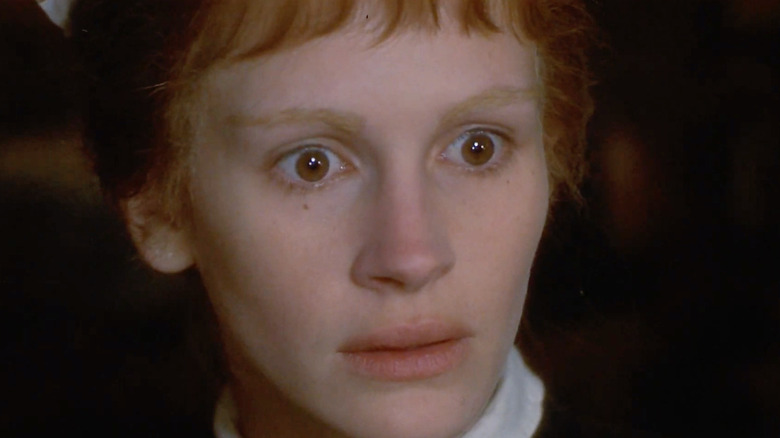
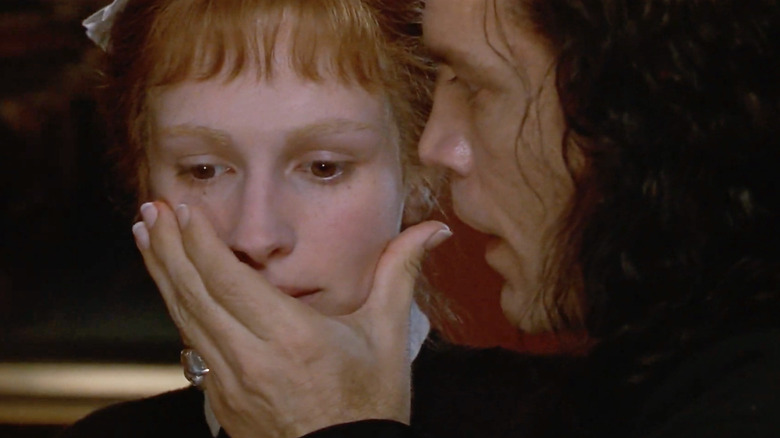
Released in 1996, Stephen Frears' "Mary Reilly" was a quieter kind of flop. Based on a novel by Valerie Martin, the film is a retelling of Robert Louis Stevenson's "Strange Case of Dr. Jekyll and Mr. Hyde" from the perspective of Jekyll's maid. After several false starts (with A-list talent like Tim Burton, Daniel Day-Lewis, and Uma Thurman eyed to either direct or star at various junctures), the project was finally greenlit with Julia Roberts, arguably the biggest movie star in the world at the time, playing the title character. John Malkovich was cast in the dual man-and-monster roles, but there were whispers of trouble from the start. When the film was bumped out of awards season to a February 1996 release date, a critical bloodbath was ensured. But Roger Ebert wasn't part of the feeding frenzy because he took the movie on its own terms.
Roger Ebert was taken with the gloomy atmosphere of Mary Reilly
Sony
Roger Ebert kicked off his three-star review of "Mary Reilly" for the Chicago Sun-Times by musing over the enduring appeal of gothic tales. He then complimented "Mary Reilly" for its astute understanding of the genre. Indeed, he believed it worked better than the vast majority of prior film adaptations of "Strange Case of Dr. Jekyll and Mr. Hyde." According to Ebert:
"'Mary Reilly' is in some ways more faithful to the spirit of Robert Lewis Stevenson's original story than any of the earlier films based on it, because it's true to the underlying horror. This film is not about makeup or special effects, or Hyde turning into the Wolf Man. It's about a powerless young woman who feels sympathy for one side of a man's nature, and horror of the other."
Most reviews took snarky aim at Julia Roberts' acting in the film, which is hampered by some dodgy accent work. But she still captures the troubled soul of Mary, and, aided by Stephen Frears' direction and Christopher Hampton's thoughtful adapted script, draws us into the movie's perverse mixture of horror and sensuality. Ebert, for his part, felt that all of the film's performances were up to snuff, but he reserved his highest praise for the mood of the piece.
"'Mary Reilly' is a dark, sad, frightening, gloomy story," Ebert wrote. His reviewing partner Gene Siskel, agreed with him as well. Decades later, the picture even made /Film's own rundown of '90s horror movies with awful reviews that are actually worth watching. So, let this be a lesson to all you critics out there: Leave that bad press at the door of the screening room, and engage with the film you've been presented with.






 English (US) ·
  Indonesian (ID) ·