
 1 month ago
Sony Pictures
It's no secret that Marvel superheroes as seen on film have had their share of ups and downs. From the original attempts at Captain America and Hulk in the '70s and '80s to the Avengers becoming the biggest cultural-dominating force this side of Y2K, it's been a process for studios and filmmakers to properly adapt the colorful and often unconstrained experience of reading comic books onto the big screen.
From the MCU (which we ranked all of) to standalone entries to more offshoot projects, there's a bevy of Marvel-related projects to dig your teeth into, but today we're asking which ones audiences have responded to the most. Specifically, what are the highest-rated Marvel movies on Letterboxd?
We made a list of all Marvel movies and used Letterboxd's "Average Rating" sorting feature to determine their place — even if two films share the same average grade, Letterboxd's proprietary weighting system will give more credit to the film it deems to actually have the higher average with a given number of users. With that system, this may be the most accurate and comprehensive view of which Marvel films movie fans at large actually prioritize on average. You can't argue with science. Or me, because it's not my ranking.
Here are the best Marvel movies, according to Letterboxd.
15. The Avengers
Walt Disney Studios Motion Pictures
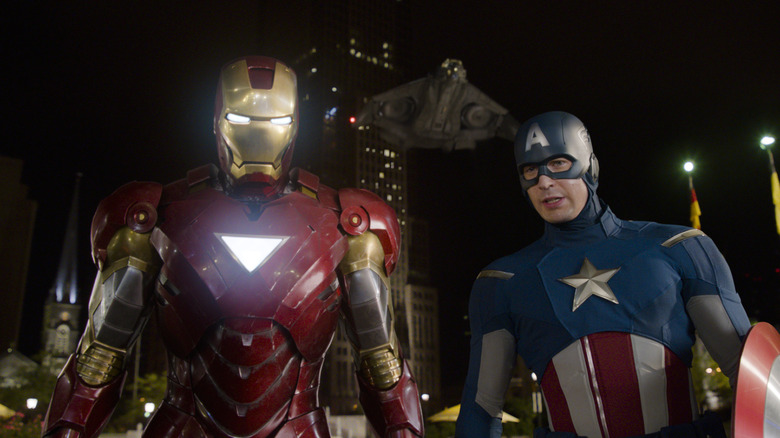
By 2012, it was time for Marvel to pay its dues on the ambitious promise it had spent four years and five movies building toward. The comic book movie studio had to prove to audiences that its formidable dreams of pulling off an "Avengers" team-up film would pay off. Joss Whedon, hired as much for his quirked-up dialogue and banter as for his geek credentials, delivered the film Marvel needed at this moment, with the ensemble pushed together like a dysfunctional family whose potential to save the world together seemed questionable at best.
The pleasure of "The Avengers" isn't really the alien invasion of New York — indeed, it's a set-piece that has become so saturated in these types of films that revisiting it here deflates the spectacle you may remember this film carrying 15 years ago. But the bickering between the team is what still holds up. Downey's Stark trading barbs with Chris Evans' straight-laced Cap, Mark Ruffalo's Hulk delivering a performance worthy of the character, and Tom Hiddleston serving as a mainstay foil for the heroes all still feels satisfying. Audiences ate up the chance to see these characters work together, a feat that once seemed improbable and now feels rather quaint. Nevertheless, it redefined blockbuster filmmaking.
Letterboxd users have "The Avengers" at a 3.8, a fitting score for a film that cemented the superhero enterprise and has had its spectacle challenged several times over.
14. Captain America: The Winter Soldier
Walt Disney Studios Motion Pictures
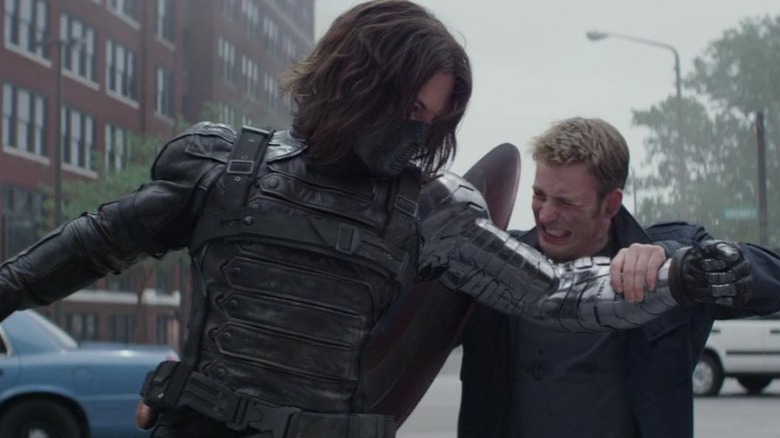
The movie that made Captain America a box office superstar came from an unlikely place. Anthony and Joe Russo were TV comedy directors who were handed a $170 million franchise flick and told to play it in the style of paranoid '70s conspiracy thrillers. To that end, "The Winter Soldier" does its best "Three Days of the Condor" impression, emphasizing surveillance-state dread and casting Robert Redford himself as the establishment villain. Meanwhile, Steve Rogers (Chris Evans) realizes that the institution he's sworn to has been rotten from within.
It's not a bad angle, though the homogenized sheen of the MCU house style is hard to get anywhere near the scuzzy neuroses of something like "The Parallax View." But it's sharper than its cohorts in many ways, especially in its use of Bucky Barnes (Sebastian Stan) to interrogate the identity of a person whose autonomy has been stripped away.
Letterboxd users have rated it 3.8, confirming it as a sequel generally seen as improving on its predecessor.
13. Iron Man
Paramount Pictures
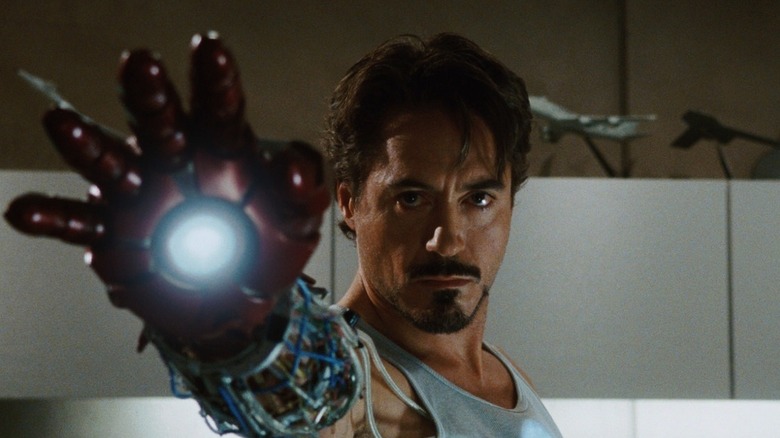
Before it became an inevitability, the Marvel Cinematic Universe was a gamble, starting with a mid-budget movie built around a second-tier comic character and directed by the guy who did "Elf." Jon Favreau's "Iron Man" pulled through by leaning on Robert Downey Jr., whose live-wire, caustic performance as Tony Stark transformed him into a movie star for a new era and helped kick-start mainstream Hollywood's cultural focal point for the 2010s. It's no exaggeration to say that "Iron Man" changed Hollywood forever.
What this film gets right, which future MCU projects would forget, is that the real special effect isn't the impressively integrated Iron Man suit or the mishmash of CGI battle sequences — it's in the performance. Downey's sarcastic charm and command of his role is the selling point here. The workshop scenes of Stark building his armor can be more engaging than the actual climactic fight with Jeff Bridges' Obadiah Stane, because Downey's screen presence makes the film his own.
Of course, as far as franchising goes, there's the all-important stinger: Samuel L. Jackson's Nick Fury striding into Stark's mansion to inform him about the Avengers Initiative, the words that would electrify comic fans more than they had ever been and change the landscape of moviemaking for the new century, for better or, more likely, for worse.
Even still, "Iron Man" is a good movie, and Letterboxd agrees, rating it at a steady 3.8.
12. Guardians of the Galaxy
Walt Disney Studios Motion Pictures
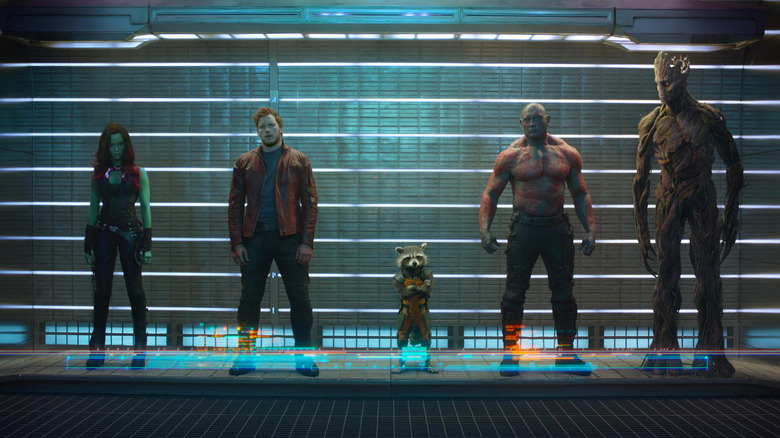
In 2014, James Gunn delivered a fresh blast of energy to the MCU that proved both his capabilities as a comic book filmmaker and the potential for Marvel's weird B-team to become mainstream, blockbuster heroes. It was truly Marvel's most unlikely box-office smash; there was no reason to think this off-kilter space opera featuring a talking raccoon and a giant tree that just says "I am Groot" would lead to its own trilogy of films and major roles within the interconnected "Avengers" films.
Gunn succeeds by discarding total brand cohesion for something more distinct and personal, scoring his superhero movies with strange environs and character designs to a mixtape of AM-radio oldies — which turned classic rock songs into their own newfound cultural sensation — and anchoring them in hero Peter Quill's (Chris Pratt) in-flux nature of his still-processing grief.
Letterboxd users have the film at a 3.9 rating, a reminder that Marvel's best material often comes from when it allows for an individual vision.
11. Spider-Man: No Way Home
Sony Pictures Releasing
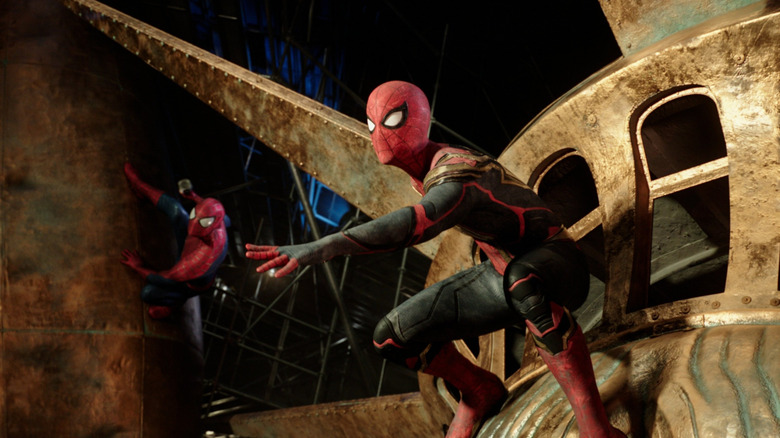
How do you finally get people to come back to theaters post-pandemic lockdowns? You put three eras of Spider-Men in the same movie, of course! While Sony and Marvel had spent years collaborating to give Tom Holland's Peter Parker room to grow, Jon Watts's "No Way Home" resolved the tension between old and new by blowing open the multiversal doors, engineering a plot contrivance just flimsy enough to bring back Doc Ock (Alfred Molina), Green Goblin (Willem Dafoe), and more alongside Tobey Maguire and Andrew Garfield's own Spideys.
It is fan service in its purest, most shameless form, though Watts and writers Chris McKenna and Erik Sommers do their best to weave it into Holland's emotional arc, ending the film with a major franchise shift that leads into the soft-reboot-adjacent stylings of "Brand New Day." It's chock-full of elements that surprisingly work and those that unsurprisingly don't, but audiences ate it up.
Letterboxd rates it 3.9, the highest of the original Holland Spider-Man trilogy.
10. Big Hero 6
Walt Disney Studios Motion Pictures
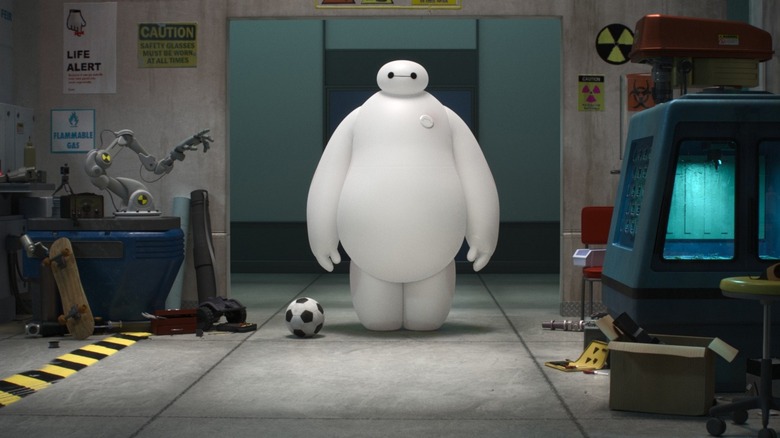
Directed by Don Hall and Chris Williams, "Big Hero 6" is something of an outlier on a list of the best Marvel movies, since most people watching it in 2014 had no idea it was a Marvel property. Walt Disney Animation Studios loosely adapted an obscure comic, transplanted it to San Fransokyo, and built the whole thing around Baymax (Scott Adsit), an inflatable healthcare companion robot with a lovable, childlike sensibility behind his blank design.
That gentle, huggable quality of Baymax fuels "Big Hero 6," a superhero movie with bouncy animation, an appealing dynamic between its leads, and an adorably squishy robot. It found enough success that it's a wonder we haven't gotten a full-fledged sequel: it won the Academy Award for Best Animated Feature and holds up as one of Disney's most emotionally direct efforts of the 2010s.
At 3.9 on Letterboxd, it edges out many live-action Marvel and MCU entries, further underscoring (along with other entries on this list) the potential for more superhero stories to be told through animation.
9. Spider-Man
Sony Pictures Releasing
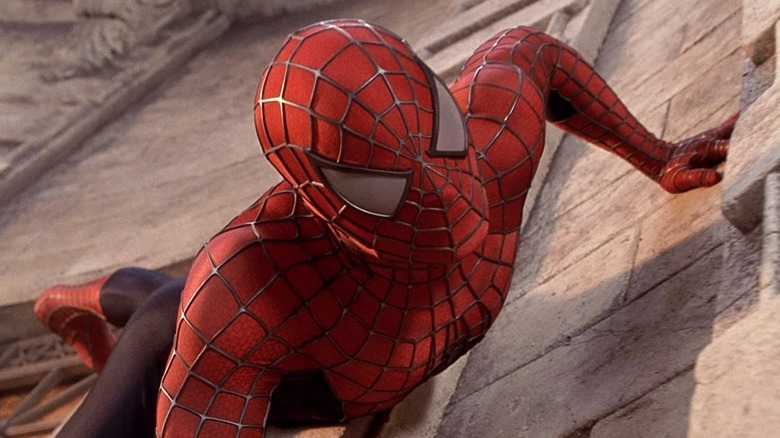
We're still begging other superhero movies to take lessons from Sam Raimi's "Spider-Man" trilogy, and it started with the 2002 movie, which proved the live-action superhero genre's lasting potential. While the overall genre was in a slump, "Spider-Man," which saw Tobey Maguire donning the suit to become the friendly neighborhood web-slinger battling it out with Willem Dafoe as Norman Osborne AKA The Green Goblin, became the first film ever to cross $100 million in a single domestic opening weekend
Raimi knew exactly how to breathe a fresh, invigorating life into a then-terminal subgenre, and he pulls off formal and stylistic tricks that still put contemporary comic-book films to shame. He imbues the film with his mischievous, pulpy flair that he made famous with his "Evil Dead" movies, and makes true blockbuster stars out of Maguire, Kirstin Dunst, James Franco, and the rest of a perfectly cast ensemble.
This is still the prototypical example of a perfect introduction to a superhero world. With a 3.9 rating on Letterboxd, many people agree. Now if only they could do this but even better...
8. Spider-Man 2
Sony Pictures Releasing
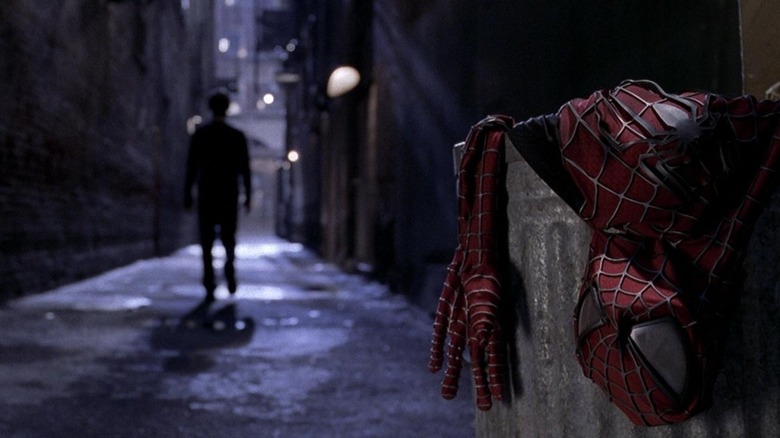
Popular opinion has "Spider-Man 2" in the running for the best superhero movie of all time. I'm inclined to agree, and the film ranks highly in Letterboxd user rankings, with a 3.9 average, and when factoring in the weight of user logs, it's the second highest-rated live-action "Spider-Man" film. This is the film where Raimi and co. harness the director's creative powers to their fullest, amplifying his outsized sensibilities in a story that taps into Peter Parker's melancholic heart.
That's why Spider-Man has maintained such popularity among audiences: his relatability. Raimi and screenwriter Alvin Sargent emphasize Peter's everyman qualities — despite being a superhero who rescues New York time and again, the real dramatic crux of this film is Peter's inability to balance everything in his life, with a constant failure to show up, whether that be for his job, for Aunt May (Rosemary Harris), or for Mary Jane (Kirsten Dunst). "Spider-Man 2" argues that the plight of Peter Parker is the balance between who he has to let down: himself or the world. Those internal stakes make "Spider-Man 2" more epic than most other superhero movies could ever dream.
7. Guardians of the Galaxy Vol. 3
Walt Disney Studios Motion Pictures
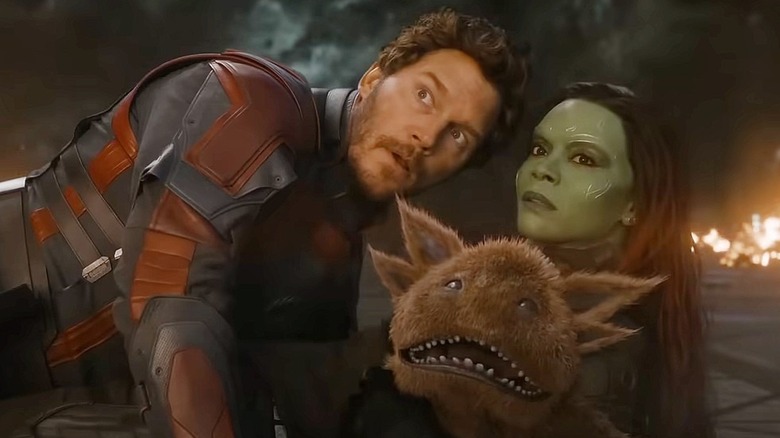
James Gunn successfully turned the "Guardians of the Galaxy" film series into the MCU's most reliably heartfelt and creative corner, and he cashes in on all his checks with "Vol. 3." Before decamping to run DC Studios, he built an emotional send-off for his off-kilter misfits, excavating the origins of Rocket Raccoon (Bradley Cooper) and finding closure in the interpersonal dynamics he had built with minimal interference from larger universe-building obligations. That's why "Vol. 3" provides a rare proper ending within the MCU.
Gunn is good at not sanding down the edges, and he lets some of the trilogy's darkest imagery sit alongside his trademark needle drops and goofy banter. The conclusion to the emotional ties among the characters is well-earned, and it played well for audiences — at 4.0, it's the highest-rated "Guardians" movie on Letterboxd, closing out one of the MCU's few unimpeachable trilogies that maintained its own distinct sense of personality all the way through.
6. Avengers: Endgame
Walt Disney Studios Motion Pictures
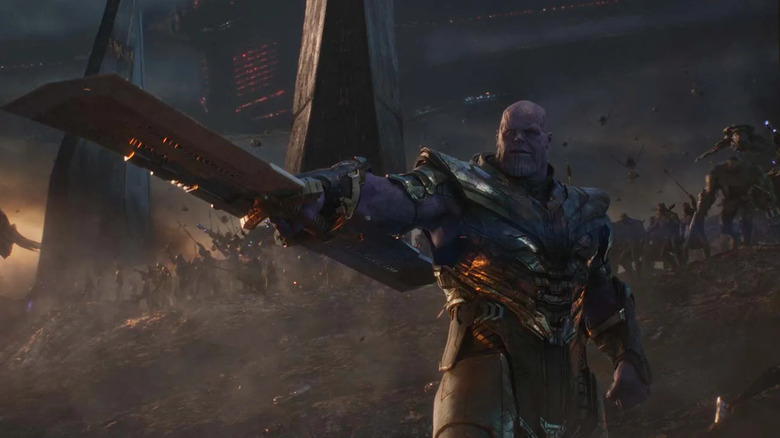
"Avengers: Endgame" took the MCU to a record-shattering box office peak that is only now being challenged — by Spider-Man, no less. It was no surprise: after a decade of build-up across nineteen movies, "Endgame" was the release valve for the dread built by "Avengers: Infinity War." It's three hours of time heists, farewell tours, and an ostensible send-off for the actors who spent a decade building the extended universe from the ground up.
The film has so much ground to cover that it races through character introductions, and that trade-off is the movie in miniature — it sacrifices the traditional screenwriting rulebook to give fans the finale they craved. It has to thread a delicate needle, delivering pure catharsis over relative cohesion. It's bloated in places, structurally baggy, and stuffed with a surplus of endings. Against all odds, it works, almost on pure audacity alone.
Letterboxd users rate it a 4.0 — a hair below "Infinity War," which says something about how much harder it is to deliver a finale than to tease it.
5. Spider-Man: Brand New Day
Sony Pictures Releasing
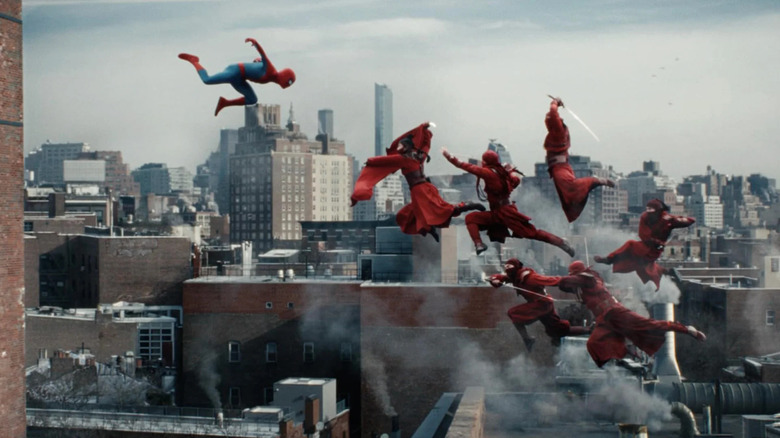
The most recent entry on this list is still in theaters and absolutely demolishing box-office records. It turns out people like this Spider-Man guy, and they especially seem to like it when you take him back to his roots. Whereas Tom Holland's Peter Parker was introduced to the MCU as a Tony Stark protege who had many of his opportunities and gadgets afforded to him by his billionaire benefactor, "Brand New Day" is the MCU Spidey movie that puts him back at ground level: on the streets of New York, grinding away at fighting crime, and forgotten by the memories of his friends and loved ones.
That doesn't mean the Destin Daniel Cretton-directed "Brand New Day" doesn't get hung up on the bloated elements of larger universe-building commitments, including relying on Jon Bernthal's Punisher and introducing Sadie Sink as Jean Grey. But it clearly re-centers Parker's grounded, emotional plight, and that is resonating — a 4.1 rating on Letterboxd could be recency bias, but this being the best-reviewed Holland "Spider-Man" film yet speaks to the success of the tonal reinvention for a franchise that has occasionally coasted on cutting corners.
4. Avengers: Infinity War
Walt Disney Studios Motion Pictures
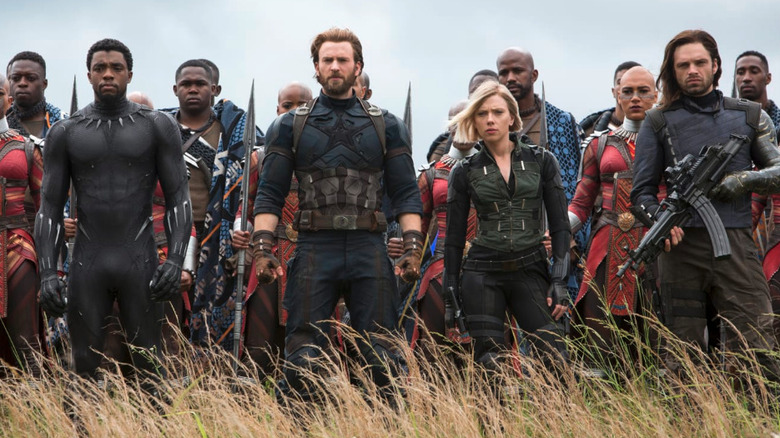
"Avengers: Infinity War" faced a truly absurd task: uniting over 20 superheroes across a decade of crossover film build-up into one coherent story. Under the direction of the Russo brothers, the solution was to stop trying to balance the ensemble and center the villain instead. The trick of "Infinity War" is Thanos, played by a motion-captured Josh Brolin, who arrives with a backstory, a personal philosophy, and a committed argument for wiping out half the population across the cosmos all at once. (He's intimidating, though a little less so without CGI.)
Thanos fits the mold of Marvel villains written with more comprehensible worldviews, even if they engage in genocidal actions. There's conviction in committing to his character, and the film does its job of setting up for the big finale handily, juicing the audience with larger stakes than the franchise had ever offered before and leaving viewers to wait after a gut-punch ending, even if it was all but inevitable that it would be reversed. It basically doesn't matter, because the film knows exactly what will get fans pumping their fists and cheering in the theater when the time comes.
Letterboxd rewarded the film with a 4.1 average rating, outpacing the actual conclusion this film builds toward.
3. Logan
20th Century Fox
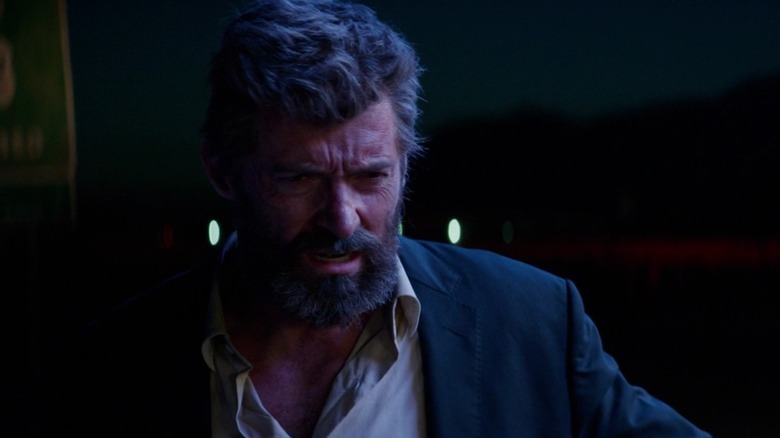
By 2017, three Wolverine movies deep, superhero fatigue was already a notable topic of conversation, and "Logan" answered it by rejecting the genre's traditional trappings altogether. Co-writer and director James Mangold strips away the one-liners and the glossy finishes, dropping Hugh Jackman's clawed mutant into a blood-soaked, dust-choked western, with a decaying 2029 America standing in for a vanishing frontier. By tying itself to a genre more deeply entrenched in the world cinema lexicon, "Logan" becomes one of the most affecting comic-book movies in years. (It was even a deeply emotional experience for Jackman and Patrick Stewart.)
In this movie, Logan and Professor X (Stewart) are dying, worn down, and irrelevant, and their last act is to protect a single child rather than save the world. It allows Jackman to get to the heart of Logan's exhaustion and world-weariness instead of his invincibility. It's also one of the rare superhero movies that earns its R-rating through the weight of its thematic material rather than gore alone. It sits at a 4.1 on Letterboxd, a telling response to successfully bucking the formula.
2. Spider-Man: Into The Spider-Verse
Sony Pictures Releasing
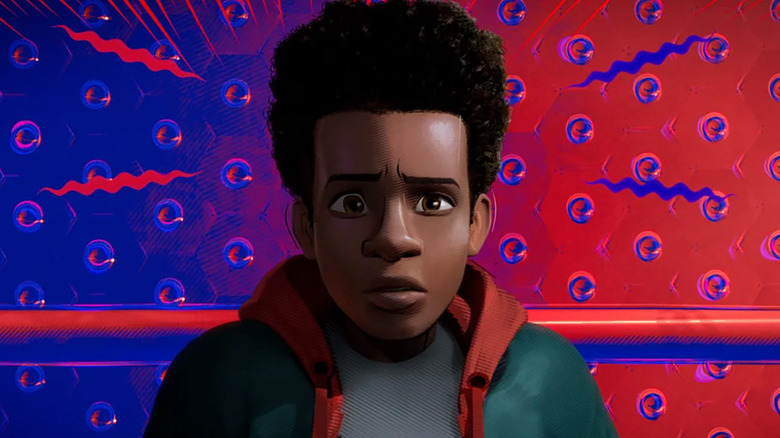
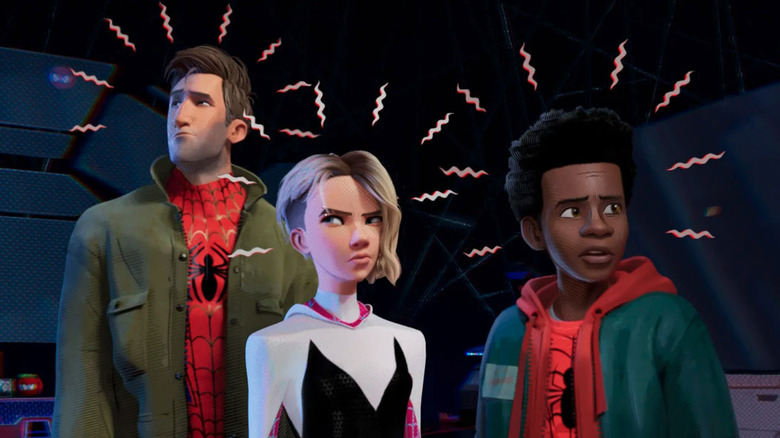
You knew this had to be here somewhere. "Spider-Man: Into the Spider-Verse" is so far ahead of other superhero movies that it's embarrassing for everyone else. While other superhero movies chase an oversaturated, homogenized brand of storytelling and aesthetic sensibilities, and animated blockbusters adhere to the same photorealistic, Pixar-adjacent sheen, "Into the Spider-Verse" blows all that up, mixing hand-drawn linework, halftone dots, and choppy frame rates that miraculously cohere into something that genuinely looks like a comic book brought to life.
It's not just a visual flex either — the film centers Miles Morales (Shameik Moore), an Afro-Latino Spider-Man, and tells an incisive story about what it means to be young, different, and tasked with unbelievable power and responsibility, espousing the message that anyone can wear the mask. It became the rare film that critics and fans are happy to rank above every live-action entry in the franchise, and it won the Academy Award for Best Animated Feature. It may be the best origin story the character has ever gotten, and Letterboxd users clearly agree, with an average of 4.4 that easily beats almost every other entry on this list. It's so good you wish they made another one...
1. Spider-Man: Across the Spider-Verse
Sony Pictures Releasing
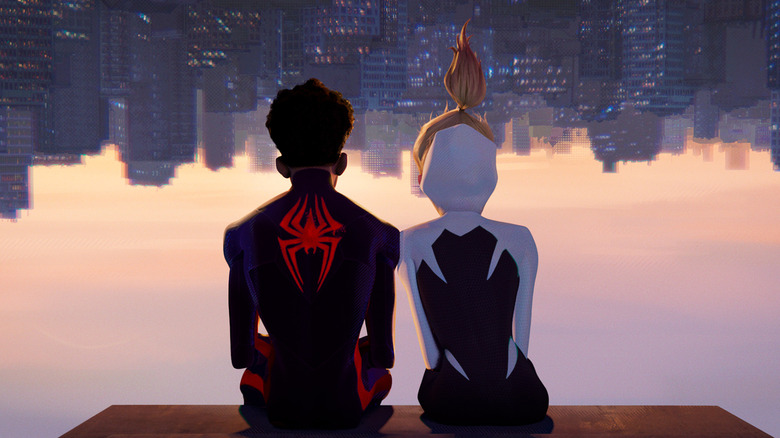
"Spider-Man: Across the Spider-Verse" takes the shock-to-the-system quality of 2018's "Spider-Man: Into the Spider-Verse" and scales it up to even greater franchise ambitions. Directors Joaquim Dos Santos, Kemp Powers, and Justin K. Thompson push Sony Pictures Animation's collage-of-styles approach so that every universe depicted on screen has its own distinct visual language. From Gwen Stacy's watercolor-bleed world to the ink-was chaos of Spot's dimension-hopping villainy, the animation in "Spider-Man: Across the Spider-Verse" breaks the brain.
The film has much to say as it interrogates its own genre, asking what happens when a hero refuses the tragedy that his story supposedly requires. It's a far more ambitious and maximalist film, both in theme and form, and a riskier one, ending on a cliffhanger for which we're still waiting on a resolution. At 4.4, it's the best-reviewed Marvel movie on Letterboxd, making the strongest possible argument for how badly audiences want superhero movies that don't simply repeat themselves.


 English (US) ·
  Indonesian (ID) ·