
 3 months ago
Static Media
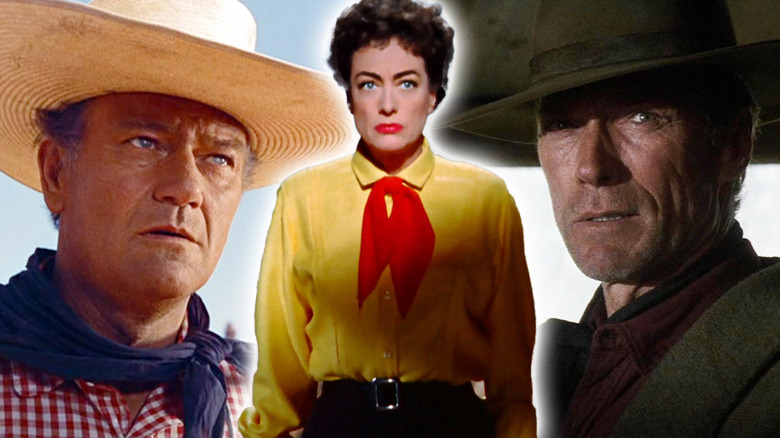
Westerns, as a genre, have enjoyed and endured a series of highs and lows in popularity over the past century. They've never been wholly and completely out of fashion, but the closest they came to fully vacating Hollywood was arguably around the 1960s. Coincidentally, that's the same decade that saw the arrival of a young film critic named Roger Ebert.
Ebert reviewed thousands of films across his career, and a little over a hundred of them were Westerns. We've shared our own list of the best Westerns ever made, but we decided to take a look to see which ones were labeled as the best according to Ebert. To do this, we narrowed the field down to only Westerns given four out of four stars by the renowned critic. From there we tightened our focus even more and eliminated ones set in modern day leaving only the more traditional Westerns set in the late 19th century. (There's one exception to that last rule below, but it's a difference of only a year or two, and its uniqueness demanded it be included here.)
Were this a longer list, it would also have included other films that Ebert loved like "Shane," "The Wild Bunch," "Red River," "Pale Rider," and a few more, but we decided to limit it to just 10 of the qualifying Westerns. Now keep reading for a look at 10 of the best Western movies according to Roger Ebert.
Stagecoach (1939)
United Artists
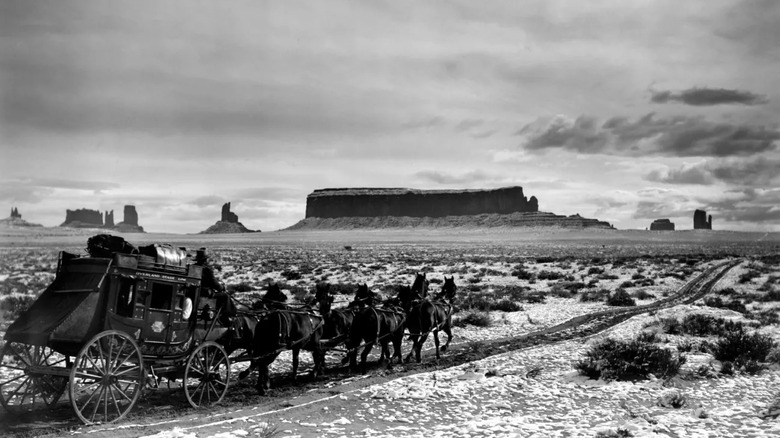
A stagecoach heads from Arizona to New Mexico with a motley crew of passengers aboard. Some are low brow, others are upper class (or at least think they are), and everyone's nerves are on edge when an escaped convict named the Ringo Kid (John Wayne) climbs aboard and news arrives that a violent band of Apache warriors are roaming the nearby landscape.
John Ford had already made a whopping eighty feature films before 1939's "Stagecoach" hit screens, and Wayne wasn't that far behind. The latter still wasn't a bankable lead, though, so Ford had to fight for the actor, and the results speak for themselves. The film remains one of the most highly acclaimed from both of their respective filmographies, and it holds up even today (outside of its portrayal of Native Americans, of course). It won't surprise you that it's one of the 6 films to make our list of essential John Wayne movies.
There are some thrilling action beats here in the form of both shootouts and stagecoach chases, and Roger Ebert says that despite conventions of character and action, it "holds our attention effortlessly and is paced with the elegance of a symphony." It's the unlikely — for the time — focus on characters and interactions that raise the movie even more above the fray. Each member of the ensemble, from John Carradine to Andy Devine, do good work here exploring class under a confined microscope, but it's Wayne and Claire Trevor who deliver the richest characters and greatest connection. He went on to become a massive star, and she won an Academy Award for her performance, but its audiences, even many decades on, who continue to be the biggest winners here.
Johnny Guitar (1954)
Republic Pictures
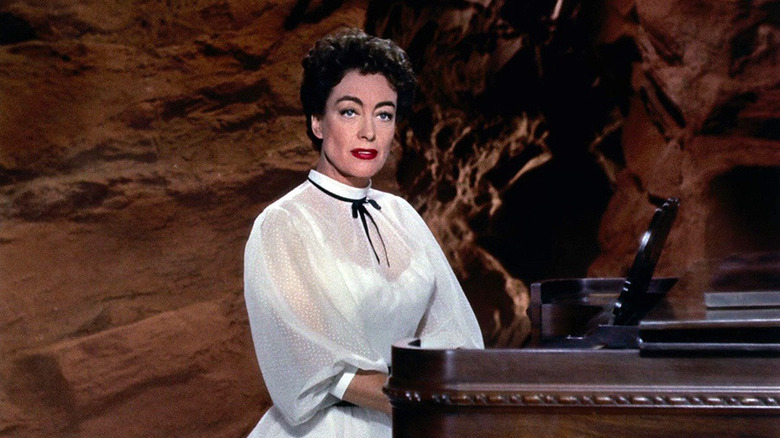
Vienna (Joan Crawford) runs a saloon that caters in large part to a somewhat lawless bunch of guys. This includes young thugs and old boyfriends alike, and it, along with Vienna's support for an incoming railroad, hasn't made her popular with a local rancher who's backed up by her own small army of gunmen.
The core premise of Nicholas Ray's "Johnny Guitar" feels familiar enough in its framework — two powerful people on opposite sides of a small town's future with differences that can only be settled by the barrel of a gun — but the film is unique in its gender politics for a Western of the time. Both Vienna and the rancher, Emma Small (Mercedes McCambridge), are women, and their simmering dislike of each other is the conflict simmering at the heart of the film. Both take on traditionally male roles, from heading up their respective organizations to finally trading lead at the film's conclusion, and they do it all while wooing local gunslingers and maybe even eyeballing each other. Crawford is the ultimate standout here, so it might no surprise you to see where it lands on our Joan Crawford ranking.
To that last point, Roger Ebert's review leans heavily into gay and/or bisexual interpretations of the film's characters, interactions, and themes that weren't openly explored upon its release. It's a common element in modern critical evaluations of the film, and it makes for an interesting lens through which to view the various onscreen relationships and conflicts. Also present here is a thinly veiled commentary on the threat posed by the House Un-American Activities Committee which was actively terrorizing Hollywood at the time. Even without those two potential subtexts, though, the film remains a uniquely captivating entry in the Western canon.
The Searchers (1956)
Warner Bros.
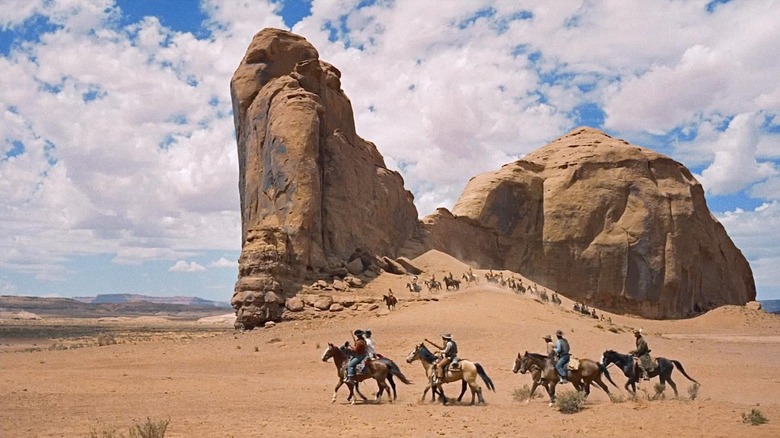
A young girl is abducted by Comanches, and her family is slaughtered. The girl's estranged uncle, Ethan Edwards (John Wayne), has spent the past decade fighting in various wars, but now he's determined to find the girl — and he'll spend years in that search. After so long in Comanche custody, though, will he bring her home or simply kill her as an act of misguided mercy?
John Ford's "The Searchers" is arguably the greatest Western ever made (although the film immediately below is a strong competitor for that title). Ford's beloved Monument Valley, set mostly along the Arizona/Utah border, offers a gorgeous landscape for the film's epic tale of violence and obsession. Small skirmishes and dramatic encounters offer propulsive, suspenseful sequences, while the film's storyline and themes build an engaging center that can't help but create genuine conversation. We explore the film and its ending in more depth here.
The focus of that conversation inevitably comes down to the character of Ethan Edwards — a man who would seemingly rather kill his niece than have her live in the knowledge that she's been touched by and indoctrinated by Native Americans. Roger Ebert's review acknowledges the simple truth that Ethan is a violent racist, and that's as challenging a protagonist as you're likely to find. The film treats him as something of the norm for the period, but it clearly doesn't want viewers to cheer on the young woman's murder at the hands of her uncle. Challenging is good and something we don't get enough of in our studio blockbusters.
Rio Bravo (1959)
Warner Bros.
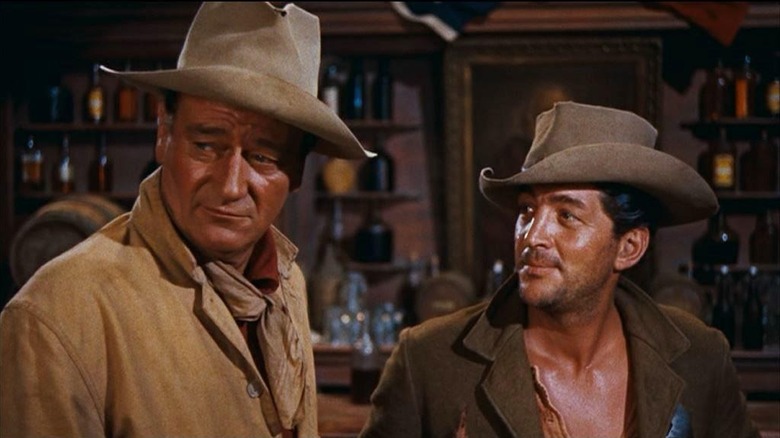
A young thug stirs up trouble in a small-town saloon and lands himself in jail on a murder charge. Sheriff John T. Chance (John Wayne) learns that the man's older brother, a wealthy rancher with dozens of armed gunmen at his call, is planning a violent jail break guaranteed to test Chance and his small group of uneven allies.
Wayne made three times as many movies with director John Ford, but his five collaborations with Howard Hawks includes one of the best and most rewatchable Westerns of all time. "Rio Bravo" takes themes of justice, loyalty, and friendship, and rolls them all into a purely entertaining concoction about good people standing up to the bad despite being outnumbered. Hollywood lore suggests that Wayne and Hawks made it as a direct rebuttal to Fred Zinnemann's "High Noon" and its story of a sheriff debating between doing the right thing or the safe thing. More importantly, it's also the direct inspiration for John Carpenter's still perfect 1976 film, "Assault on Precinct 13."
This film is a fantastic counterweight to "The Searchers" when it comes to Wayne's character. There he's bitter and unlikable, but here Wayne gets to play a brave, big-hearted sheriff who's charisma and honor can't help but draw others to his cause. Action beats entertain, the supporting cast (Dean Martin, Angie Dickinson, Ricky Nelson, Walter Brennan) shines, and the whole acts as a warm, relaxing, good time that Roger Ebert calls "uncommonly absorbing, and the 141-minute running time flows past like running water." He's not alone in that sentiment, and while Quentin Tarantino's film opinions can sometimes be suspect, he's right to call this one of the greatest hangout movies.
The Man Who Shot Liberty Valance (1962)
Paramount Pictures
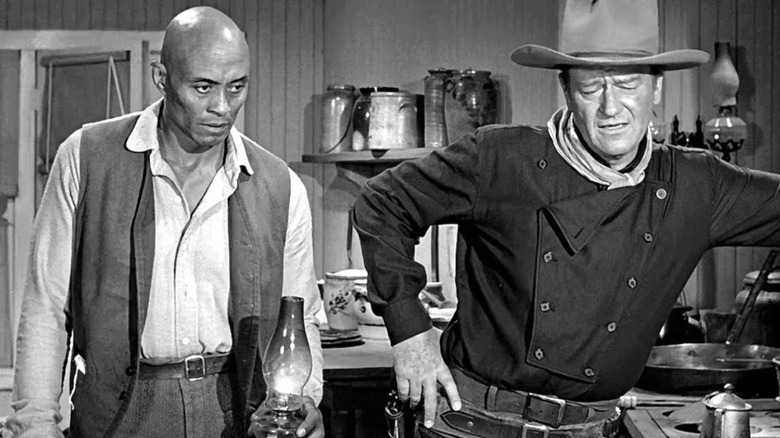
Senator Ranse Stoddard (James Stewart) arrives in a remote Western town to attend a local man's funeral. Asked how he knew the dead man, Tom Doniphon (John Wayne), Ranse tells the story of their meeting, their friendship, and the act that, in a way, set the course for the rest of their lives.
"The Man Who Shot Liberty Valance" is the third (and final) collaboration between Wayne and director John Ford to make this list of Roger Ebert's best Westerns. It's an outlier in that relationship for a few reasons — Ford was forced by the studio to cast Wayne in the role, budget cuts meant it had to film on studio lots/soundstages, and it's the rare Western where Wayne's character dies — but none of that stops it from being another masterclass example of the Western genre. It also stars three performers who made the cut on our list of the best Western movie actors.
There's action here as Lee Marvin's scenery-chewing villain pushes violence on those in his vicinity with the aid of his trigger-happy sidekicks (including the always great Lee Van Cleef), and what it lacks in visual grandeur, it makes up for in sharp filmmaking and smart use of its black & white cinematography. The bigger element here, though, is its exploration and examination of legacy, legend, and what it means to be a hero. Ebert called it the "most pensive and thoughtful" of the Ford/Wayne Westerns, and that's evident in the way the film lets its conclusions sit in sad reflection rather than celebration.
The Good, the Bad and the Ugly (1968)
PEA
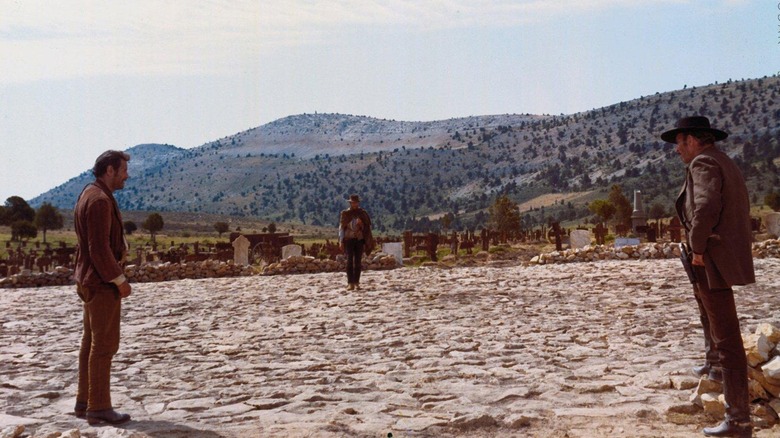
The American Civil War rages on, and word of two-hundred-thousand dollars' worth of stolen Confederate gold has leaked to all the wrong people. Three men on the same quest are destined for a violent collision. One is a reticent bounty hunter (Clint Eastwood), one is a merciless gunslinger (Lee Van Cleef), and the last is a violent goofball (Eli Wallach). They won't all live to spend that gold.
Roger Ebert had only been a film critic for a year when Sergio Leone's "The Good, the Bad and the Ugly" landed in American theaters, and his young brain wasn't quite ready to fully accept the film's embrace of style over story. "Looking up my old review," he writes in a new appreciation of the film in 2003, "I see I described a four-star movie but only gave it three stars, perhaps because it was a 'spaghetti western' and so could not be art." Leone's film is quite obviously art of the highest degree, bested in his own filmography only by "Once Upon a Time in the West," and it remains both a fantastic spaghetti Western and a great Western, period.
Like the previous two films in Leone's trilogy (for marketing purposes only, if we're all being honest with ourselves), Eastwood takes the lead as a man disinterested in small talk. It's a persona that would be carried into other gems from the spaghetti Western subgenre — see where they rank on our list of the best — but here he's also part of a small ensemble. Both Van Cleef and Wallach give equally memorable performances, and together with Ennio Morricone's score they all work to create an unforgettable film.
True Grit (1969)
Paramount Pictures
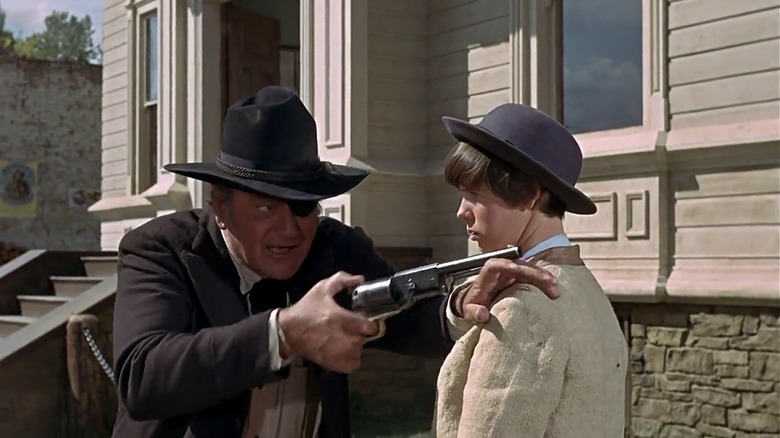
Mattie (Kim Darby) is left grieving after the murder of her father, but rather than stew in her misery, she decides to hunt down the man responsible. She's no match for a gunslinger, so she hires an old U.S. Marshal with one eye and a drinking problem. His name is Rooster Cogburn (John Wayne), and he's as grumpy as they come.
Roger Ebert's original review from 1969 refers to "True Grit" as "the sort of film you call a movie, instead of the kind of movie you call a film," and it's easy to see why. It's a claim you could also make of "Rio Bravo" above as they're both big, beautifully made pieces of entertainment rather than stories meant to watch with a serious and earnest eye. This was the last of five films that Wayne made with director Henry Hathaway — and if you're keeping track, it's clear between Hathaway, Howard Hawks, and John Ford, that Wayne was an actor who was quite loyal to his preferred filmmakers — and it's easily the most acclaimed.
Modern audiences have taken more to the Coen Brothers' 2010 remake — and to be fair, it does one-up the original in one major scene — but the original still delivers fun beats big and small with its blend of characters, story, and action set pieces. Neither Darby nor Glen Campbell offers too much as supporting players, but Wayne provides more than enough charisma and star power to fill the screen. Rooster's prickly exterior covers a big heart and a genuine enthusiasm for the spirit for the Old West.
McCabe & Mrs. Miller (1971)
Warner Bros.
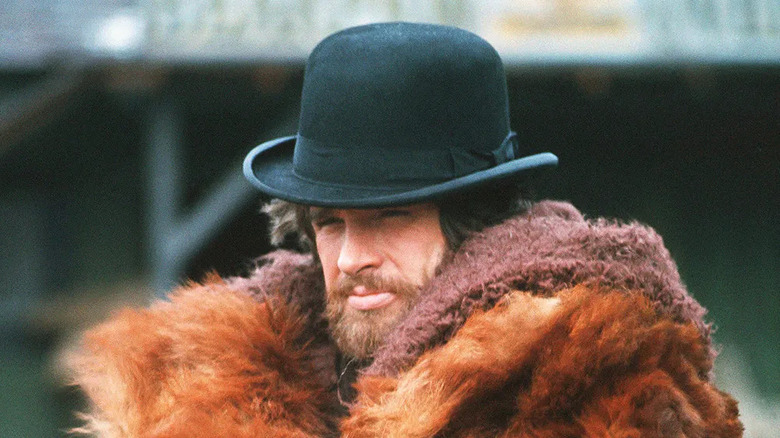
John McCabe (Warren Beatty) arrives in a tiny mining town in the Pacific Northwest and immediately sets up shop. He's going to get rich running a brothel and a casino, and a madam named Constance Miller (Julie Christie) is going to help. Their plan works until corporate interests arrive with muscle to back up their desires.
Roger Ebert's 1971 review of "McCabe & Mrs. Miller" celebrates how the film "is like no other western ever made." (It also spells out every detail of the film's ending, but that's neither here nor there.) It's a fair claim as Robert Altman's film, while featuring the general trappings of the Western genre, feels like a more intimate observation on how not even the frontier could stop the incessant grip of capitalism. The result is the most atypical Western to make this list that, yes, is technically set just after the turn of the 20th century.
Altman's film features gunslingers, horses, and shootouts, but it's a movie about independent spirit being threatened by the ever-growing societal norm of corporations in control of our lives. It's also a beautiful film that takes great advantage of Canadian landscapes as a backdrop for both the calm and the carnage. The latter comes soon enough, but it's arguably the former that elevates the film as both Beatty and Christie create characters rich in humanity (for better and worse) and personality.
Dances with Wolves (1990)
Orion Pictures
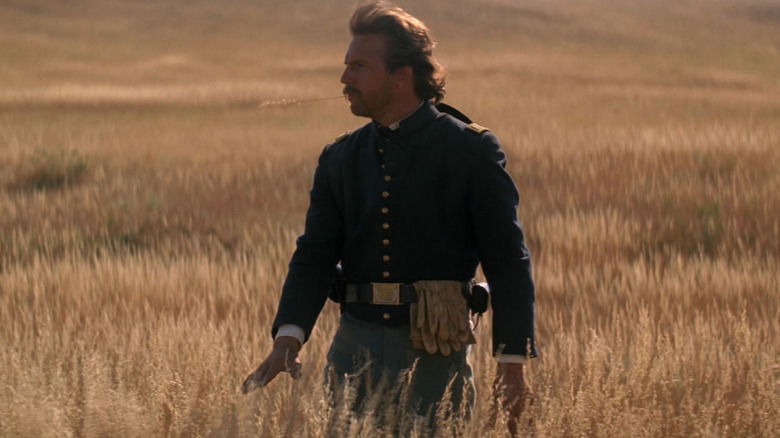
Lt. John Dunbar (Kevin Costner) is a Union soldier wounded in battle who decides to take his life instead of losing his leg, but fate has other plans. His attempted suicide leads to a military victory, and he's rewarded with an outpost on the edge of the Western frontier. It's there where he finds his true purpose.
In addition to starring in the lead role, Costner also directed "Dances with Wolves" to tremendous critical acclaim, blockbuster box-office, and numerous Academy Awards. Roger Ebert wrote that Costner's directorial debut "shows a command of story and of visual structure that is startling." It was all a fantastic end to the immense struggle he endured in getting the film to the screen — a feat he unfortunately wasn't able to replicate with "Horizon: An American Saga" — and it remains a glorious, sweeping epic and ode to America's disappearing frontier. The Western genre was in one of its long downturns at the time, and the case can be made that without this film we might not have gotten the final film below.
The story at the heart of Costner's film is one of a stranger in a strange land who discovers new aspects of life, people, and the land while rediscovering himself. It's beautifully told with a running time that allows its numerous characters and scenes room to breathe and move at their own pace, and while it can feel naive at times in its hopefulness and ideals, it's also home to some emotionally devastating sequences. It's the first of two Western masterpieces by Costner with the other being "Open Range" — home to one of the genre's best shootouts — and both remain well worth your time.
Unforgiven (1992)
Warner Bros.
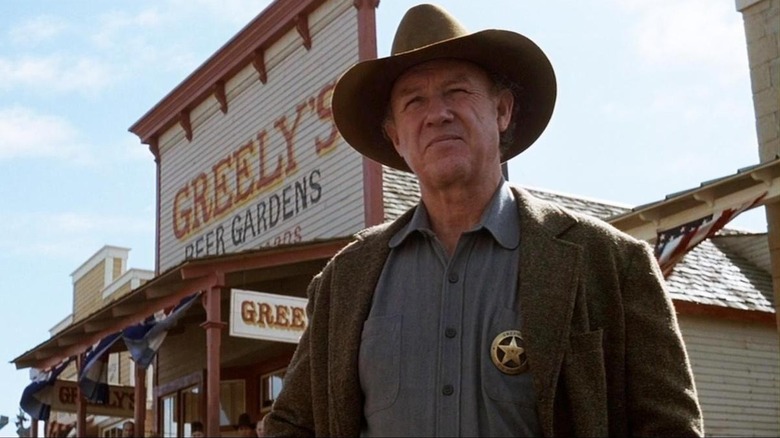
William Munny (Clint Eastwood) was once a notorious gunslinger, but now he's a widower trying his best to be a good father and a hog farmer. Still, when the opportunity arises to track and kill a man for a hefty bounty, his violent past comes roaring back into the present.
Eastwood is no stranger to the Western genre with more than a dozen fantastic examples to his name. He both acted in and directed many of them, and while he's made twenty-four films since, 1992's "Unforgiven" was his final traditional Western in either role. No one would argue that he didn't leave the genre on top as the film did well at the box-office and won four Academy Awards including Best Picture and Best Director. (It also takes the top spot on our list of the best films he directed.) It by no means sums up his entire Western career, but it does feel like a final word on the idea of revisionist Westerns in general with Roger Ebert pointing out that the heart of a western is good silencing evil and that "Eastwood is not shy about saying so."
Old school Westerns were very clear about the good guys and the bad as evident by both the characters' behaviors and, on occasion, the color of their wardrobe. So-called revisionist Westerns blur those lines, and in turn, they give characters a wider, deeper range of humankind's strengths and weaknesses. Munny was a bad man by his own admission, someone redeemed by the love of a good woman but now finding himself drawn back into the saddle, and both Eastwood's performance and his face capture that richness of character and history beautifully. Add in Morgan Freeman, Gene Hackman, Richard Harris, and more, and you have an all-timer Western masterpiece.


 English (US) ·
  Indonesian (ID) ·